AI fashion in 2026 is not just a designer typing prompts into a laptop. It now touches trend forecasting, pattern testing, virtual fitting, demand planning, product copy, resale sorting, and smart eyewear. The sharper question is who keeps taste human while machines speed up the dull work.
The Sketch Comes Faster, but Taste Still Takes Time
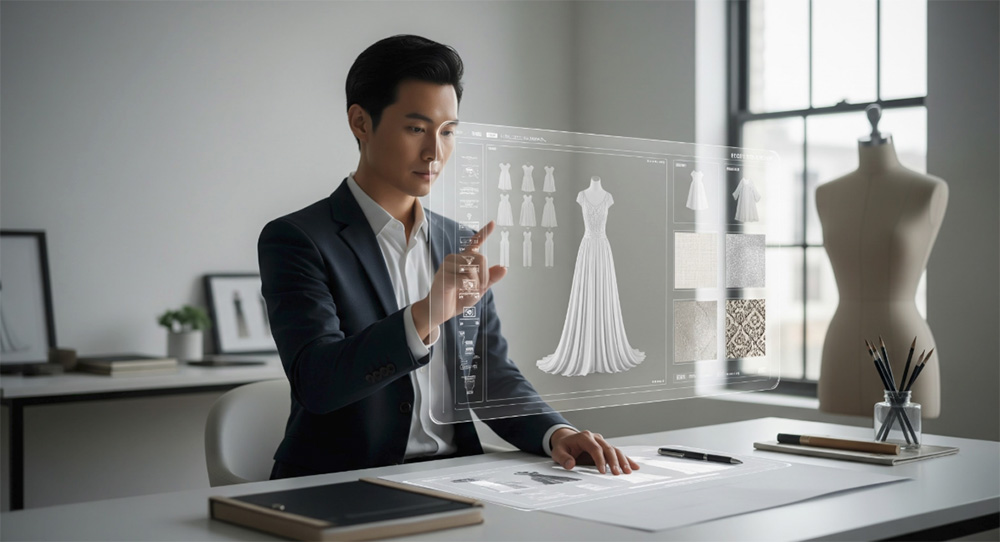
Generative tools can produce silhouettes, color directions, textile ideas, and campaign mockups in minutes. That helps small teams test more options before sampling fabric. It also creates a problem: when everyone can generate fifty “ideas” before lunch, judgment becomes more valuable than output.
A good designer still edits brutally. AI can suggest a sleeve shape. It cannot understand why a slightly wrong cuff ruins the attitude of a jacket.
Virtual Fitting Rooms Are Moving Past Gimmicks
Virtual try-on once looked like a sticker floating over a body. In 2026, better body scanning, 3D garment visualization, and matching-aware recommendations are making the experience less awkward. Retailers care because poor fit drives returns, and returns quietly destroy margin.
The best systems do more than show whether a dress “fits.” They suggest size, drape, styling, and whether the item makes sense with what the shopper already owns. That is where AI fashion design meets retail math.
Betting Apps and Fashion Apps Share One UX Problem
Fashion platforms and sports betting products both live or die by onboarding. If the first screen feels confusing, users leave before the product proves itself. That is why comparisons of Bangladeshi betting sites often focus on practical UX: odds layout, cricket coverage, live markets, payment flow, KYC, and whether account limits are easy to find. A sportsbook must make risk visible in the same way a fashion app must make size, price, and return rules visible. Good design reduces hesitation without hiding the cost of a decision. Bad design turns every tap into guesswork.
Smart Glasses Put Fashion on the Hardware Team
McKinsey’s State of Fashion 2026 report flagged smart frames as a major wearable category, with multimodal AI pushing eyewear into a new phase. Meta, Snap, and luxury partners are all chasing the same truth: people will not wear a computer on their face if it makes them feel ridiculous.
This is where fashion has real power over technology. Battery life matters. Camera quality matters. But if the frame looks wrong in daylight, the product dies in the drawer.
Supply Chains Get the Unsexy Upgrade
The most useful AI may never appear on a runway. It sits in demand forecasting, inventory planning, textile traceability, warehouse allocation, and markdown prediction. LVMH’s 2026 Innovation Award winners showed where luxury is looking: raw material traceability, scalable AI video training, and brand visibility across AI search engines.
That matters because fashion has too much waste and too many wrong guesses. If AI helps a brand produce closer to demand, it saves money before it sells a single fantasy.
Android Habits and the New Mobile Wardrobe
Style discovery is now a thumb-led routine: save a reel, compare prices, check fabric, ask a chatbot, abandon the cart, return later. Sports betting follows a similar mobile cadence, and MelBet app download for android fits users who want fast access to live odds, match statistics, casino games, payment checks, and account settings from one device. The key is control: Android users need a clean install path, visible permissions, and a layout that does not bury bankroll tools. In betting, speed without limits can become expensive; in fashion, speed without fit data becomes a returns problem. The best apps in both categories make the next step obvious without pressuring the user into it.
The Jobs Will Shift, Not Disappear Cleanly
AI will pressure junior design work, copywriting, image editing, merchandising, and planning roles. It will also create demand for people who audit outputs, train models on brand rules, protect IP, and spot beautiful nonsense. Fashion schools will need to teach prompt literacy beside pattern cutting.
The winners will not be the brands that automate everything. They will be the ones that automate the boring parts while keeping a human eye on proportion, culture, texture, and desire.