
First they came for me, and nobody did anything, because they did not know they were next
It’s been an interesting week of late, though realistically is there any week, day, hour, minute in current times that isn’t ‘interesting’ and by that I mean an absolute chaotic onslaught of saturated anger screaming across media like the proscribed Two Minutes Hate gathering in Orwell’s Nineteen Eighty-Four.
In the book the Party members were obliged to attend daily propaganda rallies where images of supposed enemies were shown to stir up vitriol, anger and what was effectively unbridled euphoric hate. These maelstroms (male-storms) are of course fiction in the book, but they are catnip to the likes of real life right wing groups in regards steering folk towards the objectives of what they want society to become, a culture tweaked to the nines on incoherent base emotions, where the brain releases a heady mix of neurochemicals including adrenaline, noradrenaline, and dopamine.
The rush of said chemicals while honing in myopically focused anger on the declared ‘monster’ of the week. A collective crowd being cooked up into an intense bonding group experience (their favourite show no doubt being MasterRaceChef), who in the moment collectively believe they have figured out the reason for all their life’s problems, and it’s that person on the screen. Thankfully they don’t have to research and think what is the real issue (Neoliberalism), the Party leaders have kept it super simple for them, don’t worry about facts, save your energy, there’s joyous screaming to be done.
As I write this, I just heard a report on BBC ‘News’ (I always use commas to show my disdain for them, what can I say, I’m Irish and I’ve read the studies on their proven bias) that only 37% of the population trust mainstream news outlets. Considering the world has been watching a live streamed genocide for years everywhere but the BBC, I’m surprised the figure is that high.
I raise all the above as it was through non-mainstream outlets, independent journalism and social platforms that I first became aware of one Misan Harriman.
Via individuals I hold in high regard and having followed them for years, knowing them to be of high integrity and moral stature, I would see comments or re-posts of Misan’s short commentary videos and striking photographs of what was effectively reportage from around the globe. A world of supposed proclaimed divisions, when all I saw was universal suffering regardless of language or location.
I also had a vague memory of Misan being the first black photographer to shoot the Vogue cover in 2020. Unbelievably he was first in their entire 104 year history. It’s a beautiful cover, but the most striking thing is it was only six years ago, has society really progressed at all?
As if proving it hasn’t, or at least projecting that impression, which only heightened my awareness (standard Streisand effect) of this incredibly talented photographer was the recent (and ongoing) onslaught of attacks from hard-core pro-Israel right wing media outlets in the UK. It has been reported they collectively ran 14 articles about him in a three week period alone, such to the extent that they may be in breach of the press regulator’s code of practice given the sustained levels of negativity that were on display.
Among many things Misan is the Southbank Centre chair, a role well deserved and earned considering his contributions to art, film, culture, activism and as an Oscar-nominated director. Considering his coverage of global atrocities while these attack groups appear to support an apartheid ethno-state that is currently committing genocide in multiple countries, it does have echoes of plantation owners baying for a metaphorical lynching.
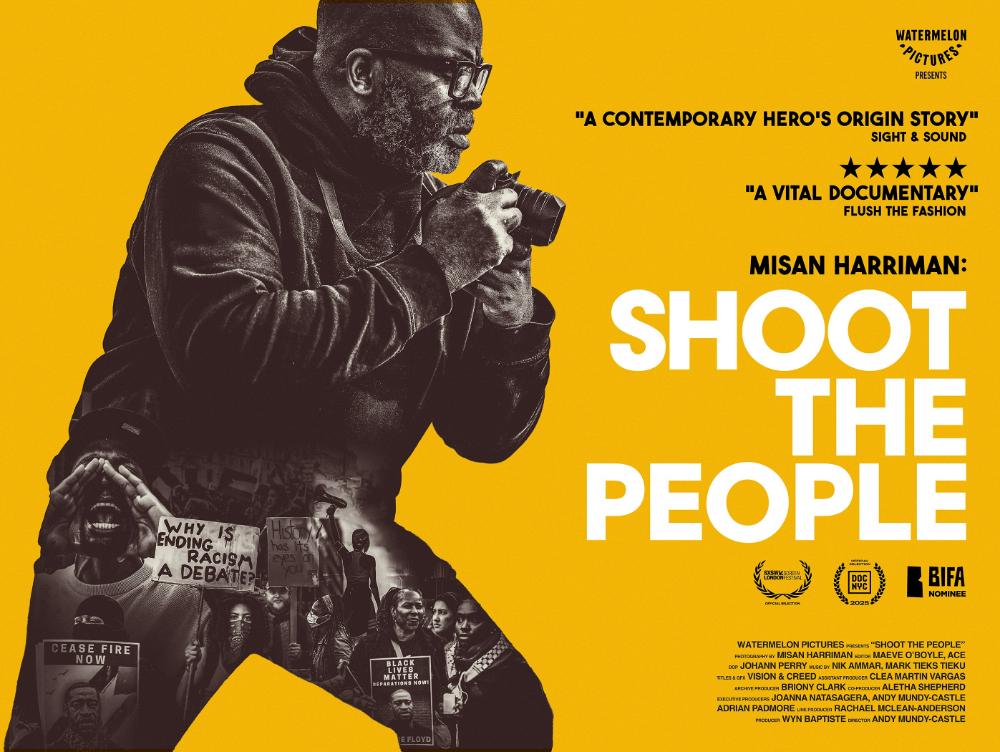
All of this is a precursor to the timely forthcoming release of the fantastic documentary Misan Harriman: Shoot The People (2026), which unbeknownst to the raging right only made me all the more interested in discovering more about the man behind the truly striking black and white images. And the film does not let us down at all.
Directed by Andy Mundy-Castle, a seasoned director in his own right, they have managed to create a work that Misan (and indeed all of us) truly deserve, and it is as beautiful looking as the best of Misan’s photographs, enhanced with some gorgeous cinematography by Johann Perry.
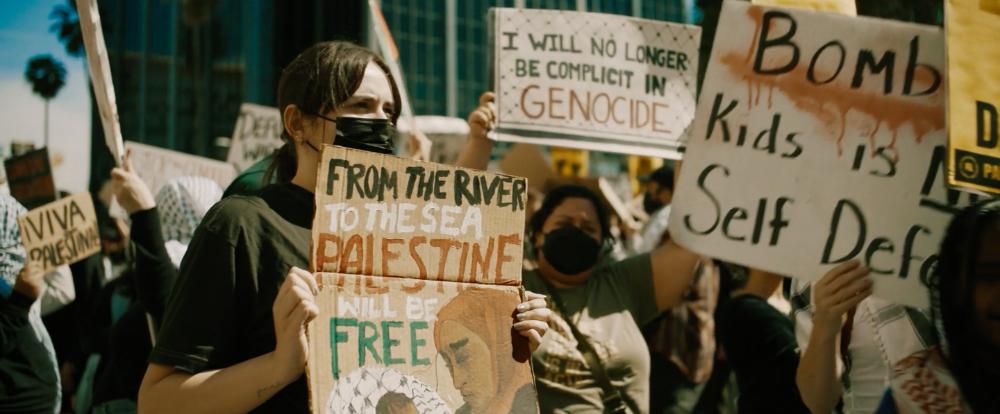
Deftly mimicking supposed current climes the film opens with an onslaught of information, news footage, historical conflicts and protesting that is like a tsunami of intensity that is genuinely nearly overwhelming (a nod of admiration to the sound design too), which of course is deliberate. Despite how full-on it feels, in hindsight it’s still only a drop of what people endure on a daily or weekly basis, to the extent that I firmly believe it’s by design, to make folk switch off and ignore what authoritarian fascist entities are trying to achieve: submission, division and othering.
None of which will be happening on Misan’s watch.
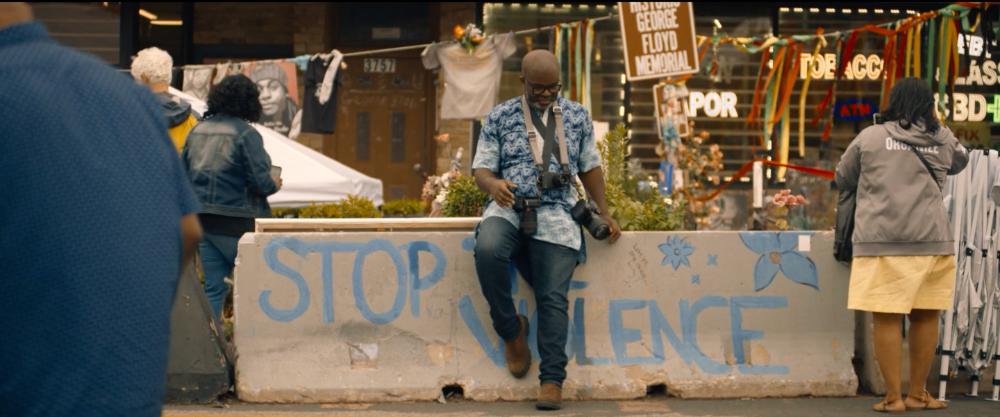
As mentioned I knew next to nothing about the man behind the pictures, and as the film progressed I grew to admire him all the more. A zen stillness amongst the chaos. Clearly there is talent, an eye, an ability to edit, but what the film beautifully shows is how he captures such moments, how he radiates pure humanity, empathy and sincerity in every gesture, regardless of who he meets.
These traits were not always a given, and the film shows the origin of these qualities, how they were born from reaction to situations, effectively survival techniques that have steered his journey through life, while he marches with millions around the world. Travelling back through his upbringing where he was deeply affected by people of other continents being brutalised, even murdered, individuals he didn’t know, yet they looked like him. Yet regardless of the apparent odds courage still emerged from the bleakest of situations, which showed him what could be collectively achieved, and meeting the people that found that belief in universal dignity.
There were so many questions I had going in, and they were all answered, while adding so much more. Seeing where his influences came from is profoundly moving, to the extent that it’s almost not about one person, but humanity as a collective, remembering to work together, as no one can do this on their own, despite media directing you to think and feel isolated as an individual.
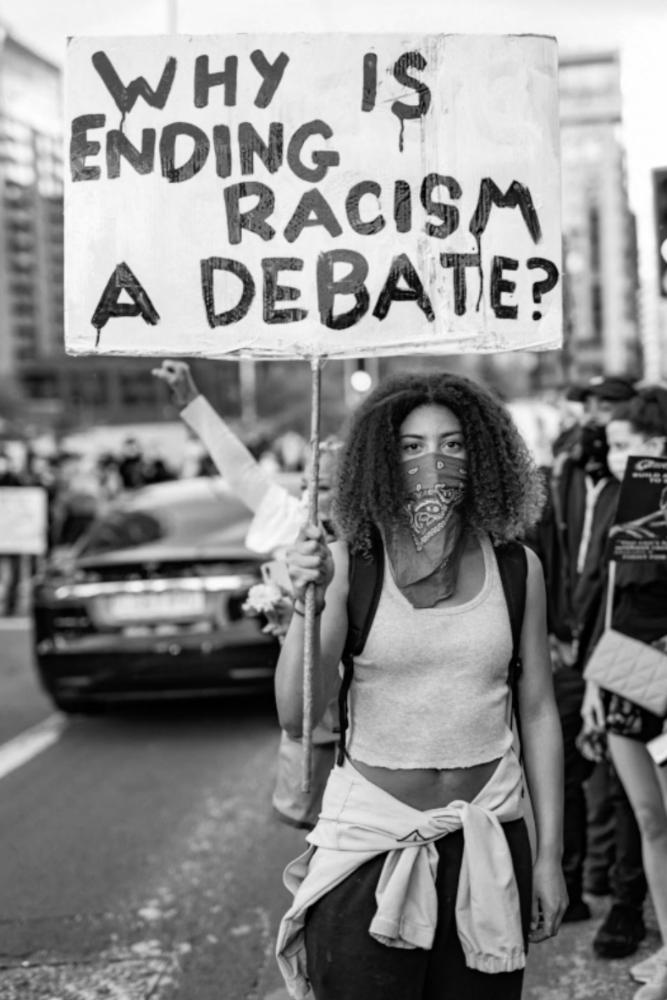
There is profound brutality and cruelty on show, but the overriding feeling is of kindness, hope, unity, resilience and the awareness that these negative things can only happen if we let them. It’s no longer a matter of these things only happening to others, it’s how soon they will be unleashed upon you and everyone you know.
Digressing slightly, it’s interesting that the core element of Stephen Spielberg’s latest film Disclosure Day is a fictional story ultimately promoting the necessity for empathy. While that is a fun and well made film (with a few issues), it’s a nice welcome gesture where it feels like they are indirectly, almost politely talking about something, when thankfully an ever-growing amount of individuals are actually actively addressing it head-on, and Misan is on the streets with them proving that empathy is infectious.
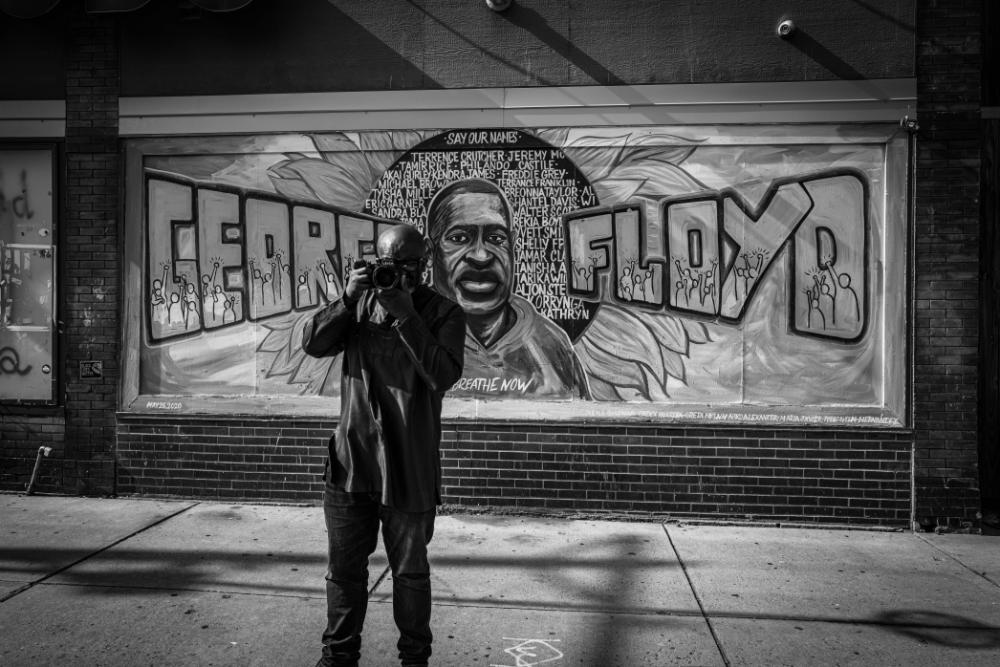
Addressing the title at the top of the review, it is a play on the lines attributed to Martin Niemöller, a German Lutheran pastor who initially supported some aspects of the Nazi movement, before becoming an outspoken critic and ultimately being put in a concentration camp. There are so many visually striking moments in this vital documentary, one such powerful and fantastic editing decision is splicing the Oscar red carpet walk with scenes elsewhere, the glitch and the carnage. Don’t look at the overall reality as Niemöller didn’t, look at the spectacle, as if dangling a Swarovski bejewelled carrot in front of you tempts you to believe that is your future, when in reality, you are much closer to, and are only a couple of pay cheques away from the ordinary people who are being obliterated for their land and resources, all perpetrated by indoctrinated hate.
The more the film progressed the more Misan reminded me of the war photojournalist Don McCullin, not just in the stunning quality of image, but in the compassion of embedding themselves in situations where humanity seems absent. Or at least that’s what various entities would like you to believe. The film does a wonderful job of following a man representing the finest qualities of what it is to be human, capturing individuals who reflect the very same characteristics back.
It may appear the film is about photography, but ultimately it’s about humanity, and it’s about you. If you can’t see yourself in these portraits, don’t be surprised when conflict comes knocking on your door, but know you won’t be left on your own when they do.
As the film shows, it wasn’t that long ago thousands of Ku Klux Klan members openly paraded on the streets of the US, how far are we actually away from seeing that again across the entire western world?
The way to stop that is to be informed, proactive, united and on the streets with millions of others that won’t tolerate hate, who are by far the vast majority of people. If you are not already involved, this film is a brilliant first step. It might not seem like the journey you want, but it’s the one you need. It might even end up having your picture taken by the great ambassador of humanity himself, and inspiring millions of others.
10/10
Misan Harriman: Shoot The People is UK and Irish cinemas from 6th July. Tickets available HERE.