
Three Cities, One Fast-Moving Journey
Japan’s main island offers an unusual combination of scale and convenience. Within a few days, travellers can move from Tokyo’s futuristic districts to Kyoto’s temple gardens and Osaka’s neon-lit streets, while the landscapes between them reveal another side of the country.
The route linking these cities is one of Japan’s most rewarding introductions to rail travel. Stations are deeply woven into urban life, services are remarkably efficient, and the journey itself becomes part of the experience. Rather than losing time between destinations, passengers can watch Japan change outside the window while travelling comfortably from one cultural centre to the next.
Tokyo Sets the Pace
Tokyo is a city that seems to operate at several speeds simultaneously. Shinjuku’s towers and crowded pedestrian crossings convey its relentless energy, while neighbourhoods such as Yanaka offer quieter streets lined with traditional houses, small temples and independent shops.
A visit to Asakusa brings another perspective. The Sensō-ji temple complex remains one of the capital’s most recognisable sights, with the Kaminarimon gate and Nakamise shopping street leading towards the temple itself. Early morning is particularly atmospheric, when the crowds are thinner and the surrounding streets have a calmer rhythm.
Elsewhere, Harajuku brings youth fashion and creative culture, while Ginza presents a more polished side of metropolitan Tokyo.
The Shinkansen Experience
The Tokyo to Kyoto train makes it remarkably easy to connect the capital with Japan’s former imperial centre. The journey is not simply about reaching the destination quickly. It offers a glimpse of the country’s infrastructure, precision and changing scenery.
Leaving Tokyo, dense development gradually gives way to suburbs and open countryside. On a clear day, Mount Fuji can appear dramatically beside the route, creating one of the most memorable views from the carriage window.
Arriving in Kyoto brings an immediate contrast. Instead of an endless skyline, visitors encounter lower buildings, traditional architecture and mountains surrounding the city. The transition is one of the defining pleasures of travelling through Japan by rail.
Kyoto’s World of Temples and Gardens
Kyoto carries the weight of centuries without feeling entirely frozen in the past. Wooden machiya houses sit beside contemporary cafés, while busy shopping streets can lead unexpectedly towards quiet temple grounds.
The Fushimi Inari shrine is among the city’s most recognisable sights, with thousands of vermilion torii gates following a wooded route up Mount Inari. Kiyomizu-dera offers expansive views across the city, while the Zen gardens of temples such as Ryōan-ji encourage a slower kind of sightseeing.
Arashiyama provides yet another setting, combining bamboo groves, mountain scenery and the Katsura River. Visiting early can make a significant difference, especially around the most popular paths.
Flavours of the Ancient Capital
Kyoto’s culinary traditions reflect the same attention to detail found in its gardens and crafts. Kaiseki cuisine presents seasonal ingredients through carefully arranged courses, while simpler dishes such as yudofu, soba and matcha-based sweets offer more accessible ways to explore local flavours.
Nishiki Market is an excellent place to observe the breadth of Kyoto’s food culture. Its narrow covered passage is lined with stalls selling pickles, seafood, spices, sweets and ingredients unfamiliar to many visitors.
Tea remains particularly important. Matcha is closely associated with Kyoto, and participating in a traditional tea experience offers an opportunity to appreciate the ritual surrounding preparation and presentation.
Southbound Towards Osaka
From Kyoto, the journey continues towards Osaka, where the atmosphere becomes more playful and extroverted. The bullet train Tokyo to Osaka is an obvious choice for travellers whose itinerary focuses on the two larger cities, while Kyoto provides an easy stop between them.
Osaka is often described through its food culture, and for good reason. Takoyaki, okonomiyaki and kushikatsu are among the city’s signature dishes, while neighbourhood eateries often have a lively, informal atmosphere.
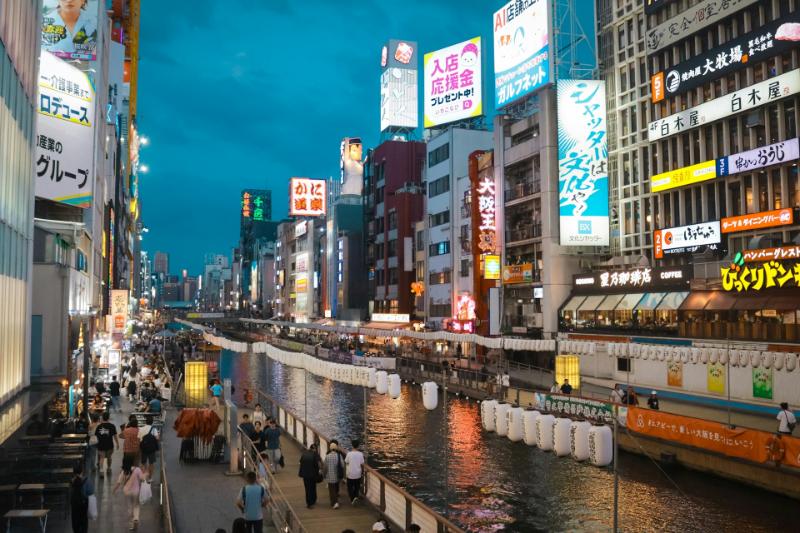
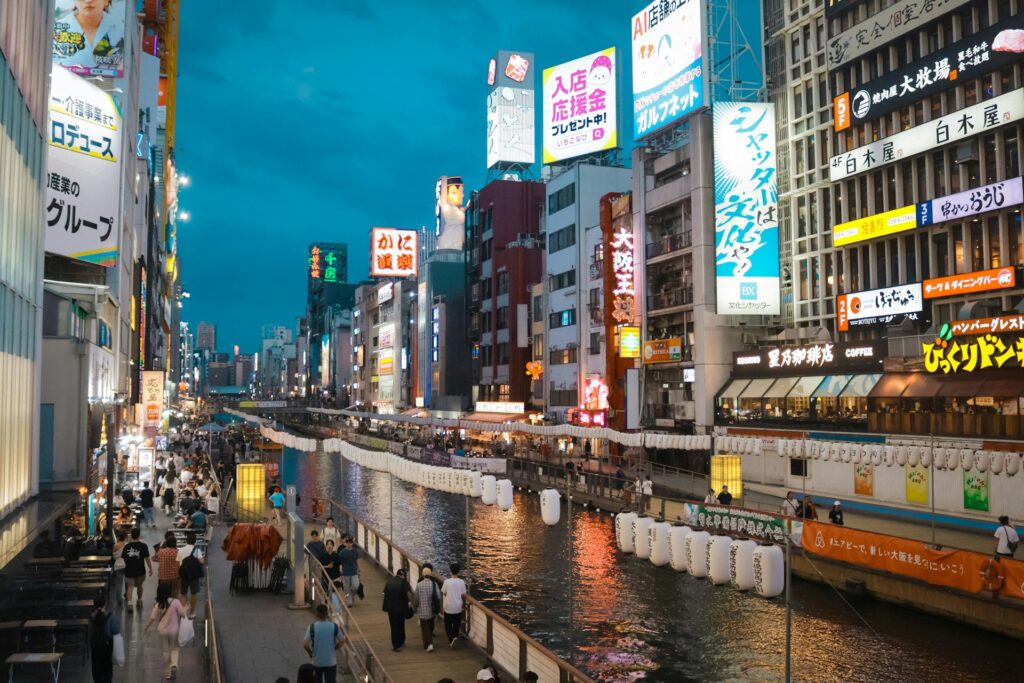
Dōtonbori provides the classic introduction, with illuminated signs, bridges and restaurants crowded along the canal. Yet Osaka’s personality extends well beyond its famous entertainment district.
Osaka’s Historic Side
The city has a rich history that can be easy to overlook amid its modern skyline. Osaka Castle stands within extensive grounds, recalling the political importance the city once held during Japan’s turbulent unification period.
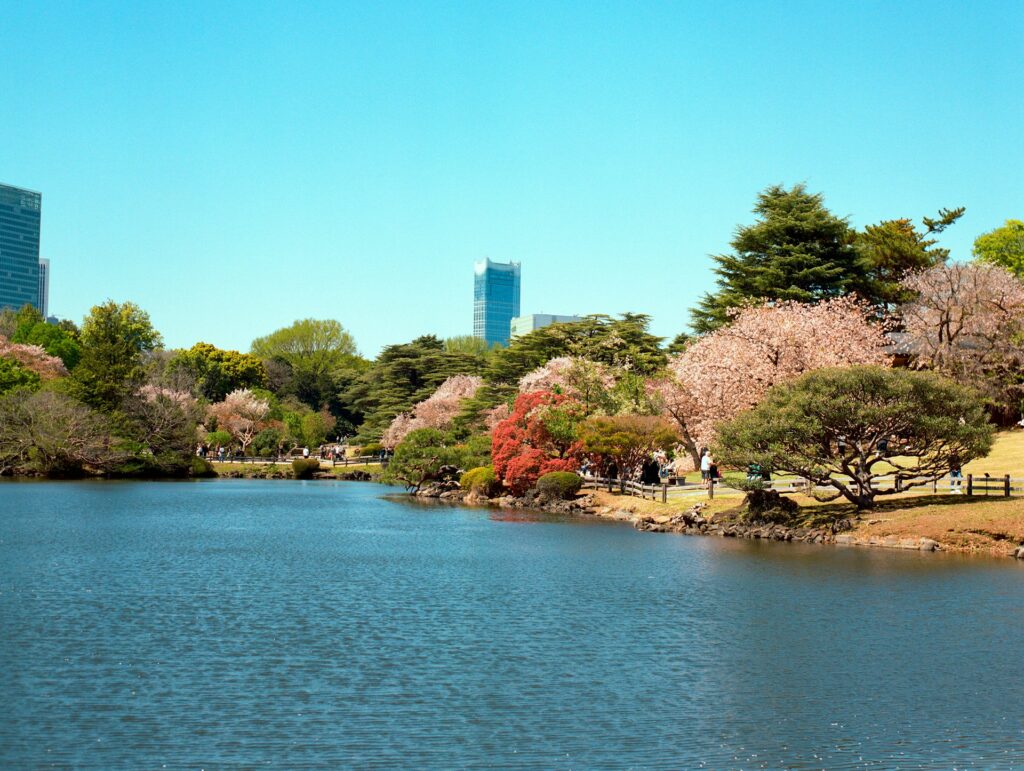
The surrounding park changes dramatically with the seasons. Cherry blossoms make spring particularly attractive, while autumn brings warmer colours to the trees surrounding the castle.
For another glimpse of Osaka’s past, the streets of Shinsekai offer an eccentric mixture of retro architecture, restaurants and local entertainment. The area feels very different from the polished commercial districts elsewhere in the city.
A Corridor of Contrasts
What makes the Tokyo, Kyoto and Osaka route so appealing is the difference between the three cities. Tokyo is expansive and relentlessly contemporary, Kyoto places greater emphasis on historical continuity, and Osaka has an energetic character shaped by commerce, food and entertainment.
The landscapes between them add another dimension. Urban development gradually changes into fields, distant mountains appear on the horizon and smaller communities offer glimpses of everyday Japanese life beyond the major tourist centres.
The railway makes these contrasts easy to experience within one itinerary, without requiring complicated transfers or long stretches of travel.
Beyond the Main Stations
Major railway stations are destinations in their own right. Tokyo Station combines historic architecture with vast underground shopping areas and an extraordinary range of restaurants. Kyoto Station presents a strikingly modern architectural counterpoint to the traditional city outside, while Osaka Station forms part of a huge commercial district filled with shops, hotels and dining venues.
Exploring these spaces can reveal how important railways are to everyday Japanese life. Commuters, shoppers, office workers and travellers move through the same buildings, creating an atmosphere that feels distinctly different from a conventional transport hub.
Seasons Along the Route
The corridor changes character throughout the year. Spring brings cherry blossoms to parks and temple grounds, while summer creates lush green landscapes and long evenings suited to exploring Osaka’s streets.
Autumn is particularly beautiful around Kyoto, where maple trees turn brilliant shades of red and gold. Winter offers clearer views, quieter temples and the possibility of seeing snow-covered mountains beyond the cities.
Choosing a season therefore changes more than the weather. It alters the atmosphere of the entire journey.
The Journey Beyond Tokyo, Kyoto and Osaka
The high-speed corridor offers a compact introduction to several defining aspects of Japan. Tokyo demonstrates the scale and energy of modern urban life, Kyoto preserves extraordinary artistic and spiritual traditions, and Osaka adds a distinctly local enthusiasm for food, entertainment and social life.
Travelling between them by rail keeps the journey fluid while leaving plenty of time for exploration at each stop. The real appeal lies in the transitions, from skyscrapers to temple roofs, from quiet gardens to illuminated canals, and from the precision of the railway network to the countless details of everyday life beyond the stations.