
Where Harleys diverge from all bikes is the infinite levels of customisation. Hog owners can change any stock options that don’t meet personal tastes or performance and comfort expectations. These, after all, are bikes meant for the long haul, with most riders upgrading and personalising bikes straight from dealership floors.
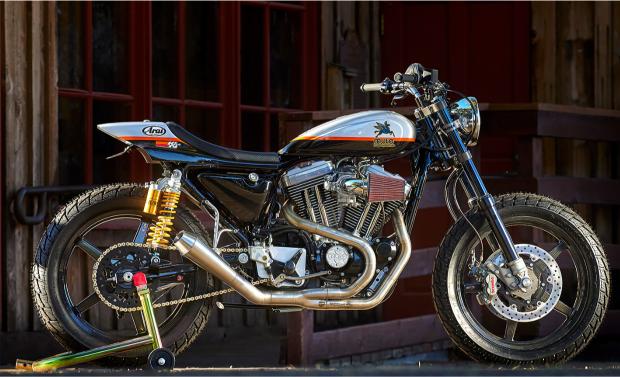
Stock suspension setups, consisting of front telescopic forks and single monoshocks or rear dual-shock setups on heavier tourers, balance weight, comfort and riding dynamics, with preload adjustments providing versatility for riding solo, or two-up with a full set of luggage. For riders needing more, aftermarket options, ranging from complete Harley lowering kits and aftermarket rear shocks to revised front forks and air suspension, bring dependable changes to overall comfort, control and safety.
Why Upgrade Your Harley’s Stock Suspension
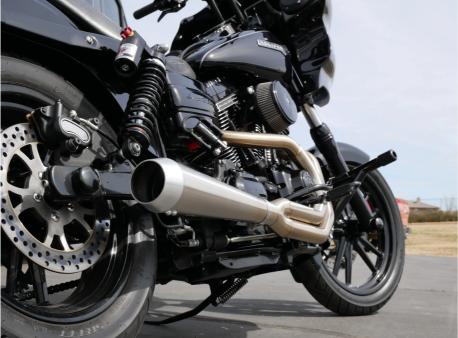
- Rider and passenger comfort: Aftermarket setups based around shocks with improved damping smooth out potholes and road imperfections, and reduce muscle and joint pain on longer rides. They also eliminate bottoming out, and when paired with aftermarket springs with progressive spring rates, support the added weight of passengers and luggage without sacrificing ride quality.
- Improved handling, safety and stability: The infamous Harley wobble when cornering at higher speeds, paired with rear-end squat on hard acceleration, isn’t exactly confidence-inspiring. Aftermarket shock and spring setups address both issues, increase traction in the tyres, and provide better braking performance, with fewer instances of pronounced front-end dive.
- Personalisation and adjustability: High-end kits provide more settings to fine-tune the suspension to personal tastes. Riders can change compression and rebound rates, slam the bike lower to the ground for a lowrider look, and adjust ride and seat height for varied riding settings.
The Basics of Harley Lowering Kits
Lowering kits are usually aftermarket suspension modifications to the factory geometry designed to reduce ride and seat height. They reduce overall seat height between 1 and 3 inches with a range of parts, from simple rear lowering blocks, replacing the stock shocks or replacing the front fork springs. For shorter riders, this vastly improves several factory design and ergonomic issues:
- High seat heights: If you can’t get both feet flat on the ground at the lights or at stop signs, then opt for a Harley-Davidson lowering kit. This helps riders manage the weight of the bike and improves stability without the risk of drops.
- Top-heavy balance: Higher-sprung touring bikes can be very unstable in slow-speed maneuvers. By lowering the bike’s centre of gravity and overall seat height, riders get vastly improved control.
- Generic ergonomics: Harleys are all about customisation, and there’s no bike for all riders. Stock ergonomics are set up for riders of “average” height and weight, leaving many riders with an off fit.
Lowering Kit Types
Riders can modify the front forks, the rear shocks, or both. Common changes over the factory suspension include:
Rear Lowering Blocks
These are metal brackets that change the lower mounting point of the rear shocks. Made of billet aluminium or machined steel, they bolt onto the swingarms or shock mounts, adjusting the angle of shock eyelets and providing a slammed look. As the most affordable way to lower the stock seat height, lowering blocks improve slow-speed stability and maneuvering.
Shorter Aftermarket Shocks
Replacing the stock shocks with shorter aftermarket variants retains factory adjustability and frame integrity, with more predictable steering control. Shocks are designed with stiffer spring rates and damping tuned specifically for the shorter travel distance. Unlike lowering blocks, they eliminate the risk of fendering rubbing and related tyre damage. A slight trade-off is the stiffer ride quality.
Fork Lowering Springs
These consist of internal springs that replace the factory springs in front forks. They drop the front by up to 2 inches, while improving reach for shorter riders, limiting front-end brake dive and preserving the factory geometry during changes to the rear. Riders can easily navigate slow-speed turns and tight spots, while retaining factory comfort (with progressive rate springs) and getting a slammed look. Kits often require no fork disassembly or specialised tools, meaning shorter and simpler installation.
To maintain safety and factory geometries, both the rear and front are lowered. Dropping the front only alters fork angles, which actually increases steering instability. Also consider other trade-offs – such as foot controls closer to the ground with the lower clearance and the slightly reduced suspension travel to absorb potholes and road imperfections.
Comparison with Air Suspension
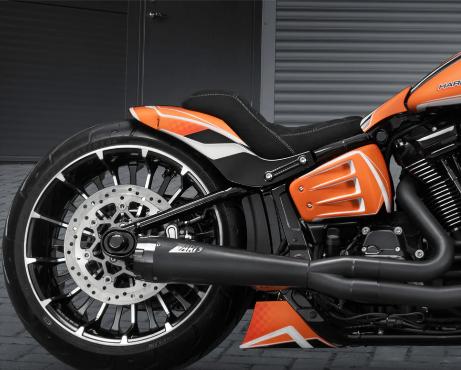
Lowering kits are the low-cost, effective and simple option for a reduced ride height and getting that slammed bike aesthetic. Are there better options? Definitely, albeit at a much steeper price. Air suspension, with automated ride height and spring stiffness adjustment, largely takes the guesswork out of preload adjustments, instead relying on a series of height and pressure sensors and valved hydraulic air shocks to provide more riding comfort, stability and a bike suited to any riding condition.
It works by inflating air shocks to a defined pressure, while allowing the bike to be lifted or lowered as needed. This ensures higher flexibility for a variety of road conditions, such as riding two-up on B-roads or with a full set of luggage. And improved comfort and reduces fatigue with springs that self-adjust to soak up bumps and road imperfections, or soften or stiffen up for improved steering response and safer braking performance. The aim is to keep both the front and rear level, maximise traction through both tyres, and let riders focus on the journey with selectable preset riding modes.
Somewhat simpler manual air suspension systems include handlebar-mounted switches to change ride height and air shock pressures. These allow for more rider input and personalising settings to suit needs. With fewer components, they are also more reliable than automated air suspension setups, and cheaper and easier to repair in the event of component failures.
Both types, however, solve common issues with cheaper Harley-Davidson lowering kits – mainly the increased risk of bottoming out and losing steering control, and the firmer ride. Choose lowering kits if you usually ride solo on smoother roads and want a slammed bike look on a tighter budget. Or air suspension if you often ride with a passenger, want maximum comfort on all road surfaces and aren’t worried about the cost.