
Banjo bolts are critical, low-profile fasteners in modern automotive plumbing that ensure reliable fluid flow under high pressure within confined spaces. Commonly used in brake callipers, turbocharger oil feeds, and fuel lines, these hollow bolts feature cross-drilled holes and pair with dual washers to create a dependable, leak-proof seal. Unlike comparable AN fittings, their unique design allows fluid to exit at any angle without twisting the hoses or requiring specialised installation tools.
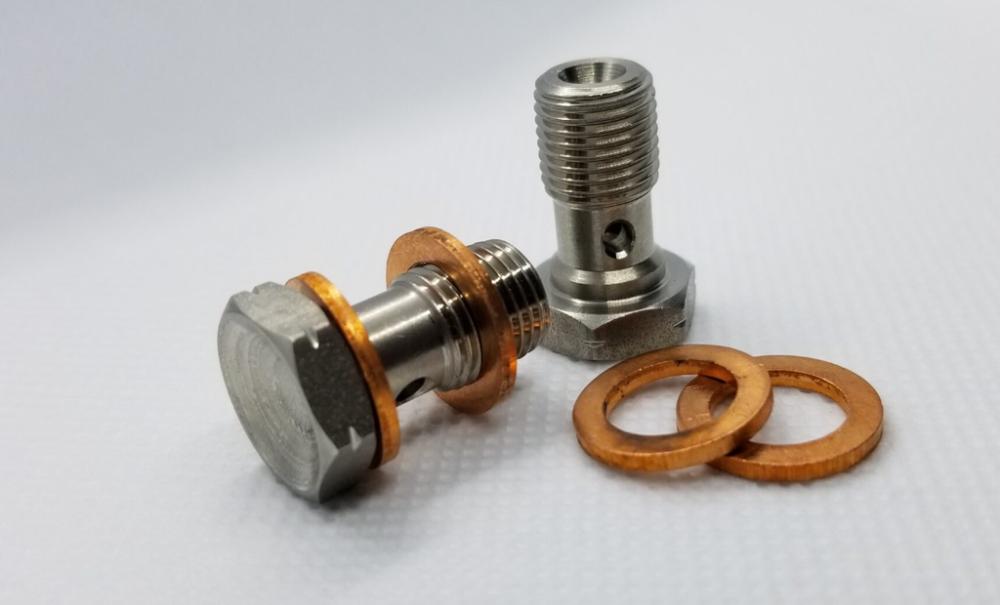
Banjo Bolt Basics
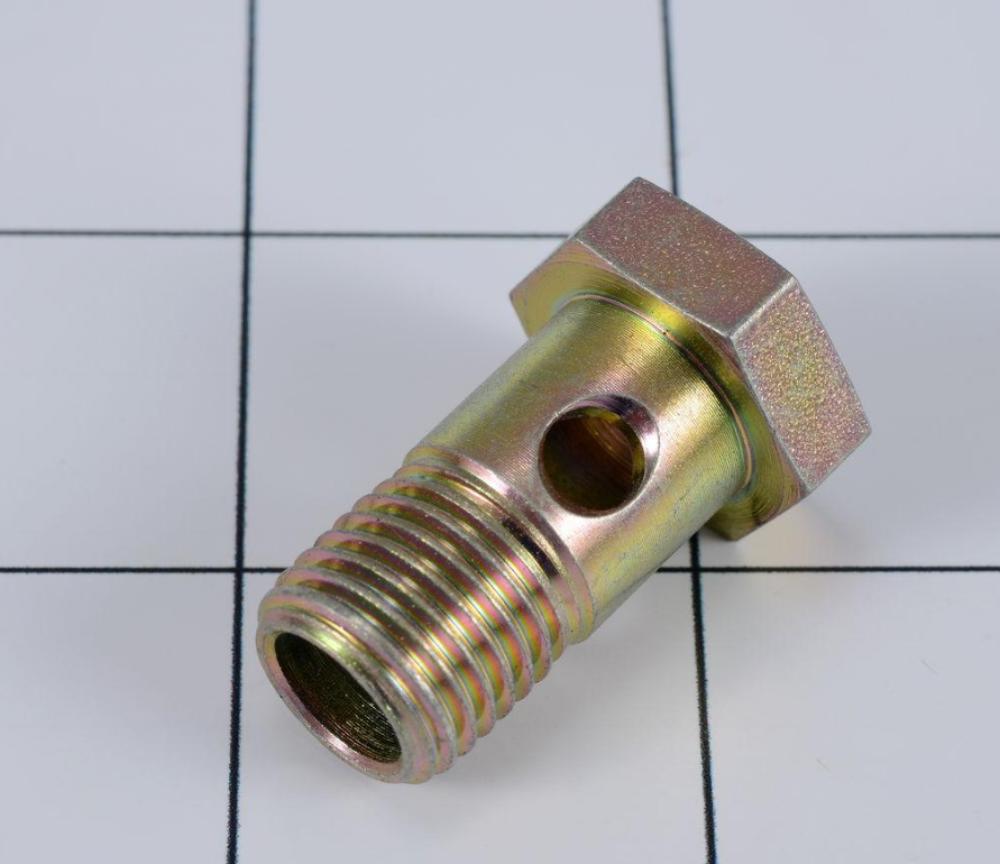
A banjo bolt (and its matching banjo fitting) is a specialised two-piece connector consisting of a hollow, perforated bolt and a cylindrical, ring-shaped pipe coupling. The bolts consist of three main parts:
- The bolt: The threaded section of the fastener that screws into the receiving port or fitting.
- The “banjo”: The circular, perforated part that surrounds the bolt and allows fluid to pass through.
- Washers: Usually made of copper or aluminium, these are placed on either side of the banjo to create a tight seal and prevent leaks once the bolt is tightened.
A complete assembly also includes a banjo fitting or union with a ring-shaped end of the hose fitting that encircles the banjo bolt shaft. Fluid enters or exits freely through the holes in the bolt shaft and continues in the annular cavity in the union. The fluid then passes through the perforated banjo and central hollow bore, and flows directly into the female port of the receiving component. Because the union can rotate 360 degrees around the bolt before tightening, installers can route lines at any angle. This provides a secure and leak-free connection without the need to twist attached hoses, particularly in applications where space is limited.
Primary Motorsport Applications
- High-performance brake systems: Durable and well-designed banjo bolts connect flexible brake lines to master cylinders, ABS assemblies and setups with multi-piston callipers. The unique design ensures brake lines can be routed around complex suspension setups.
- Turbocharger oil and coolant feeds: Engineers use banjo bolts to deliver pressurised oil and coolant to turbo housings, especially in confined engine bays where AN or straight fittings struggle to clear manifolds or the engine block.
- Fuel rails and regulators: The fasteners supply fuel in tight transverse or longitudinal engines, where 90-degree or multi-directional routing is required.
- Hydraulic clutches: Banjo bolts pair seamlessly with hydraulic clutch components (master cylinders, slave cylinders, pedal boxes), providing a compact and leak-free swivelling fluid connection.
- Power steering and Variable Valve Timing (VVT): The bolts can work under immense pressures (up to 2000 PSI), making them the preferred choice for fluid routing in heavy-duty steering linkages and VVT oil supply actuators.
Why Engineers Choose Banjo Bolts
Compared to straight and standard AN fittings, banjo bolts provide multiple benefits for high-performance, motorsport applications:
- Ultra-low profile packaging: Banjo fittings require significantly less clearance around the port. They sit flat and low, making them ideal in cramped engine bays, compact brake calliper pockets and confined turbocharger oil feeds, or areas where AN alternatives simply won’t fit.
- 360-degree infinite rotation: The circular eye of the banjo fitting allows motorsport engineers to orient attached hoses and lines in any direction. Bolts can be threaded loosely before or after final torqueing, with hoses easily adjusted to correct routing angles.
- High-pressure reliability: When sealed with high-grade aluminium or copper washers, banjo assemblies maintain a high clamping force, and withstand extreme vibrations typical in motorsports., provided they’re torque to require specifications.
Selecting Bolts in the Right Materials
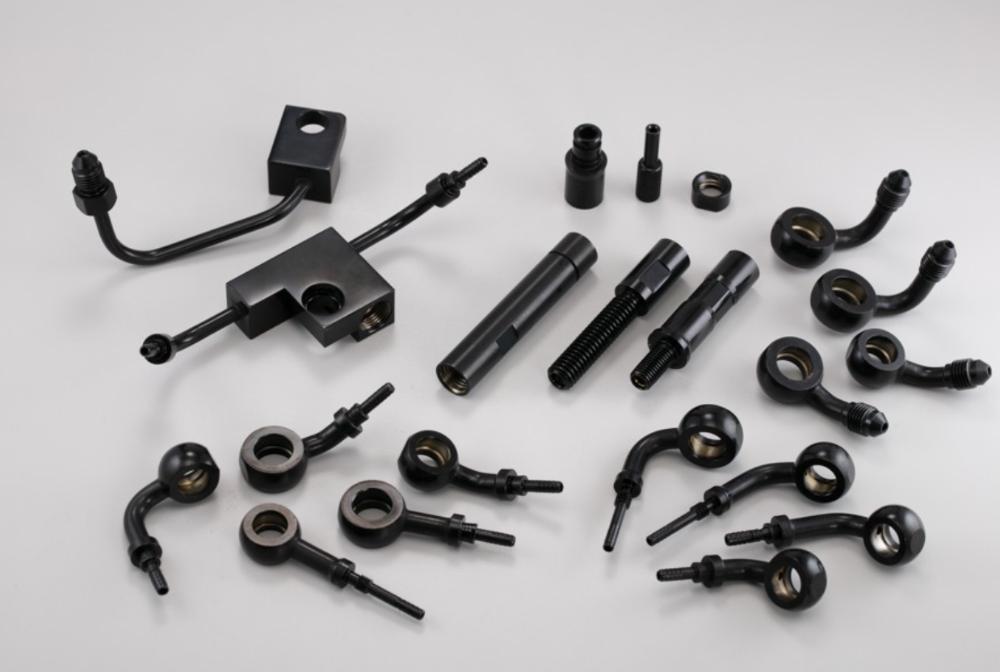
The materials banjo bolts are machined from determine their strength, pressure ratings, corrosion resistance and tolerance to high temperatures. Consider the following options:
6061-T6 or 7075-T6 Alumnium
Both aluminium alloys are lightweight and preferred for reduced weight loads, particularly in fuel, oil and coolant lines when optioned with anodised coatings. However, the alloys’ lower tensile and shear strength makes them incompatible with high-pressure hydraulic brake or clutch lines. Here, the bolts can stretch, deform, or shear under extreme pressures or high tightening torque required to keep lines sealed.
Stainless Steel
Bolts in stainless steel are preferred for their superior corrosion resistance, high tensile and shear strength, and durability against harsh chemicals. They resist the extreme temperatures and pressures generated during hard braking, withstand abrasive and corrosive racing fuels and retain structural integrity under high vibrations.
Titanium Alloys (Grade 5 Titanium)
Aerospace-grade titanium alloys provide ultimate corrosion resistance, meaning they won’t degrade from exposure to debris, salt or moisture. The material additionally exhibits exceptional strength-to-weight ratios (double that of steel) and the tensile and shear strength to handle pressures seen in competition racing. Motorsport teams widely use these benefits in custom brake assemblies.
Installation and Sealing Considerations
Unlike standard AN fittings where secure mechanical seals are achieved using 37-degree flares, banjo bolts rely on two crush washers – one between the bolt head and the banjo eye, and one between the banjo eye and the component surface to ensure pressurised fluids reach their intended destination. As such, they require more consideration when torquing correctly. Overtightening can snap the bolt, and under-tightening results in leaks.
Also, consider that washers must be replaced every time the connection is opened and inspected. Copper washers are often paired with stainless steel or titanium banjo bolts, particularly in brake assemblies, as the material is malleable and easily conforms when torqued to create a tight seal. This is the preferred choice in demanding street and motorsport uses. Alternatively, use aluminium washers with anodised aluminium bolts. Or bonded rubber washers or dowty seals in low-torque applications, such as fuel lines and oil systems.
Lastly, correct sizing and alignment can be complicated, especially compared to standardised AN fittings where sizes are denoted in dash systems as fractions of overall hose diameters. Bolts, banjo fittings and assemblies require matching precise thread diameters, pitch, bolt lengths and banjo dimensions. To ensure connections are leak-proof, all parts, including bolts, washers, unions and port faces, must be perfectly aligned, free of debris and in perfect condition.