
History can feel remote when it arrives as a sequence of dates, names, and completed events. A child may remember that a battle happened or a law was signed, yet struggle to picture people who crossed difficult terrain, cooked over open fires, carried news by hand, or made decisions without knowing how events would end.
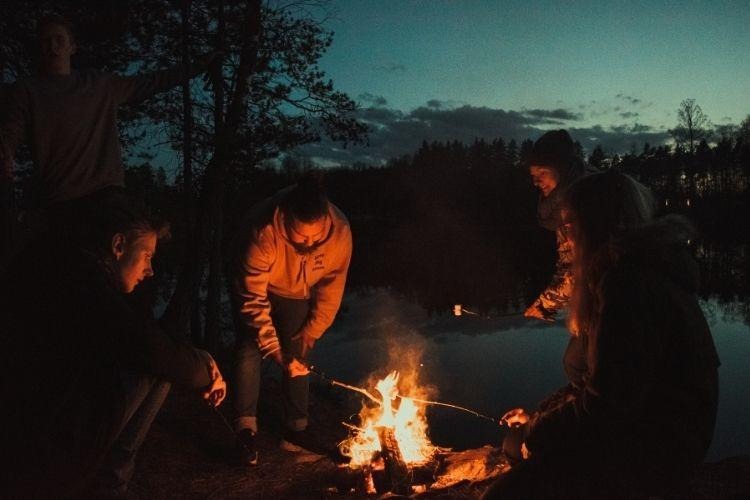
A family walk, campsite, road trip, or visit to a historic neighborhood can change that. Outdoors, children can feel the slope of a trail, judge the distance between a river and a settlement, and ask practical questions that rarely appear on a worksheet. Add a strong story and reliable sources, and an ordinary outing becomes a form of time travel.
Why Stories and Places Work Together
The National Park Service describes place-based learning as putting a historic structure, archaeological site, cultural landscape, or park at the center of a story. The aim is to use the setting as evidence and ask how geography shaped real lives.
Stories provide the human thread. The Historical Association notes that historical fiction can introduce young readers to a real past in ways a straightforward history book may not. Characters guide children through unfamiliar customs, conflicts, and choices.
Before an outing, choose one of the best historical fiction books suited to your child’s age and the period you plan to encounter. Read enough to establish the setting and central problem, but don’t turn the trip into a test.
Ask: “What would this character notice first?” On a canal path, that might be the water level, towpath, locks, and distance between towns. At a frontier site, it might be shelter, food storage, or fresh water. The story gives the landscape a point of view.
Read the Landscape Like Evidence
Children often assume history lives inside museums. Help them see that roads, fields, shorelines, bridges, walls, and place names also carry information.
Ask your child to find three details that seem old, unusual, or deliberately placed. Then move from seeing to reasoning:
- Why might the path follow this route?
- What could people see from this hill?
- Which materials came from nearby?
- How would weather or darkness change the journey?
- Who used this place, and who may have been excluded?
There may not be an immediate answer. That is a strength. Good history begins when a detail creates a question.
Give children time to sketch, measure, or form a theory. A low stone wall may prompt a conversation about property, labor, or local materials. A faded railway platform can lead to questions about migration, trade, or a town’s growth.
Bring One Primary Source
A map, photograph, diary excerpt, poster, or letter can deepen an outing without making it feel like school. The Library of Congress calls primary sources the “raw materials of history”: original documents and objects made during the period being studied. It says that analyzing them can prompt curiosity and strengthen critical thinking.
Choose one source closely connected to the place. An old map works well on a trail. A historic photograph lets children compare buildings, traffic, clothing, and public space. A short letter can introduce a voice that a monument doesn’t include.
Use three prompts:
- What do you notice?
- What do you think it means?
- What would you need to check?
That final question matters. Primary sources are partial, and their creators had viewpoints and purposes. The National Archives recommends using documents to build contextual understanding and informed judgments, rather than treating every old item as automatically complete or neutral.
Let the Campfire Do Some Work
A campfire slows the pace and creates room for retelling without the pressure of a formal lesson.
Invite each person to choose one moment from the day and describe it as a scene. What could be heard? Which task would take longest without modern tools? What might a traveler carry, repair, trade, or leave behind?
Then change perspective. Retell the scene from the viewpoint of a child, shopkeeper, laborer, newcomer, guide, protester, or resident whose home became someone else’s “historic site.” This isn’t about inventing feelings and presenting them as fact. It’s about noticing that the same event could look different depending on a person’s information, power, duties, and risks.
Write down the questions that surface. A child may wonder where people got medicine, how they found their way, who made the rules, or what happened to displaced communities. Those questions lead to deeper learning.
Keep Fiction and Fact in Conversation
Historical fiction is a doorway, not a documentary. Its dialogue, private thoughts, and some characters may be invented even when the setting and major events are carefully researched.
Teach children to sort details into three groups: documented, plausible, and invented. Documented details can be checked. Plausible details fit the period but may not be recorded. Invented details serve the story.
This habit protects the pleasure of reading while building media literacy. It also prevents a vivid scene from becoming a mistaken “fact” simply because it was memorable.
Accuracy matters most when a story addresses war, enslavement, persecution, displacement, or other traumatic histories. Look for books with historical notes that distinguish invention from evidence. Pair the story with material from museums, archives, historic sites, or relevant scholars.
Give Kids a Real Job
Participation works better than passive listening. One child can map the route; another can sketch objects, keep questions, or record a short audio diary. A fact-checker can compare the story with signs, exhibits, and primary sources.
The National Park Service’s Junior Ranger model uses the phrase “Explore, Learn, and Protect.” Its activities connect observation with stewardship and encourage children to share why a place matters.
You don’t need an official badge to borrow the principle. Ask children to leave with one new fact, one unresolved question, and one action that shows respect for the site.
Follow the Question Home
At home, compare the fictional account with a museum collection, archive, historical map, oral history, or reputable reference book. The National Archives’ DocsTeach collection includes thousands of digitized letters, photographs, speeches, posters, maps, and videos spanning American history.
Let the child choose the output. They might record a two-minute podcast, design a museum label, redraw a map, build a timeline, or create a “fact versus fiction” page.
Keep the project small enough to finish. The purpose isn’t to recreate school at the kitchen table. It is to show that questions can be pursued and that history is assembled from evidence, interpretation, and many perspectives.
Conclusion
Helping children connect with the past doesn’t require an elaborate vacation or a perfect lesson plan. A local trail, old street, campsite, family story, or weathered building can provide the setting. A well-chosen novel supplies characters and stakes. One primary source adds evidence. A few open questions turn the child from a spectator into an investigator.
The most meaningful time travel happens when children realize that people in history lived in physical places, faced limited choices, and couldn’t see the ending. Once the past feels inhabited rather than finished, curiosity has somewhere to go.
References
- Historical Association, Paula Kitching, “Does historical fiction matter for children?” The Historian 143 (2020).
- Library of Congress, “Getting Started with Primary Sources.”
- National Archives, “Teaching With Documents” (DocsTeach).
- National Park Service, “Place-based Learning,” Teaching with Historic Places.
- National Park Service, “National Junior Ranger Booklets,” NPS Kids.