
Many people tend to prepare for a vacation the wrong way around: they first book the flights, then the hotel, and three days before leaving, they rush to buy swimwear from the closest store to the airport. This explains why so many vacation pictures remain hidden in a drawer rather than being displayed. The problem is the sequence of preparation. Swimwear is the foundation of the clothes you will wear on your trip, and if you choose it before anything else, everything else will be easier: the outfits you will pack, the way you will look at the beach, and even your choice of restaurants.
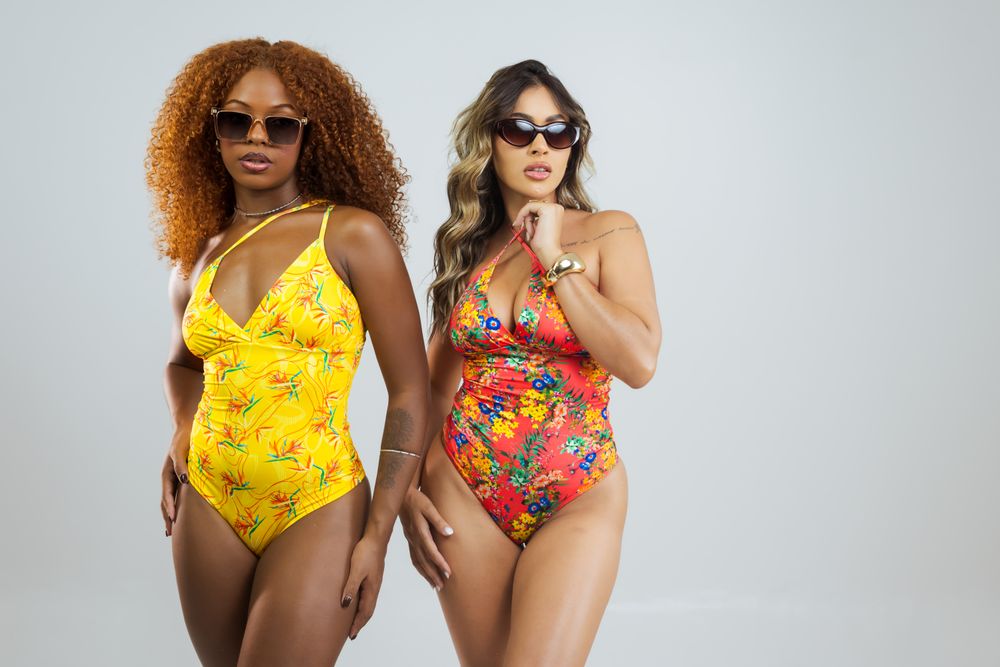
Why Swimwear Belongs At The Start Of Vacation Planning, Not The End
Planning a vacation typically involves organizing spreadsheets with flight schedules and hotel bookings. Figuring out what to pack comes almost as an afterthought and often left for last. This is not the right approach. In fact, what you pack is equally important and deciding it in a hurry can lead to making unsuitable choices for some of your garments. Swimwear, for example, is likely the only clothing item you’ll have to wear for long hours, mostly in broad daylight, surrounded by strangers. Also, there’s nowhere to hide if it doesn’t fit you perfectly. Deciding on the right swimwear in advance isn’t just about photos – it affects how you move, sit, and enjoy your vacation.
According to a study conducted by Mintel, over 70% of women experience anxiety when shopping for swimwear. If you look at how different a swimsuit behaves compared to other types of clothing, the number starts making sense. A shirt drapes but a swim top needs to support your bust, lift it slightly, and protect it from slipping while you are swimming, walking, and having dinner anywhere you might be. Try to find the right one weeks in advance, when you should not be in a hurry and can take all the time you need to try it on properly. It’s way easier to experience a mini-crisis in the store instead of real tears next to the pool.
The Architecture Of Visual Balance
Disregard body shapes. Pear, apple, hourglass – these categories reduce actual bodies to forms that don’t truly determine what will look good on you. What really matters is proportion: the relationship between your shoulders and hips, the size of your torso compared to your legs, and how your decolletage is positioned in relation to your waist. Swimwear is, essentially, a series of lines on the body, and lines alter the way proportion is perceived.
Horizontal lines add width. A straight-across neckline or a band beneath the bust widens the image, which can help bring your narrower shoulders into balance if they are narrower than your hips. Vertical lines elongate. A plunge neckline or the center seam in a one-piece suit pulls the eye up and down instead of side to side, creating a lengthier-looking torso. Diagonal lines – like an asymmetric one-shoulder style – alter proportions yet again: they shift the focal point across the body, which is generally the best strategy for broader shoulders that do not require additional horizontal emphasis.
None of this is left to chance if you already know your proportions. Stand in front of a mirror, note whether your shoulders are wider than your hips, and take a tape to your torso length from the base of your neck (not your shoulders) to your natural waist. Bingo! You now have far more clues to what will flatter you than all the body-shape measurements in the world.
Necklines and Bust Support: What’s Actually Happening Structurally
The neckline of a swimwear top is doing more work than people give it credit for. A high-neck halter, for instance, has a minimizing effect – it covers more of the upper chest and creates a vertical line straight up the sternum, which narrows the visual footprint of the bust. That’s great for someone who wants coverage and a streamlined look, but it can also flatten the chest and, on a fuller bust, cause strain on the neck from all the weight pulling on a single strap.
A sweetheart neckline works differently. The heart-shaped dip follows the natural curve of the bust and exposes more cleavage, but the wide base points wide too. If your bust is already wide-set or low, this can make it look even wider and lower. A square neckline is similar to a sweetheart, minus the curve – it creates a visual horizontal line.
For better support, look for underwired or soft-cupped tops in which the cup size corresponds to your bra size. Steer clear of tiny triangle tops if you are bigger than a B-cup; otherwise the weight of your bust will cause the top to tilt forward. Fully lined cups can also help support larger busts, as they provide more scooping action.
The Geometry Behind Flattering Swimwear
Forget about the old-fashioned way of dividing people into those with pear or apple silhouette. It’s too simplified and doesn’t help you choose the right item. The most essential is the type of line, fabric, and piece – based on the relationship between your shoulder width, your torso, and leg length.
Horizontal lines – add width. Vertical lines – add length. This rule is a backbone for creating a visually balanced swimsuit. If you have small, narrow shoulders, you need horizontal accents up top – they will make you look more even and give the illusion of an hourglass figure. And vice versa, you need to elevate the shorter parts of your body with vertical lines.
Your measurements are the key – once you master them, you’ll understand that you should follow the design, not the trend. Take a look at a swimsuit you like, not sure if it’s the right fit for you? Look at the fabric, neckline, and piece – what do they do to your body?
How To Do It
Measure the length of your shoulders relative to your hips. The length of your torso relative to your legs will help you make the right choice. When done, simply determine which of the measurements is smaller for you: the torso or the shoulder-to-hip length. This will be a starting point for finding the best swimsuit for you.
Necklines and The Upper Body
Balconette tops use an underwire – often paired with lightly padded, structured cups – to prop up the chest. This wire isn’t universally popular; for some people, it’s a reason to avoid the style entirely. Certainly, it’s more likely to cause bulging or spillage when it doesn’t lay flat or runs into a section of your chest where it doesn’t anatomically fit. That said, when applied correctly, the underwire keeps the chest up and perky without over-squishing it. It also plays a role in distributing your chest’s weight across the band of the top (assuming the band fits properly and isn’t pulling up).
This is how the balconette cut got its coveted status as the do-it-all silhouette in swimwear. It’s constructed with wide-set straps, a straight-across bust line, and demi-cups that rest right below the fullest part of your chest. That lifts and frames, all with the smallest amount of fabric possible. Smaller busts rejoice – this kind of top gives you that definition and shape you simply wouldn’t get from a squishy triangle style. Larger busts aren’t left hanging, but they also don’t become buried beneath a field of coverage that inches up toward the collarbone.
A well-engineered balconette bikini top requires the underwire and structured cups to give you that lift while maintaining a low, open neckline that frames those collarbones rather than hiding them. That combo of nostalgic shaping and modern support is something you just can’t replace with a soft-cup or halter style. It’s also one of the few cuts you’re not going to hate yourself in from the side view. It matters more than people give credit for when you already know that at least half of this upcoming vacation is going to exist solely in photo evidence.
Halters, Triangles, and The Weight Distribution Problem
Classical neck-tie designs of halters and triangles provide a flexible fit that customers love. By your neck strap, you can make it looser or tighter, for more coverage and lift. But all that flexibility loses out on something else: weight distribution. If that single strap around the neck is your main source of support, rather than wider straps across your shoulders, well, then halters really start to dig in after a full day in the sun. Especially for bigger busts, those red lines and indents are a common sight.
Parallel-strap designs such as balconettes or bandeaus-with-straps spread the weight of your swimsuit more evenly shoulder to shoulder. Wear this more supportive design to the beach for ten days straight, and you’ll realize that this slight difference in weight tension is made abundantly clear by day three.
Leg Lines and Hip Proportion
The bottom half of a swimsuit does an equal amount of visual heavy lifting but gets less attention in most buying guides. High-cut leg openings are appearing in a lot of swimsuit lines. Reason being, when the openings sit up higher on the hip the visual start point of the leg is pushed up, and the leg’s entire length is put on display, thus creating the illusion of longer legs. Trust us, it really works. We particularly recommend this style if you want to narrow the hip line visually or if you have shorter legs that you’d like to elongate.
Low-slung, hipster-style bottoms are also popping up on our favorite e-commerce sites with increasing regularity. These sit lower on the hip and add an often welcome dose of horizontal volume straight across that region. If you’ve got broad shoulders happening up top that you’d like to balance with a fuller-figured hip, well, then, these are the treasures for you.
Side note: one is not ‘better’ than the other. It really depends on what you’re trying to balance against the top half you’ve gone for. It’s all about knowing what you’ve got to work with and deploying it wisely. This is also where asymmetric cuts actually get a nod: if you want to go dramatic, diagonal-strap bottoms work to whisk the eye across the body rather than straight down or straight across, therefore softening a shoulder-to-hip tough contrast. It’s not for everyone but, you know, it’s in the box.
Building A Capsule Around Your Swimwear
If you opt for well-structured swim pieces, packing becomes simpler. Imagine the capsule wardrobe concept, but for swimwear instead: Instead of packing five different suits for a five-day vacation, you can pack two to three pieces that can be paired well, layered, and can go from the beach to a nice dinner without requiring a full-on outfit change.
For instance, a structured swim top with a lot of support – a balconette, an underwire bandeau – can get you out of the pool. A sheer linen shirt or a light kimono can be worn on top of it and double as a top. Wear it with high-waisted slacks and it becomes the top of a resort outfit. You get the idea, without said resort outfit needing a separate bralette. This is where resort wear and swim planning meet: sarongs, linen shirts, palazzo pants, all of them require something under them and a well-made swim top can double as that base layer.
It’s this kind of double purpose that makes your luggage lighter without you having to compromise on aesthetics. A few well-chosen pieces that are structured and double up beat a lot of options that just don’t manage to work together most of the time.
The Takeaway For Your Next Trip
Selecting swimwear based on structure rather than trend requires a bit more effort beforehand, but it’s so rewarding in each photo, on every pool occasion, and at every dinner you can step into from the shore without changing. Understand your shoulder-to-hip ratio. Understand your torso length. Source necklines and cuts that fix or flatter what you’ve got, not what suited someone else. Do this once, long before you travel, and the rest of holiday preparation becomes a breeze.