
There’s a particular kind of design object that blurs the line between furniture and art, and Alessandro Mendini’s Proust Armchair is probably the most famous example of it. I’ve always had a soft spot for the thing — it’s gloriously, defiantly over the top, and there’s a real intellectual backbone behind all that visual noise.
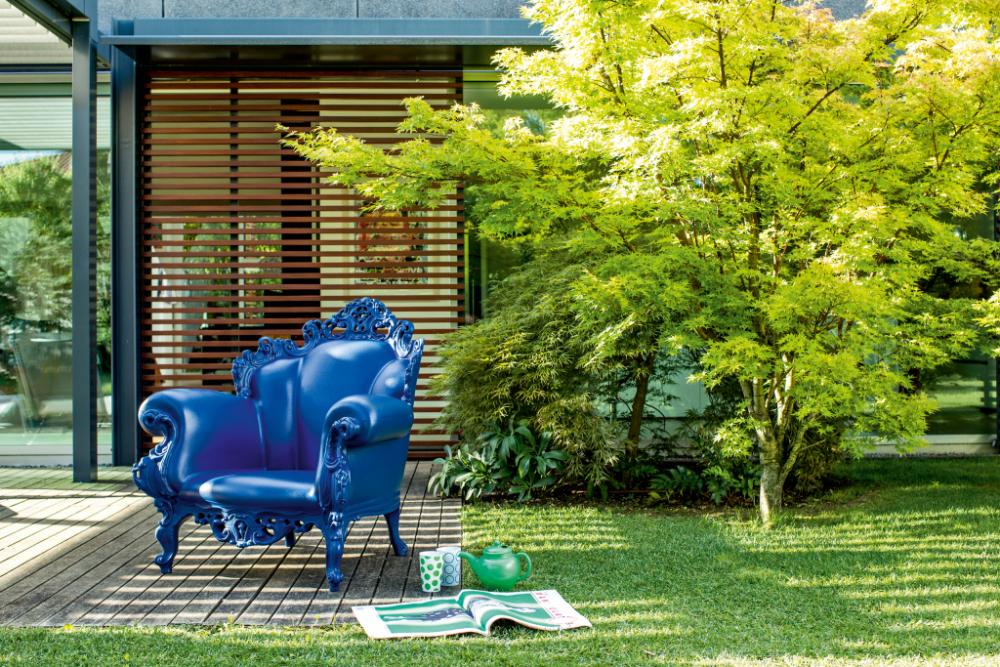
The story starts in 1978. Mendini was thinking about Marcel Proust — the writer, the universe of details, the near-infinite sensitivity to sensory experience — and found a visual parallel in the Pointillist movement. Paul Signac in particular. So he took a faux Baroque armchair, the sort of kitsch flourish Proust apparently loved in his own rooms, and painted it by hand with Pointillist brushstrokes. A piece of furniture as literary homage. It’s a wonderful idea.
As Mendini described it himself: “Proust’s world is an infinite universe of details, anecdotes and words, the visual transposition of which, for me, lay in the brushstrokes of Pointillist artists such as Signac. I picked up a brush. My object of joy to decorate was a faux Baroque armchair, a reference to the kitsch with which Proust adorned his rooms. And so, in 1978, the Proust Armchair was born.”
Over the following decades the chair was reinterpreted in ceramic, in bronze, in various limited editions. Beautiful objects, no doubt, but not exactly something you’d find outside a museum or a very well-funded collector’s living room.
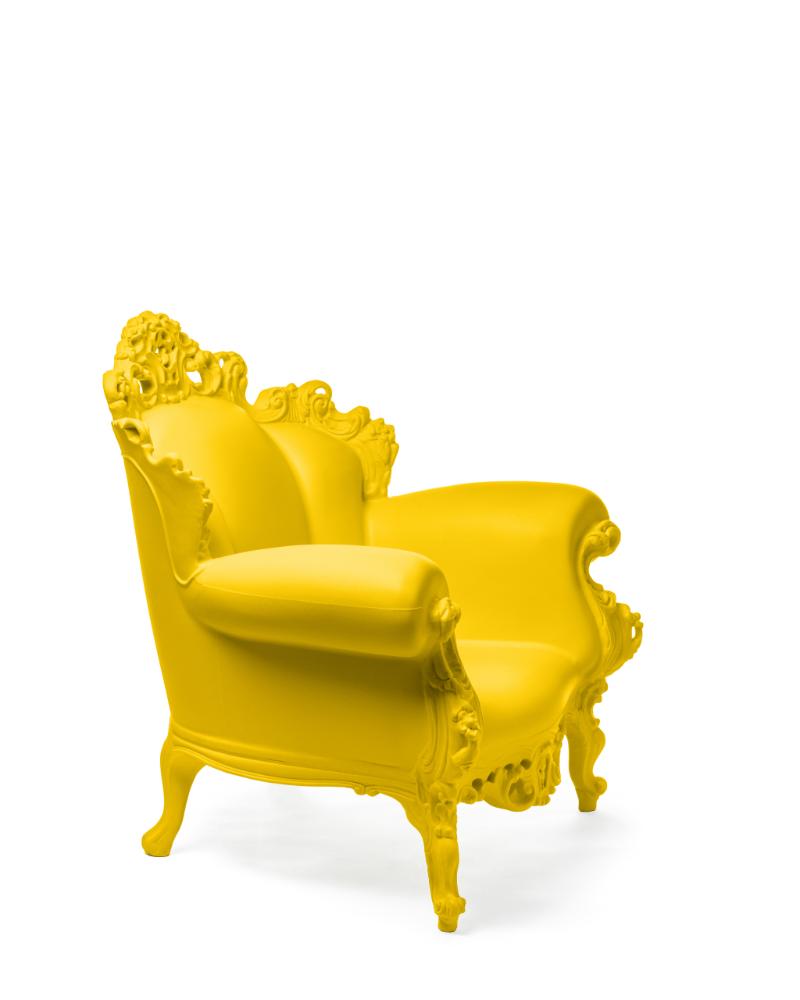
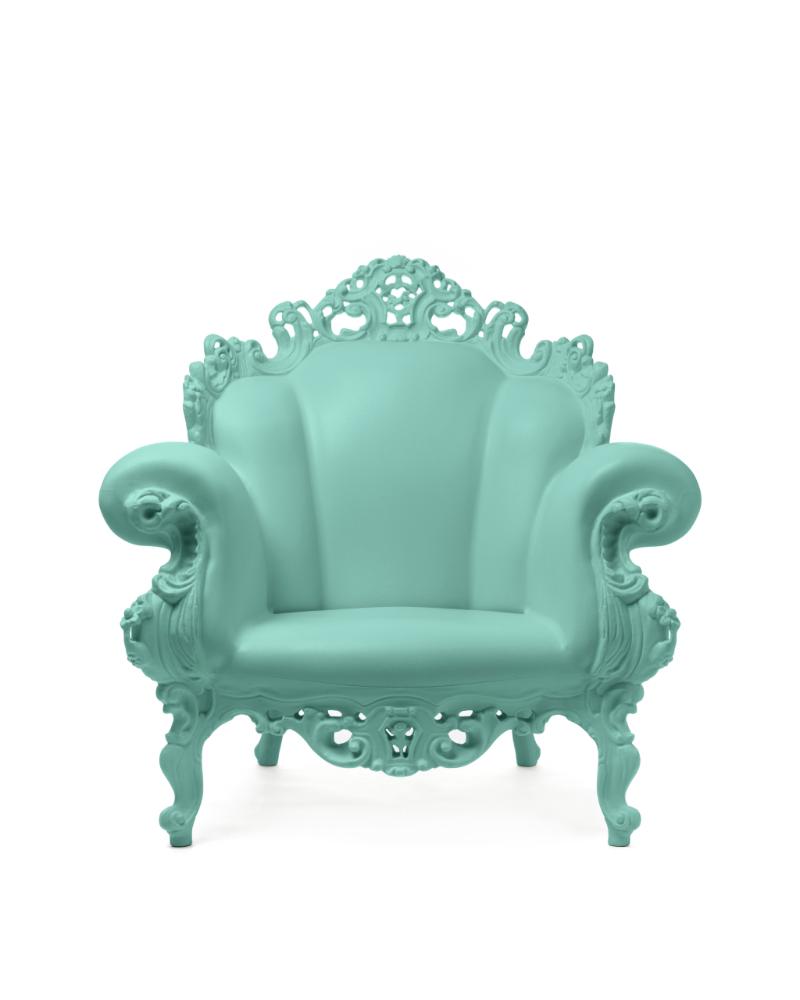
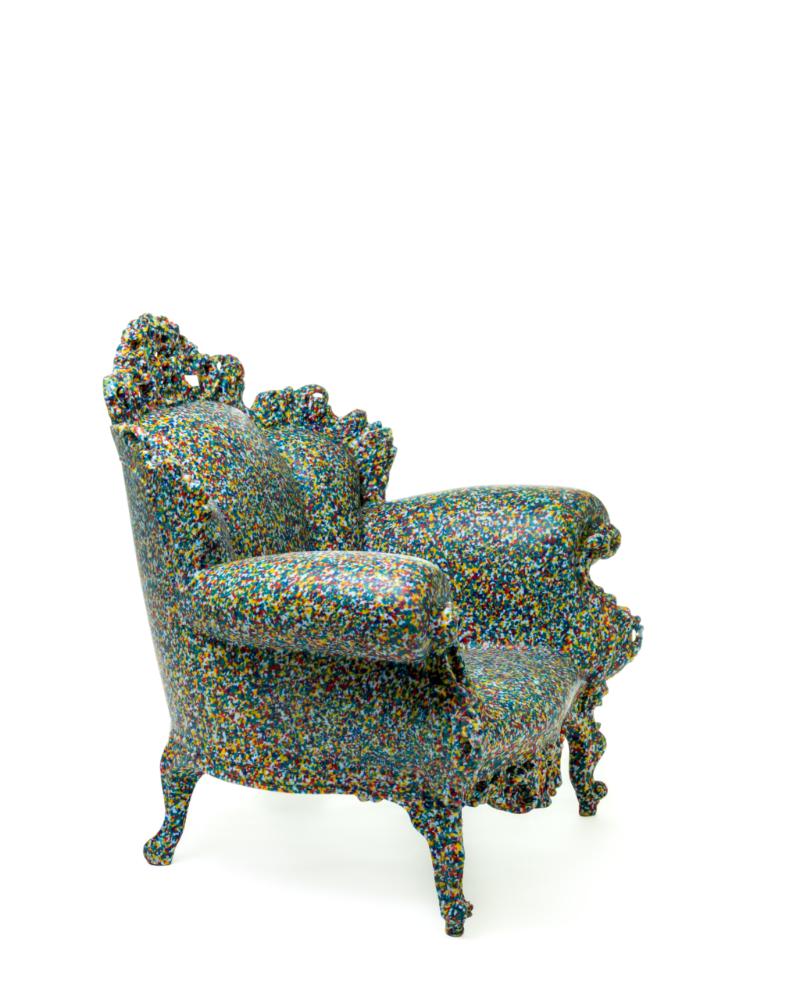
That changed in 2010 when Magis came along with a genuinely interesting proposition: let’s make this an industrial product. Accessible. Reproducible. The technology they landed on was rotational moulding — a large mould, polyethylene, and suddenly one of the most celebrated chairs in design history could be manufactured at scale.
The paradox isn’t lost on anyone, Mendini included. He called it “a paradox come to life” — this deeply handcrafted, painterly, literary object reborn as a piece of rotationally moulded plastic. And yet somehow it works. The Magis Proust keeps the silhouette, keeps the spirit, and loses none of the humour that made the original so compelling in the first place.
There’s something very Italian about the whole thing, actually. The willingness to take a high-minded cultural reference — Proust, Pointillism, Baroque furniture — and turn it into something people can actually sit on in their garden. Design that doesn’t take itself quite so seriously that it forgets to be useful.
Mendini passed away in 2019, but the Magis Proust feels like a genuinely fitting part of his legacy. His own word for it was “a fresh burst of colour and atmosphere for a timeless object” — and honestly, it’s hard to argue with that.
For more information visit magisdesign.com.