
There’s a scene in David Lynch’s Mulholland Drive where someone steps forward and announces, quite plainly, that there is no band. The music playing isn’t real. The performance is an illusion. It’s one of those Lynch moments that stays with you, and it turns out to be a rather brilliant starting point for an exhibition.
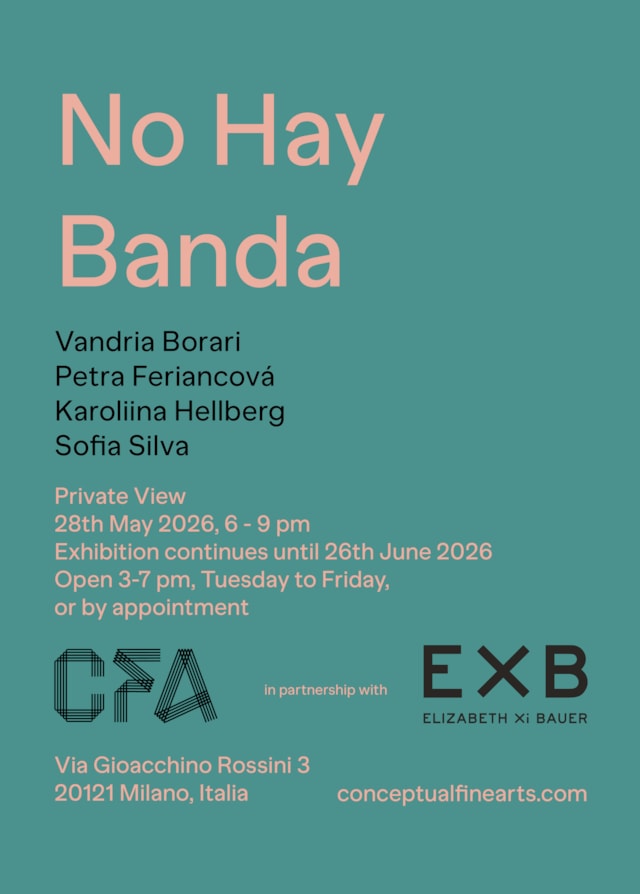
No Hay Banda is a new group show presented by Elizabeth Xi Bauer in partnership with CFA (Conceptual Fine Arts) in Milan, running from 29 May to 26 June 2026. It brings together four artists — Vandria Borari, Petra Feriancová, Karoliina Hellberg, and Sofia Silva — working across ceramics, painting, and photography, and curated by Maria do Carmo M. P. de Pontes. The connecting thread isn’t a style or a movement; it’s more of a shared disposition. Each of these practices treats silence and restraint not as a lack of something, but as a deliberate and generative position in their own right.
Which feels, frankly, like a welcome proposition right now.
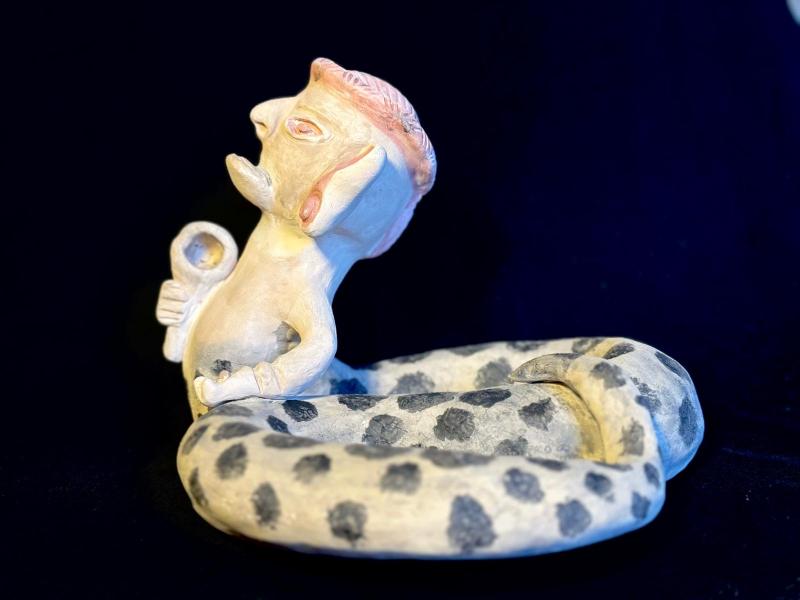
Vandria Borari is an Indigenous ceramic artist from the Borari territory of Alter do Chão in the Brazilian Amazon, and her contribution to the exhibition is the one that has really caught my attention. Her Yupirungáwa series — the word means “origin” in Nheengatu — presents four monumental ceramic sculptures of Amazonian seeds: Brazil nut, tucumã, forest muruci, and curuá. Developed in collaboration with anthropologist Myrtle Pearl Shock through a dialogue between Indigenous knowledge and archaeobotanical research, the sculptures are modelled on botanical remains from archaeological sites in the Lower Amazon, enlarged to human scale and finished with pigments that recall the look of excavated, carbonised material. There’s something genuinely arresting about the idea of a seed rendered at the scale of a person. The forest, in Borari’s hands, becomes something you have to reckon with rather than look past.
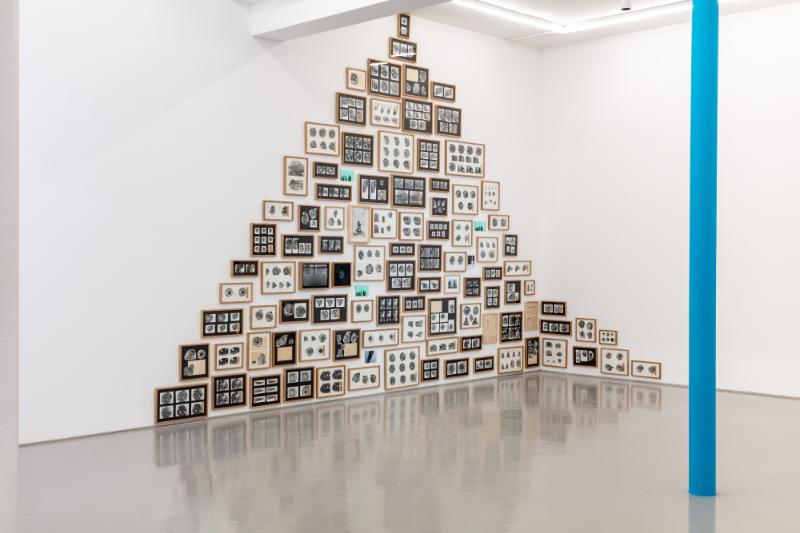
Petra Feriancová brings two bodies of work. Her Playgrounds series is a long, patient project built from archival photographs and her own images of public playgrounds — some taken by her father in the 1970s, others taken by Feriancová herself decades later.
The playgrounds are mostly empty, stripped of their original purpose, and that emptiness is the point. The series resists nostalgia without being cold about it; instead it registers something quieter, the way perception shifts across a lifetime when you return to the same place. Her Hands series (2017–2025) works in a similar register — hands caught in motion but without any apparent goal, the gesture valued for itself rather than for where it leads.
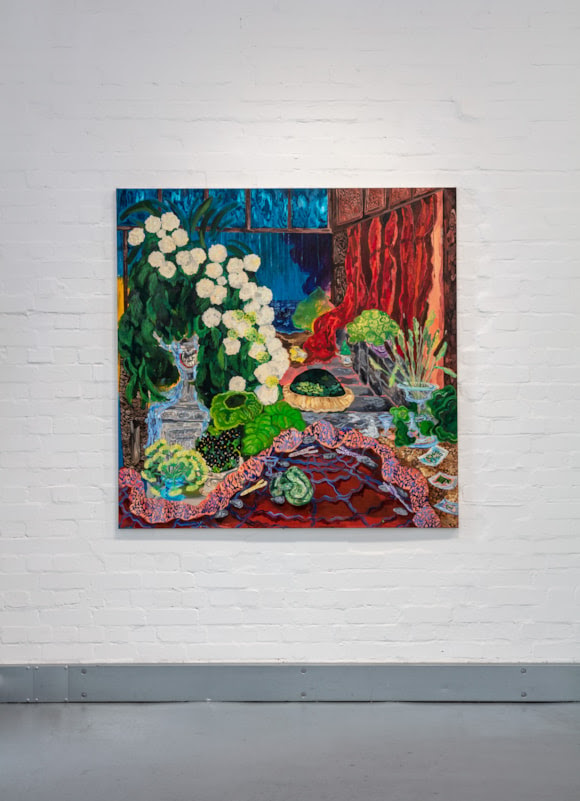
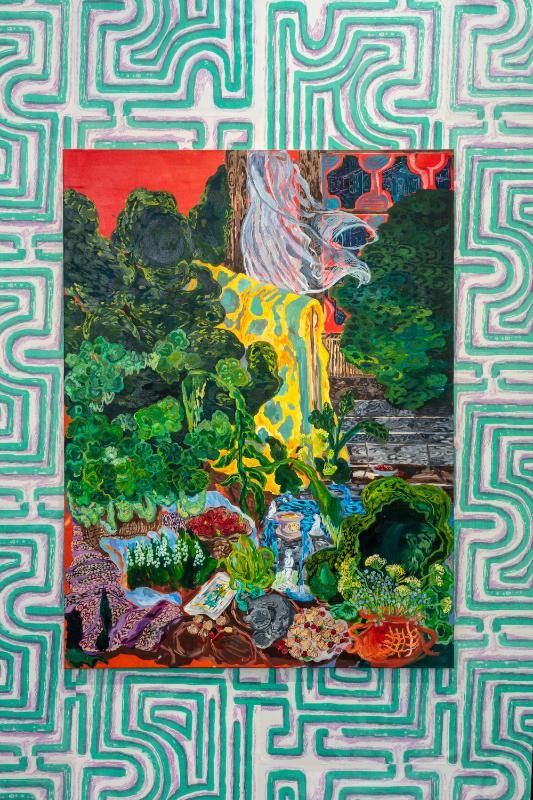
Karoliina Hellberg’s paintings are new works created specifically for the show in her Helsinki studio, and from what I can gather they sit in that particular space between dream and memory that’s genuinely difficult to pull off without tipping into vagueness. Interiors, plants, animals, textiles — motifs that hover and blur, with intense colour and a confident hand. Beauty and menace apparently cohabit in these pictures, which is about as Lynchian as the title itself (probably not a coincidence).
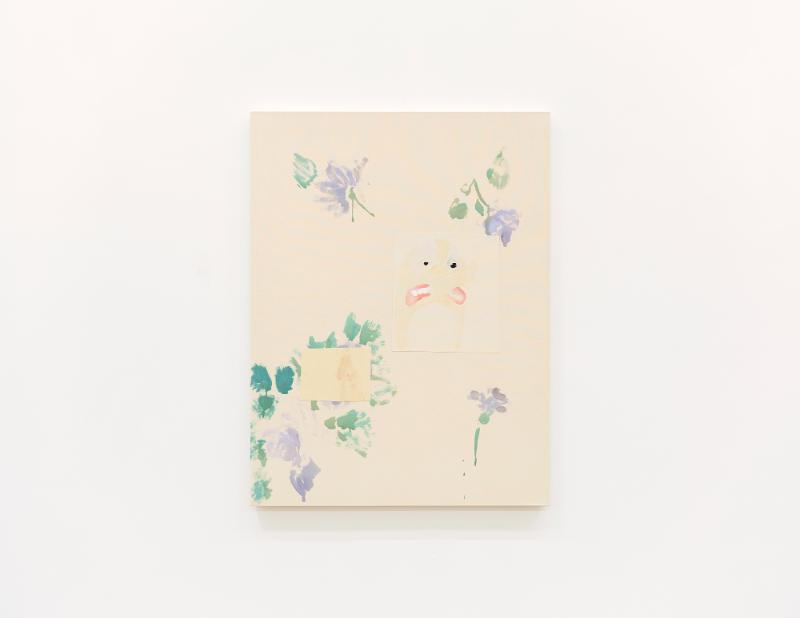
Sofia Silva’s paintings have a different kind of restraint — spare, domestic, carefully lit. Camera bianca (2026) centres on a silhouette of branches in a vase against a thin line of light, the composition inscribed with the phrase con tutto il cuore — “with all my heart” — taken from a Catholic prayer of confession. A second smaller work, titled Non rompetemi i coglioni (Girl Interrupted While Reading), does something rather different: it stages the collapse of that quiet, the intrusion of noise into solitude. The contrast between the two feels very deliberate.
The exhibition opens concurrently with the 61st Venice Biennale, and there’s a conversation being had here with the Biennale’s own interest in the significance of small gestures. Whether or not you’re heading to Venice this year, Milan in late May is not a bad place to be.
The show runs at the at CFA, Via Gioacchino Rossini 3, Milan from 29 May – 26 June 2026.