
Many people think that if they brush harder and longer, it can make up for skipping a day. But sadly, that’s not the case. Oral health doesn’t respond to effort like the gym – it responds to consistency, and unfortunately for you, your mouth is the gym that’s compulsory.
What plaque actually does between brushings
Biofilm, which is the technical term for dental plaque, is not an inactive film that remains on your teeth. It is a living bacteria colony that begins to form four hours after you last brushed your teeth. When 12 hours have passed, this colony is already solid enough to begin excreting acids that deteriorate the enamel. After 24 hours, the coating firmly settles on it.
That’s why brushing your teeth twice a day isn’t just a recommendation. It is the minimum amount of time needed and required to mechanically interrupt this process before it leads to demineralization. No single brushing, however lengthy or rigorous it may be, can serve as a guarantee for the next 36 hours.
A mouth also has its own schedule. Saliva production drops significantly during sleep, which means that the acid defense system in the mouth is inoperative. It’s not just something that would be nice to do, brushing your teeth before bed is a vital task.
How consistent brushing protects enamel you can’t see
Fluoride in toothpaste uses remineralization to essentially replace minerals in areas of enamel where acid has started causing microscopic damage. But that can only happen when fluoride is both frequent and low-dose, not occasional and high-dose.
Two reliable brushing sessions a day gives enamel multiple chances to absorb fluoride and repair early damage before it advances to a cavity and requires a filling. According to the Journal of the American Dental Association, brushing twice a day with fluoride toothpaste is linked with 25% fewer decayed, missing, or filled teeth than brushing with fluoride only once a day. That gap comes from consistency, not from brushing harder or longer.
This is where home care and professional care connect. No matter how reliable your daily routine, your toothbrush and floss won’t budge tartar – the calculus left behind when biofilm is given enough time to mineralize and turn into an unbreakable deposit. That’s the point where a dentist new town patients rely on needs to step in with professional tools, because home care alone can’t reverse it.
Why scrubbing harder backfires
Many people have a common pre-dentist routine: brush uncomfortably hard right before the appointment, in a futile effort to make up for a week of negligence. It doesn’t work, and you’re doing serious harm.
Aggressive brushing with a hard-bristled brush causes toothbrush abrasion. That means enamel erosion at the gumline and gum recession – both of which are permanent. The enamel doesn’t grow back. The gum tissue doesn’t fully reattach.
A soft-bristled brush used for two minutes, twice a day, with light pressure does more for your teeth than a stiff one used for 15 minutes once in a while. The goal is disruption, not friction. Plaque is soft. It doesn’t require a stiff brush to remove it, it requires a frequent brush.
The weekend warrior flossing problem
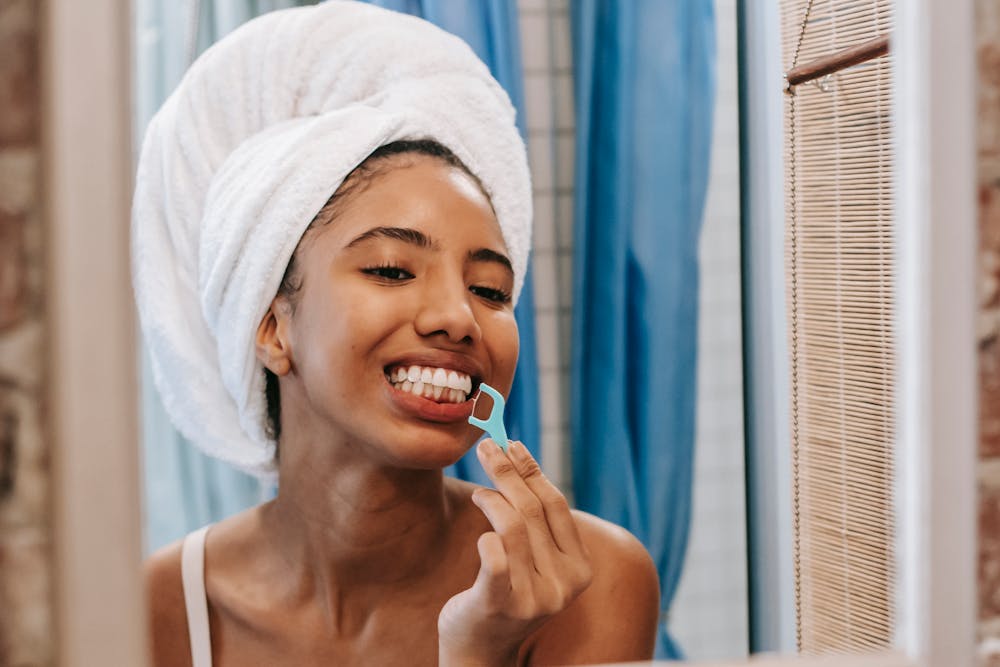
While brushing your remove plaque from about 65% of your tooth surfaces. The other roughly 35% are the surfaces between your teeth and the spaces between teeth. The only way to remove plaque from these areas is by cleaning between your teeth with floss or another interdental cleaner.
Your gums as well as the bones that support your teeth stay healthy by responding to the daily activity of cleaning. When you clean your teeth, you remove the plaque and bits of food that bacteria thrives upon. If you skip cleaning, your gums lose those daily healthy influences and respond by getting red, swollen, and bleeding easily. In short, they become inflamed. Inflamed gum tissue readily loses its grip against your teeth and pulls away, creating pockets that trap more plaque and food and bacteria.
Gingivitis is the first stage of gum disease. It’s where the early, easily reversible inflammation hits your gums. Don’t take the opportunity to knock that out. If gingivitis’s allowed to advance to periodontitis, your supporting gum tissue and bone is destroyed and can no longer hold your teeth in place. This stage of gum disease is no longer reversible.
Reliable beats perfect
There is no high-effort version of this. There is no complex technique that only the pros know. Two minutes of brushing, twice a day, with a soft brush and fluoride toothpaste. Floss once daily. Give the process time.
What breaks this down isn’t laziness – it’s the belief that inconsistency can be corrected by intensity. It can’t. The mouth runs on rhythm. Disrupting biofilm before it matures, exposing enamel to fluoride regularly, giving gum tissue daily contact – these aren’t goals you achieve in a single session. They’re outcomes that accumulate from showing up reliably.
The patients who maintain the best dental health over decades aren’t the ones who brush hardest before appointments. They’re the ones who’ve made the routine boring enough to do without thinking about it.