
Physical AI turns raw robot data into meaningful movement by linking perception, reasoning, and control in one continuous loop. A robot does not act from a single signal. It combines camera images, force feedback, joint positions, motion history, and human instructions to understand what is happening and what should happen next.
Physical AI models organize these inputs, interpret the environment, plan a response, and send precise commands to motors and actuators. The result is behavior that looks purposeful rather than preprogrammed. This process matters in service robotics, industrial automation, and humanoid systems, where robots must respond to changing surroundings in real time. To understand how it works, it helps to break the pipeline into data collection, scene understanding, decision-making, and physical action execution.
How Does Physical AI Collect and Process Robot Data?
Multiple Data Sources: Cameras, Sensors, and Robot States
Physical AI starts with data gathered from many channels at once. Cameras capture visual details such as objects, people, depth, motion, and spatial layout. Other sensors add information that vision alone cannot provide, including force, touch, proximity, inertial movement, temperature, and audio. The robot also tracks its own internal state, such as joint angles, motor torque, battery status, speed, balance, and position in space.
Together, these inputs create a fuller picture of both the environment and the robot itself. In humanoid platforms such as LimX Luna, intelligent perception works alongside hardware redundancy and multi-layered safety architecture, helping the system maintain awareness while protecting operation. Physical AI depends on this combined stream because reliable action requires more than seeing; it requires sensing context, body condition, and change over time.
Data Processing and Multimodal Input Preparation
After collection, robot data must be cleaned, synchronized, and converted into a format AI models can use. Camera frames may be resized, depth maps aligned, sensor noise filtered, and time stamps matched so events from different sources describe the same moment. Internal robot signals, such as joint positions or torque readings, are normalized and structured for fast interpretation.
Language input also enters the pipeline, where spoken or typed commands are transformed into machine-readable representations. This multimodal preparation lets physical AI compare what the robot sees, feels, hears, and is asked to do. The goal is not just storing data, but building a shared representation of the current situation. Once inputs are aligned, the system can connect environmental details with motion constraints, safety rules, and task objectives.
How Does Physical AI Understand Its Environment and Make Decisions?
Visual Perception and Language Understanding in Robotics
Physical AI interprets the world by combining visual perception with language understanding. Vision models identify people, tools, obstacles, free space, gestures, and object relationships, while estimating where those elements are in three-dimensional space. Language models translate instructions into goals, constraints, and expected outcomes.
When these capabilities work together, a robot can connect words such as “pick up the bag beside the chair” with the actual scene in front of it. Multimodal interaction makes this process more natural by linking conversation with gesture and motion. In LimX Luna, natural language input can define a scenario, and the AI task editor can compose motion, voice, and visual behavior into a complete task. That kind of integration helps robots move from simple command execution to context-aware understanding.
Connecting Environmental Context with Task Planning and Reasoning
Understanding a scene is only the first step; physical AI must also decide what action sequence best fits the goal. It does this by combining environmental context with planning and reasoning. The system evaluates object positions, reachable paths, timing, balance, safety limits, and task priorities before generating a plan. If a path is blocked or a person moves unexpectedly, the plan can be adjusted rather than rigidly followed.
Reasoning also helps the robot break large goals into smaller steps, such as approach, orient, grasp, and place. In more expressive deployments, planning may include coordinated body motion, speech, and visual presentation. That matters for humanoid platforms designed for interactive scenes, where movement must appear deliberate and fluid. Effective task planning turns perception into structured intent that a control system can execute.
How Does Physical AI Convert Decisions into Physical Robot Actions?
Vision-Language-Action Models: From Data Interpretation to Action Generation
Physical AI converts plans into movement through vision-language-action models and low-level control systems. These models connect perception and reasoning directly to motor-relevant outputs, such as target poses, trajectories, grasp points, locomotion steps, or manipulation commands. Instead of treating vision, language, and motion as separate modules, the model learns how scene understanding and instructions should shape action.
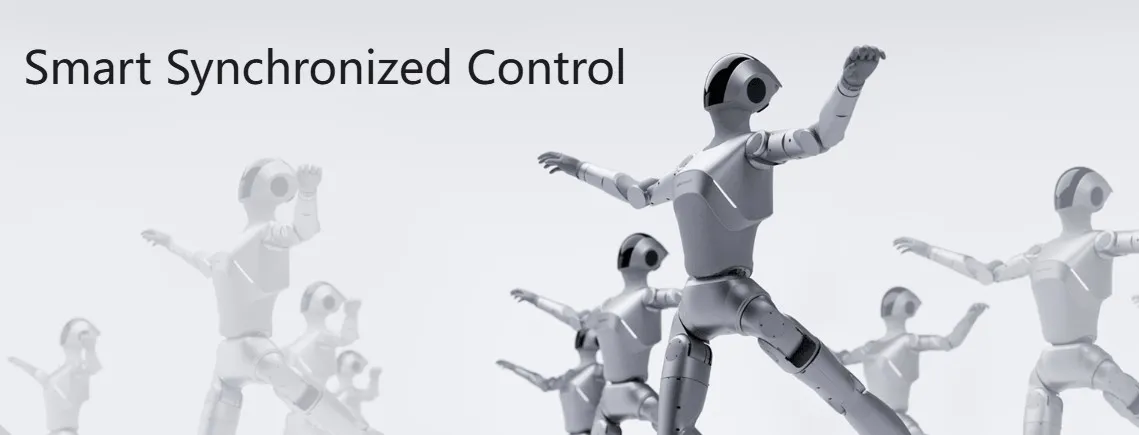
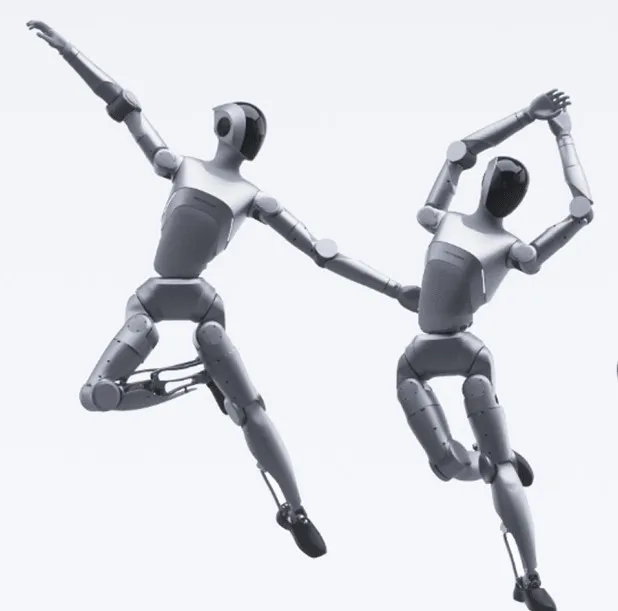
That is especially useful for humanoid robots, where balance, coordination, and expressive movement must work together. In LimX Luna, the second-generation Sys 0 engine, upgraded joint motors, and full-size 160 cm humanoid form support dynamic, fluid movement in real-world settings. By pairing high-level interpretation with capable actuation, physical AI can transform abstract goals into precise joint-level behavior that appears natural, responsive, and intentional.
Real-Time Execution, Feedback Loops, and Sim-to-Real Deployment
Action does not end when a command is sent. Physical AI relies on constant feedback loops to compare intended motion with actual results and correct errors immediately. Cameras, inertial sensors, force readings, and joint feedback report whether the robot stayed balanced, reached the right location, or contacted an object as expected.
If conditions change, the controller updates the motion in real time. This closed-loop execution is essential for stable walking, safe manipulation, and responsive human interaction. Simulation also plays an important role by allowing robots to learn policies, test edge cases, and refine behavior before deployment. The final challenge is sim-to-real transfer, where learned behavior must remain reliable on physical hardware. Strong thermal management, endurance, and precise synchronization further support sustained real-world performance.
Conclusion
Physical AI turns robot data into action through a clear sequence: collect rich multimodal input, build a usable representation, understand the environment, plan the task, and execute motion with continuous feedback. Camera images, sensor readings, robot state data, and language commands each contribute part of the picture, but the real value comes from combining them into one decision-making system.
That integration allows robots to move beyond fixed programming and respond intelligently to changing environments. In practice, the strongest systems unite perception, reasoning, actuation, and safety so that every movement is informed by context. As humanoid robotics advances, physical AI is becoming the core technology that makes robots more adaptable, expressive, and capable of carrying out useful real-world tasks with precision and natural behavior.