
An embodied AI robot becomes truly intelligent when it can sense the world, interpret what it perceives, make sound decisions, and carry out actions reliably in physical space.
Intelligence in this context is not just about generating answers or following scripts. It is the ability to connect perception, reasoning, learning, and motion into a continuous loop that works under real-world constraints. A robot must detect obstacles, understand people, adapt to change, and keep balance while completing tasks safely.
The most capable systems also improve through experience and respond in real time. For humanoid robots, true intelligence appears when digital models and physical behavior stay tightly aligned, allowing the machine to move, interact, and solve problems with useful consistency in daily environments.
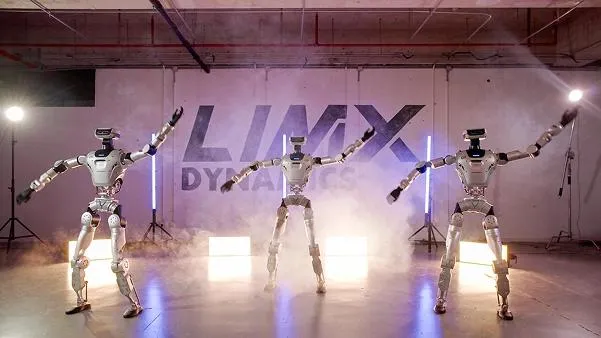
The Four Foundations of Embodied AI Intelligence
Perception: How Robots Understand Their Surroundings
Perception gives embodied AI robots the raw understanding needed to operate beyond controlled demos. Through cameras, depth sensors, force sensing, and inertial measurement, a robot builds a live model of space, objects, people, and its own body. Good perception must do more than detect shapes. It must estimate distance, track motion, identify obstacles, and support safe navigation and manipulation.
In humanoid systems, perception also helps maintain balance and coordinate limbs during movement. Robust sensing matters especially in cluttered, changing environments where lighting, noise, and motion can disrupt weaker systems. A truly intelligent robot uses sensor data continuously, filtering uncertainty and updating its understanding fast enough to guide meaningful physical action in real time.
Reasoning and Decision-Making: Turning Information into Plans
Reasoning transforms sensor input into goals, priorities, and executable plans. After perceiving a room, an embodied AI robot must decide where to move, what to avoid, how to sequence actions, and when to stop or adjust. This requires combining world models, task rules, safety limits, and feedback from ongoing motion.
Strong decision-making is not abstract intelligence alone. It is practical judgment under physical constraints such as timing, reach, stability, and human presence. Intelligent robots break larger objectives into smaller steps, monitor whether those steps succeed, and revise plans when conditions shift. The best systems can also support natural interaction, linking spoken commands or contextual cues to physical actions without losing reliability.
How Embodied AI Robots Learn and Interact with the Physical World
Learning Through Experience, Feedback, and Adaptation
Embodied AI becomes more useful when robots improve through interaction rather than relying only on fixed programming. Learning can come from demonstration, reinforcement, simulation, human correction, and repeated task execution. Feedback closes the loop by showing whether an action achieved the intended result, whether balance was preserved, or whether the environment changed unexpectedly.
Intelligent adaptation means the robot updates control policies, refines object handling, and improves timing across repeated attempts. This matters in real settings where surfaces vary, people move unpredictably, and tasks rarely unfold exactly the same way twice. Learning also supports personalization, letting robots respond better to site-specific workflows, voice commands, and operational preferences over time in practice.
Motion Control and Physical Interaction in Dynamic Environments
Physical intelligence depends on turning plans into stable, precise, and safe movement. Motion control manages posture, joint coordination, balance, force, and timing while the robot walks, reaches, avoids obstacles, or reacts to contact. In dynamic environments, control systems must respond instantly to shifting terrain, moving people, and unexpected disturbances. A robot that understands the world but cannot move reliably is not truly intelligent in embodied terms.
Effective physical interaction also requires smooth handoffs between perception and control, so sensor updates can refine movement as it unfolds. This allows safer navigation, better manipulation, and more human-like behavior. Real capability shows when a robot performs useful actions consistently, not just isolated motions in tightly scripted settings.
What Defines a Truly Intelligent Humanoid Robot?
Hardware and Sensor Integration: The Foundation of Physical Intelligence
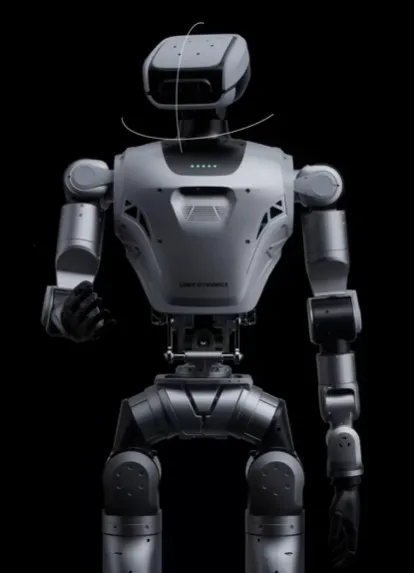
A truly intelligent humanoid robot needs hardware designed for real embodiment, not just software sophistication. LimX Oli illustrates this well as a full-size humanoid robot standing 165 cm tall with up to 31 DoF, enabling more human-like postures and broader motion possibilities. Its independent compute for motion control and perception supports advanced algorithm research without overloading one processing path.
Oli also combines a self-developed 6-axis IMU with enhanced anti-interference performance, head- and chest-mounted Intel® RealSense™ D435i depth cameras, and electrical interfaces for external LiDAR or added cameras. That sensor stack gives wide-range environmental perception, close-range manipulation awareness, and stronger motion control in complex environments and diverse application scenarios effectively.
Autonomy, Real-Time Responses, and Real-World Reliability
True humanoid intelligence shows up in autonomy that works outside ideal lab conditions. A capable robot must respond in real time, recover from small disruptions, and continue operating without constant human intervention. Reliability depends on low-latency sensing, stable control, effective fault handling, and interfaces that make deployment practical. It also includes communication that feels natural and useful.
Voice interaction, command understanding, and task execution should connect smoothly to physical behavior. Systems become more valuable when they are easy to transport, quick to set up, and simple to operate. Features such as bilingual voice interaction, custom knowledge bases, OTA updates, and intuitive no-code choreography tools support broader real-world use while keeping autonomous behavior flexible and dependable.
Conclusion
An embodied AI robot is truly intelligent when it unifies perception, reasoning, learning, and motion into dependable real-world behavior. Each capability matters, but intelligence emerges from how well they work together under physical constraints. The robot must understand its surroundings, choose effective actions, adapt from feedback, and move safely through changing environments. In humanoid platforms, strong hardware integration, responsive control, and reliable autonomy make that intelligence visible and useful.
Systems such as LimX Oli highlight how sensing, compute architecture, and interaction design can support practical embodied AI development. The clearest test is simple: can the robot operate with awareness, adaptability, and consistency in the physical world? When the answer is yes, it has moved beyond automation toward genuine embodied intelligence.