
Key Takeaways
- Choose one compact neighborhood rather than trying to eat across the entire city.
- Plan two to four stops, with each one serving a different purpose.
- Set a realistic per-person budget that includes tax, tip, and transit.
- Use shareable dishes and small portions to avoid turning the crawl into an endurance test.
- Confirm hours, menus, reservations, and dietary options before leaving.
A New York City food crawl is less about checking off famous restaurants and more about building a day that feels easy, flavorful, and worth remembering. Starting with a neighborhood-first list, such as https://frankiapp.com/guides/best-restaurants-in-new-york, can help you identify areas with enough variety for breakfast, snacks, dinner, and a possible dessert stop.
The strongest routes leave room for walking, people-watching, and an unexpected bakery or market counter. Instead of trying to fit in six full meals, choose a few stops with different portion sizes and let the neighborhood set the pace.
Why A Food Crawl Works Well In New York City
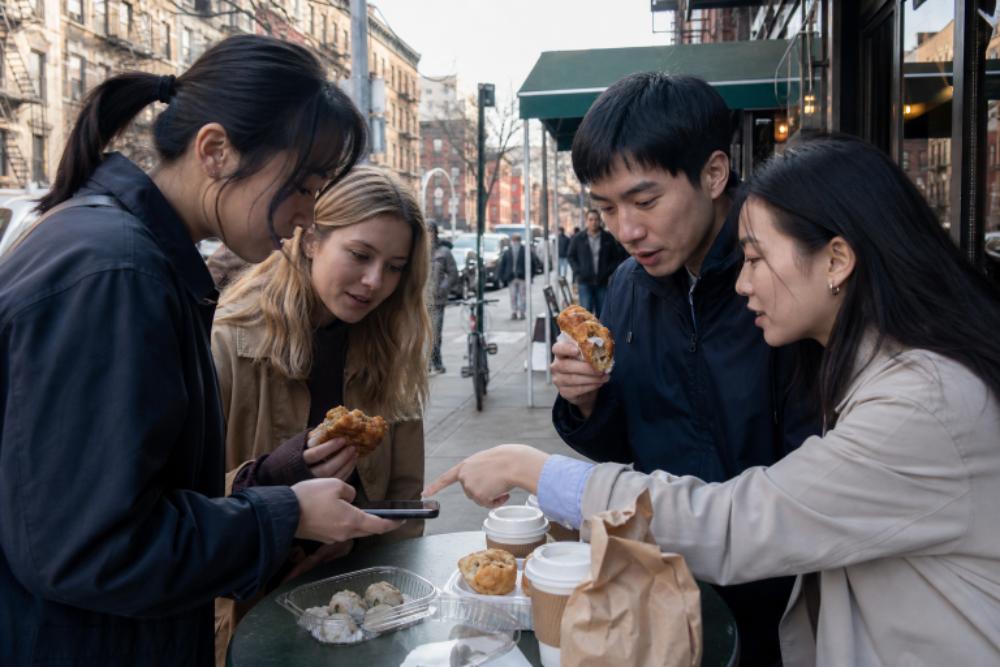
New York is built for food-led wandering. Many neighborhoods put cafés, diners, bakeries, bars, and casual restaurants within a few blocks of one another, so you can try several styles of food without spending most of the day in transit. A crawl also gives groups more choice than one long meal. One person can get a pastry, another can order coffee, and everyone can regroup later for a shared savory dish.
Think of the day in stages: a light breakfast, a small lunch or snack, a walk or attraction, then a relaxed dinner. The goal is not to eat constantly. It is to experience a neighborhood at street level while making each stop feel distinct.
Step 1: Pick The Right Neighborhood
Choose the area before choosing individual restaurants. A practical crawl keeps most stops within a short walk, with a subway ride only if it solves a meaningful problem. Historic dining areas are useful for classic foods and cultural context, market districts work well for mixed preferences, and residential neighborhoods often offer a quieter mix of cafés, bakeries, and local favorites.
Questions To Ask First
- What time will the crawl begin, and how long will the group want to be out?
- Is the mood casual, celebratory, romantic, family-friendly, or late-night?
- Will the route connect to a museum, park, theater, hotel, or train station?
- Does everyone want counter service, sit-down dining, or a blend of both?
- Will rain, heat, or cold make a very walk-heavy route uncomfortable?
Step 2: Set A Realistic Budget
A food crawl can be inexpensive, but only when you avoid ordering a complete meal at every stop. Build the budget around food, tax, tip, transit, drinks, and any reservation deposits. Sharing works especially well for pizza, dumplings, tacos, pastries, appetizers, and desserts.
- Low-cost crawl: Pick a breakfast item, two snack-sized stops, and one filling counter-service meal.
- Mid-range crawl: Add a sit-down lunch or dinner, plus coffee and a shared dessert.
- Special-occasion crawl: Reserve one memorable restaurant, then keep the earlier stops small and simple.
Step 3: Build The Route Around Meal Size
- Start light. Coffee, tea, a bagel, fruit, or a pastry creates a gentle opening.
- Make the second stop savory. Choose one dish that can be shared, such as a sandwich, slice, bowl, dumplings, or small plates.
- Schedule a real break. Walk, browse shops, visit a nearby attraction, or sit in a park for 30 to 60 minutes.
- Finish with the anchor meal. Reserve energy and budget for the place where the group can sit, talk, and slow down.
- Keep dessert optional. It is better to discover you have room for it than force it into the plan.
Step 4: Match The Crawl To The Group
For Couples And Solo Diners
Prioritize comfortable seating, bar seats, counters, and a slower pace. Couples may prefer one standout dish and a scenic walk between stops. Solo diners can stay flexible by choosing places that welcome walk-ins and by keeping one backup nearby.
For Families And Friends
Families benefit from short distances, quick service, familiar menu choices, and a park or open space between meals. Friend groups should agree on a spending limit before ordering and choose menus that make sharing easy. A crawl becomes more enjoyable when no one feels pressured into a meal they did not want.
Step 5: Plan For Dietary Needs
Check menus before committing to a route, especially for severe allergies, gluten restrictions, vegetarian diets, or vegan preferences. Do not assume every restaurant can safely adapt a dish. Choose a neighborhood with multiple suitable options, call ahead when necessary, and keep one flexible restaurant on standby.
Balance Famous Stops And Local Finds
Use one recognizable restaurant or classic dish as an anchor, then build around it with smaller, less obvious stops. That mix provides the fun of trying a place you have heard about without making the whole day dependent on long lines or a single reservation. Recent menu checks and customer feedback can reveal whether a spot still fits your timing and budget.
Use Walking And Transit Without Losing Time
Keep the main route tight. If you need transit, use it at the beginning or end of the crawl rather than between every stop. Reviewing how to ride the NYC subway before heading out can make transfers and payment choices less stressful, especially for visitors. Build in extra time for crowded sidewalks, weather, lines, and service changes.
Common Food Crawl Mistakes
- Planning too many stops and rushing through every one.
- Ignoring portion sizes until the group is already too full.
- Crossing boroughs for a single dish is not the main purpose of the day.
- Skipping water, restrooms, seating breaks, and weather planning.
- Having no backup for a closure, a long wait, or an unavailable reservation.
Sample Food Crawl Formats
The Three-Stop Afternoon Crawl
Begin with coffee and a pastry, follow with a savory counter-service dish, then end with an early dinner or dessert. This format works well for visitors who have sightseeing plans before or after the crawl.
The Budget-Friendly Crawl
Choose one inexpensive breakfast item, share two snacks, and finish with a filling but casual main dish. Skip pricey drinks until you know how much food the group actually wants.
The Celebration Crawl
Start with a relaxed café stop, book one special meal, and add dessert only if the schedule permits. Leave enough time between stops so the occasion feels leisurely rather than tightly managed.
Final Planning Checklist
- Choose one neighborhood or a very compact route.
- Pick two or three main stops, plus one optional backup.
- Set a per-person budget before ordering.
- Review current hours, reservations, menus, and payment policies.
- Confirm dietary needs and plan walking breaks.
- Leave room for an unplanned discovery.
Conclusion
The best New York City food crawl is not the one with the longest list. It is the one that matches the neighborhood, your budget, the group’s appetite, and the day’s mood. Keep the route focused, make every stop serve a purpose, and leave a little space between bites for the city itself.