
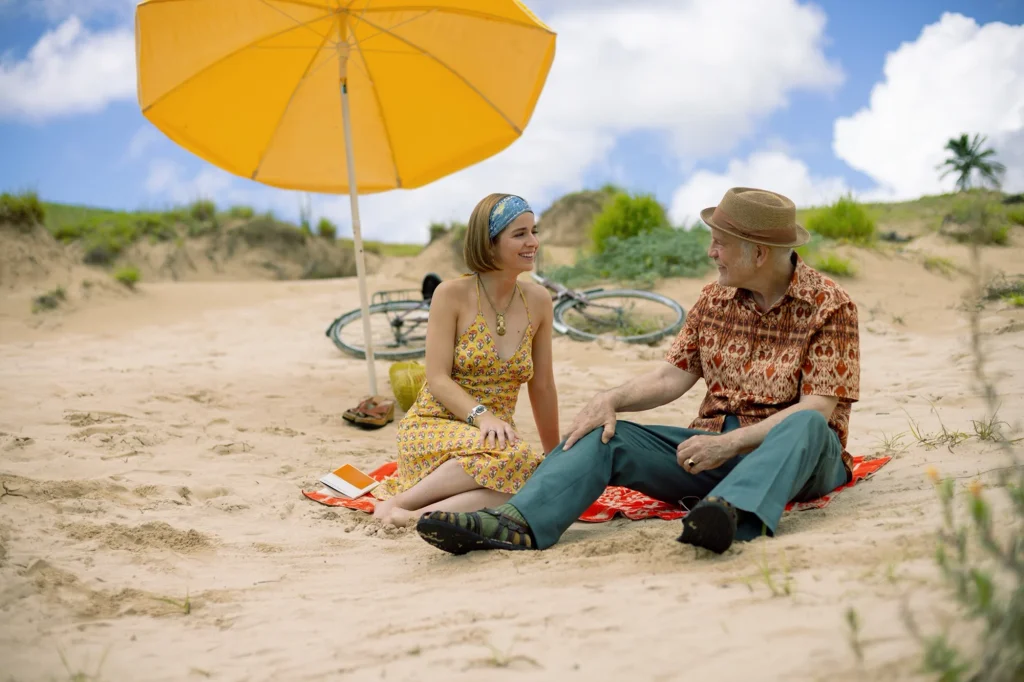
Mortality, Imperialism & McDonaghism
For a great many folk, including my good self, there is a palpable excitement in knowing that you are about to sit down to watch a new Martin McDonagh feature film, especially when that perch resides under the radiant spotlight of the 70th BFI London Film Festival. These semi-infrequent sour and bittersweet McDelights are of such a rare storytelling quality that many hunt for lifetimes, but alas never find.
Those potent truffles of a fireside yarn are worth their weight not in such hollow trinkets as ‘precious’ gold, but in something far more valuable, especially in modern climes: time-defying integrity.
It is the depth and richness of these tales, especially for the attentive, that leave a sated sensation lingering for days, weeks, even months and beyond, only maturing, enriching the umami (like gay cheese, as referenced by a hysterical joke in the film) not only of said venture, but your own sense of taste, and of life, whatever is left of it.
Wild Horse Nine (2026) is only McDonagh’s fifth feature film in a series that are all highly regarded in their own right. Of course he has written at least double that amount of narrative meanderings in the world of theatre which he has been writing for since the mid 1990s and he did win an Oscar in 2006 for his first ever short film Six Shooter (2004) starring Brendan Gleeson, so his talent is effectively unquestionable, whether it is your happy meal of choice or not.
It’s not only audiences that adore his works, so too actors as clearly the words are written for them, often specifically for individuals such as Sam Rockwell who stars in Wild Horse Nine. Their third feature film together, though Sam was also in the 2010 production of McDonagh’s A Behanding in Spokane alongside Christopher Walken, who incidentally at one stage had been in line for Wild Horse Nine only for scheduling conflicts to put a hit on that.
Rockwell’s character Lee was specifically written for him, and despite Christopher’s absence, the role has been catapulted into the heavens by every second that Chris, now played by John Malkovich, is on the screen, utterly captivatingly so. It’s as though the foundational substance of Rockwell and McDonagh’s real-life friendship has marinated, seasoned the story and script, to provide the recipe for another real-life friendship between John and Sam to soar to multiple Michelin-star status. Arguably this is one of the finest, if not the finest, performances that Malkovich has ever put to screen such is the apparent truth and vulnerability of what we are watching unfold, or more realistically, fall apart.
And so to the film itself.
The CIA has requested that certain operational details remain classified, and for once I’m inclined to oblige.
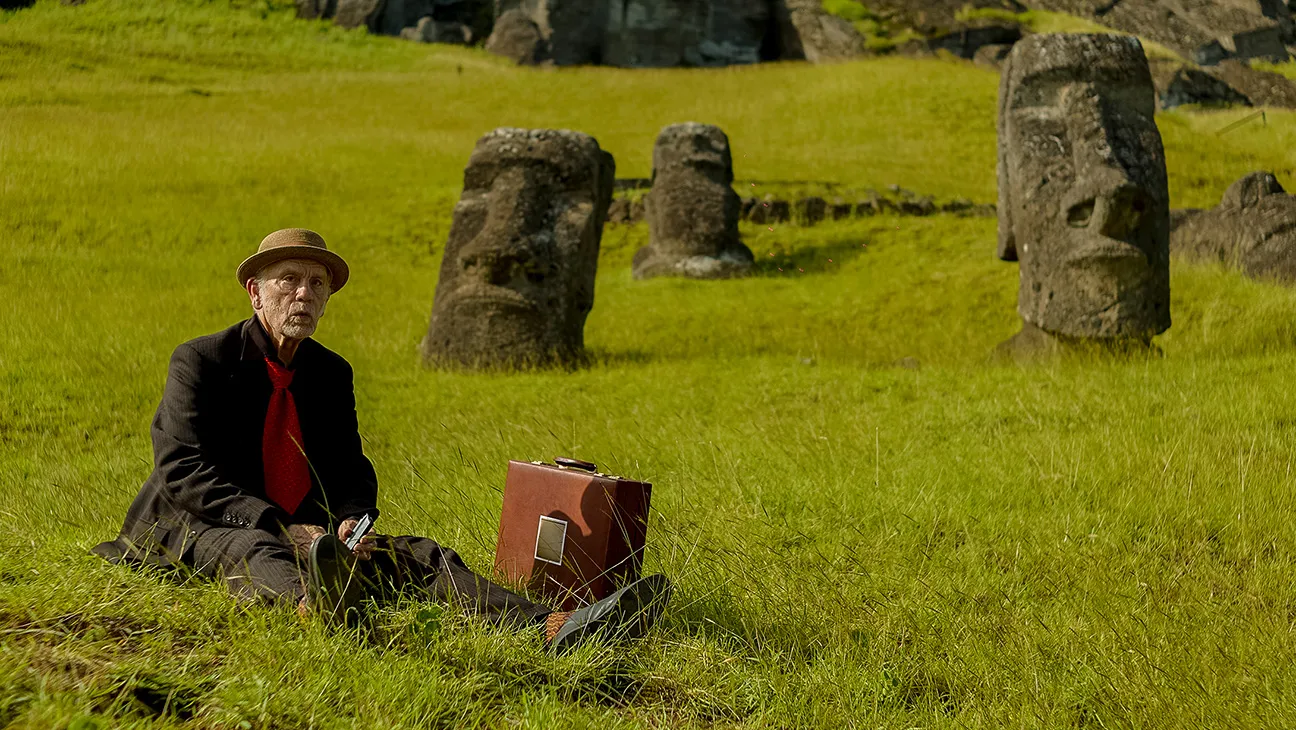
Set in Chile and Easter Island (Rapa Nui) in 1973, it is a fabulous and fantabulous collision of multiple themes that is often the case with McDonagh, where seeming contrasts only provoke a newfound clarity or exposure and focus not only of the story itself, but of the flailing almost chaotic and seemingly innocuous tributaries that contribute to events and the formation of characters’ quandaries.
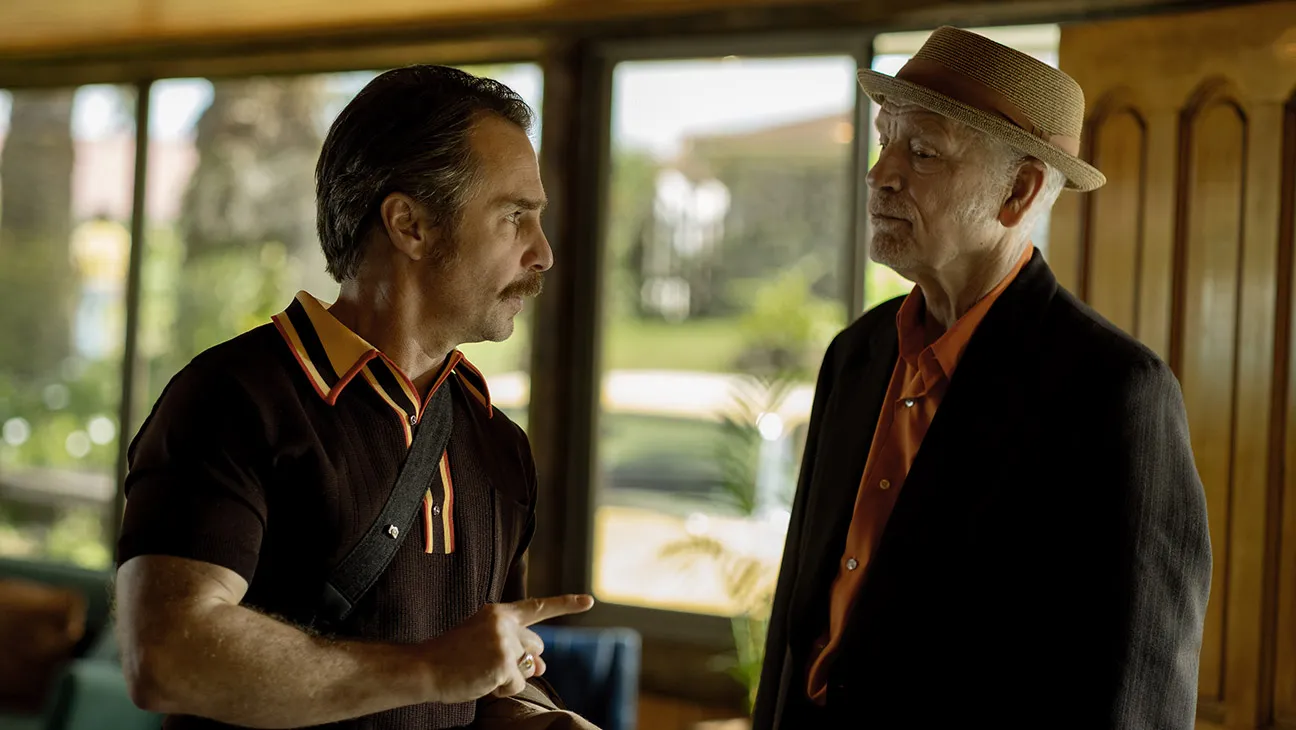
Chris and Lee have arrived prior to this fateful day (11 September) in ‘73 in the knowledge of what is coming down the colonial pipeline, and they know this because they are active agents, with many a skeleton in their closets, and by closet I mean warehouse sized storage. Unfortunately for the CIA and fortunately for the story, Chris is already in the autumn of his years, but the double agent that is death has spun the all too familiar crosshairs, and he now finds himself on the receiving end after gaining the knowledge of a fatal illness.
That period in actual history was rife with abject atrocities that the CIA were cultivating around the world and particularly Chile where the US under President Richard Nixon and Henry Kissinger (those notable bastions of humanity) were involved in the military coup against democratically elected socialist Salvador Allende. The attack was led by none other than General Augusto Pinochet which ultimately led to Allende’s death, however many thousands were subsequently murdered, and even more tortured in the years that followed. It was only in 1990 that the Pinochet reign of terror ended.
Yet the attempts to destabilise the region had started years before, and also had the UK involved in trying to undermine actual democracy by conducting covert operations against Allende. After all, colonialists gotta colonise. And actual democracy in the form of socialism can never be allowed to take root, anywhere. Case in point the UK Tory PM Edward Heath recognised Pinochet’s military junta merely 11 days after the coup.
What might have been one last spyboys ‘hurrah’ now enters the realms of an almost mystical purgatory, where the island’s ancient heads seemingly become gods, a jury, ancient wise elders or gatekeepers to the afterlife, and Rapa Nui has become Chris’ final judgement, his life flashing before his eyes as he reminisces about covert operations onto tapes for his autobiography. The issue with that is as an undercover very high-ranking operative for many decades, he has a staggeringly dark past (and present), that has via his health predicament, become an albatross around his neck that he feels he has to unburden himself, with everyone he meets.
It would be fair to say that the CIA is not too happy about this. Chris seeks redemption, even penance, the CIA prefers a vow of silence, by any means necessary.
Isolating the characters on an inherently beautiful and mostly unspoilt land only emphasises the folly of Man as he plays his games of apparent ultimate control over something he will never control: his own mortality. Colonialism is the antithesis of what is natural, of nature itself, where even the word indigenous becomes a slur (another running joke in the film). It is a construct attempting to harness a life force that is ultimately free, however fleeting that life might be. Is this construct merely a vacuous defence against mortality, an act of defiance against the inevitable, which ultimately manifests in so much destruction and death, the very thing it subconsciously fears?
Watching the literally unbridled beauty of the wild horses that roam the island brings a stillness and focus to Chris’ rambling and increasingly forgetful mind, their freedom an ungoverned truth that brings clarity and respite to the internal chaos of his diminishing mind.
All this brings a timeless poetry of word, image, performance and storytelling that are the core traits of McDonagh’s work. Seemingly counterintuitive alliances of ideas or concepts only serve to intensify the moment, a stabbingly dark joke gushes the gentleness within, the shock of ripping off the veneer of conceit, that exposes the reality, an apparent cruelty that pangs of genuine deep unquestionable love. In the McDonaghverse maybe the most beautiful of flowers only bloom in the darkness.
The seeds for this story were sown when at the age of 13-14 Martin heard The Clash song Washington Bullets (Sandinista!, 1980) where over a somewhat jaunty track, Joe Strummer sang about atrocities that many western governments tried to bury, with the thousands of dead. This led to Martin actively learning about what had happened and via multiple iterations eventually becoming Wild Horse Nine.
Art becomes the truth-sayer.
Despite the decades in gestation of the story, comedy is all about timing, and 2026 couldn’t have been more perfect for landing the punchline given the state of dramatically escalated brazen American imperialism, with ‘leaders’ seemingly drunkenly steering it towards a gilded Thelma and Louise ending. The parallels, deliberate or not, to Chris and Trump wandering around saying anything they want without any sense of consequence or indication of awareness of reality are uncanny. It’s the relationship between power, confession, accountability, mortality and legacy. The ultimate horror of their uncovered truths are so awful, the only safety net we have is to laugh.
Case in point is what Trump said in a recent CBS 60 Minutes interview. He was questioned if he was standing at the gates of heaven and asked could he forgive his adversaries, as it would gain him immediate entrance to heaven, he said ‘No’. He went on to say he believed he had done good throughout his life, would get into heaven and that he was genuinely concerned about his legacy, as he wanted to be remembered.
His ballroom is a clear manifestation of that, in all its Romanesque manosphere styling monstrosity, where insecurity decries it is the size that counts. And where Chris has his autobiography tapes, we have the 4am tweet rants.
Thankfully there are no such visions in Wild Horse Nine, and Chris knows he hasn’t been involved in good deeds.
Also in regards to timing, this resulting story couldn’t have existed at any other time. Given various subjects within, amounts of genuine life have to have been lived irrespective of it being about fictional characters. Everyone involved and behind it had to be at various points of their life for this to ring through with profound sincerity. Again this leads to John’s performance in particular, in which the greatest of roles doesn’t feel in any way like a performance, he is both Chris and not Chris, but himself at the same time.
I can understand that all the aforementioned may sound potentially heavy and while subject wise it very well may be, but it is so deftly written and performed it is incredibly funny for the entirety of the film. And for those that know their history it is genuinely hysterical given the subtlety of some of the (often outrageous) references, and giddy payoffs of setups that were hinted at hours previously. I guarantee you it will not go to where you think it will go either, which again in a colonised world that regurgitates compliance, homogeneity, mediocrity and demands assimilation, this feels like one of the best Clash gigs ever where anything can and should happen.
The work flows so naturally that it could belie the depth of skill that is needed by all to make it work so well. Across the board everyone is on their A (or should it be McD) -game, from radiant cinematography, performances clearly from the tender reality and relatability of the main roles but absolutely by supporting roles regardless of how little actual screen time they might have. Ailín Salas (Alicia) and Mariana di Girolamo (Monica) shine as Chileans who get caught in the machinations of the imperial force, while Steve Buscemi (MJ) is phenomenal as one of the orchestrators of said force. And it’s always a delight to see Parker Posey (Margie), especially in such a manifestation of chaos.
Can contemplative landscapes or the zen stone moai get an Oscar? The moments of stillness, depths and details of the story layers deserve it all.
Everything is subjective of course and it doesn’t hit the heights for me that Banshees did (my bias for my homeland), but we are still talking about some of the finest storytelling by one of the greatest yarn spinners around. Who knows, you might even learn to be a better human between laughing your arse off at just how awful we all can be.
9/10
Wild Horse Nine is on general release now in the UK and Ireland.