
The Fears of a Clown
Of the many gems we managed to see at this year’s BFI London Film festival, Richard Linklater’s Blue Moon (2025) soared like a musical theatre crescendo to the heights of my top films.
Like numerous other selected films, they were chosen purely on the merits of the people involved, and with a minimum knowledge of much else, especially without having seen any trailers. I don’t think there were even trailers released yet for some of them.
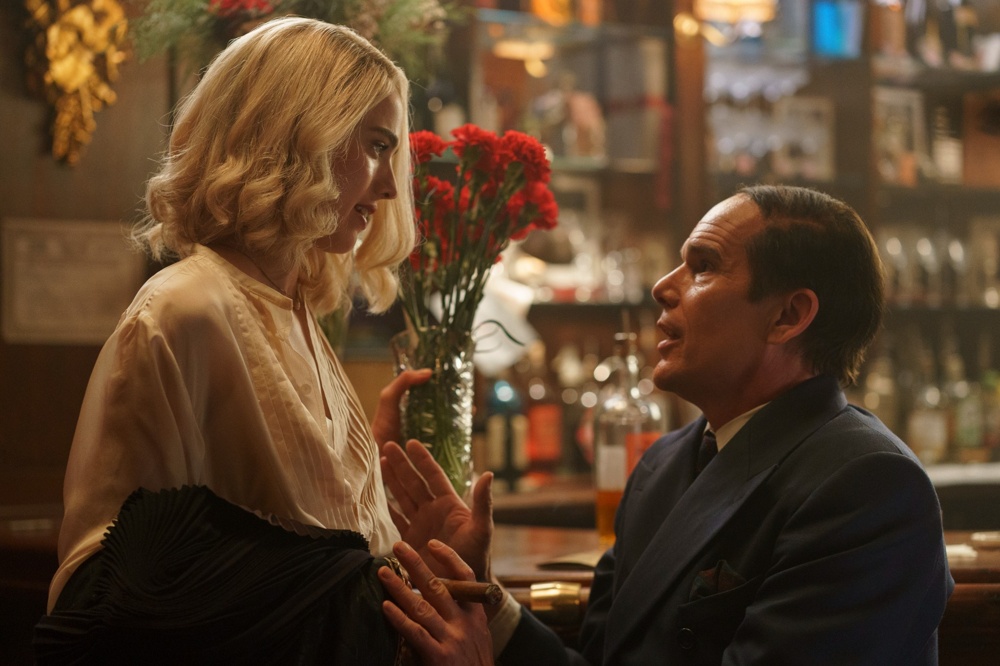
There’s an element of a gamble in this approach, which far more often than not reaps rich and deeply nourishing rewards, case in point this film. Though given the quality of Linklater’s work over the years, it would be an anomaly for it to be bad, especially when he was once again working in collaboration with Ethan Hawke (this is their ninth film together) as the lead playing musical theatre legend Lorenz Hart. Plus it would be surely libellous to say Ethan is nothing less than devotional to any role he takes on.
That mainstream phrase ‘musical theatre’ may immediately want you to press next on any consideration for this sparkling diamanté written gem, but you would be missing out on experiencing one of the best written (and performed) scripts (by Robert Kaplow) this year, and for many years prior, it is utterly transfixing, if you release yourself to the music of it. I’ll briefly add that this isn’t a musical either, yet the words genuinely sing.
Said script becomes all the more potent given the setup of the film is effectively a single situation, a small basement bar set in 1943 New York. It’s a fictional account of a premiere after-show gathering for the musical Oklahoma!, based on the correspondence between Hart and a fleeting muse Elizabeth Weiland (Margaret Qualley).
Historically Hart was the wordsmith half of one of the most successful broadway musical partnerships in history, his composer wing-man was none other than Richard Rodgers, and as a team they flew to the stars with such iconic songs as The Lady Is a Tramp, My Funny Valentine and of course Blue Moon itself.

You don’t have to be aware of the history of the shows or the songs, but it would be quite the achievement to have never heard Blue Moon given it was covered over the decades by the likes of The Beatles, Frank Sinatra, Ella Fitzgerald, Elvis, Dean Martin, Bob Dylan and even Rod Stewart. It goes beyond iconic and resides in the hallowed halls of pure Americana.
Oklahoma! however was the beginning of the teaming of Rodgers with Oscar Hammerstein II, who themselves went on to be the most successful musical theatre writing duo ever to have lived. Regardless of their significant success together, Rodgers and Hart were like the early indie years, and the new team went K Pop global stardom.
There’s also a giddy acerbic strata to the film in that it’s like an acrimonious divorce, where your ex has just rocked up with the most beautiful and talented person on the planet. It would take a figure of genuine balance and zen to warmly celebrate this moment, and given Hart is a desperately lonely alcoholic self proclaimed ‘omnisexual’ (clearly addicted and infatuated to anyone within seconds), who’s sexual freedom brings him nothing but a continuously misguided broken unrequited heart, he’s a musical tragedy in bright incandescent bulbs, powered by newspaper clippings, many of which are flickering, dull, cracked, broken or missing. A malnourished romanticist, feeding on the crumbs of attention, who now believes they are effectively the embodiment of Great Expectations Miss Havisham, jilted at the altar of Broadway.

The glue that is holding all this timeless melancholy together is some astonishing performances by everyone involved, particularly the leads Hawke, Qualley, Bobby Cannavale (Eddie the barman), and Andrew Scott (Richard Rodgers), that lean heavily into subtle and sometimes overt comedy. A type of stage set gallows humour, where the main protagonist is both addictively aware of their own catastrophic life, and yet clearly unaware of it by every single sentence, wry quip and self flagellation confession they utter that maintains it. It’s death by a thousand lyrics, a master songsmith writing the theme song to his own demise. The most eloquent and clever of epitaphs by someone who knew all the words, but never seemed to truly understand them, he just knew how to spin them.
The confinement of the location only accentuates and heightens the power of words, which is incredibly apt given Hart’s career and skill at wordplay, at the expense of real life play. He has managed to build a virtual world of words and dreams, that he keeps alive (at least in his mind) as long as he keeps talking, where the facade of his extensive lexicon can’t drop. At least for the duration of his performance.
Armed with the belief he has educated himself with the clever lyrics he wrote over the years, he is dismayed by the apparent populist phrases he hears in Oklahoma! The tragedy is that his words didn’t bring him closer to people, no matter how many he knew, they only formed bricks that become a wall around himself, or paved a road that brought him further and further away.
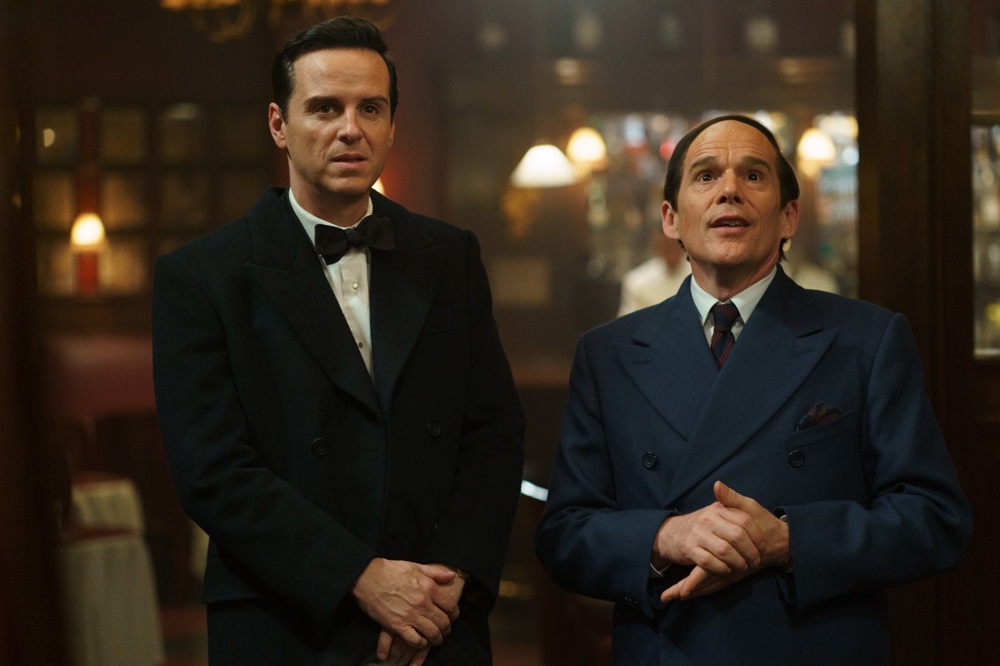
The interplay between him and the various characters he meets throughout the night is like a fascinating Greek tragedy, as each conversation with ordinary people offers nuggets of potential salvation, but he is blinded by his own perceived greatness, and doesn’t hear the life rope words being cast, instead he’s thinking of new clever ways to describe drowning.
A theatre king who has lost his crown, and was only known for the grandeur of his crown, an object of unquestionable craft, but the audience just wants to sing along to good vibes.
It’s not all flawless, probably for the better. Hart was at the top of his game, but actually diminutive in physical stature (around 5 feet), so there are treatments to mask Hawke’s significant difference that generally work, there are a couple of moments of uncanny valley. For myself I wasn’t aware of the height fact, so I had a slight wobble when it becomes initially apparent.
It doesn’t take away from a hyper rich and engaging experience, waves of beautiful dialogue, exchanges, weaving throughout the entire room, with nuggets of magical (culturally historical) moments for the attentive from the people he briefly meets during the evening.
Sometimes the greatest of nights and moments aren’t set in spectacular grand venues or situations, but are actually the briefest of random conversations that happened with strangers in a bar. The truest of performances that happened for one night only, and have you humming and smiling forever more.
10/10
Blue Moon is currently in UK/Ireland cinemas and streaming in the US.