
A handbag once announced its owner through a recognisable shape or logo. Now the most revealing details may be the objects swinging from its handle: a plush animal, a hotel key ring, a ribbon, a beaded name or a tiny plastic snack. Bag charms have made accessories less pristine and considerably more personal.
The look has survived beyond a brief social-media craze. Miu Miu helped revive densely decorated bags on the runway, while Coach embraced cherries, animals and other playful add-ons. Dua Lipa has carried an Hermès Birkin loaded with a scarf and soft toys. Labubu figures, created by artist Kasing Lung and sold by Pop Mart, have also migrated onto luxury bags, giving an expensive object the unruly character of a school backpack.
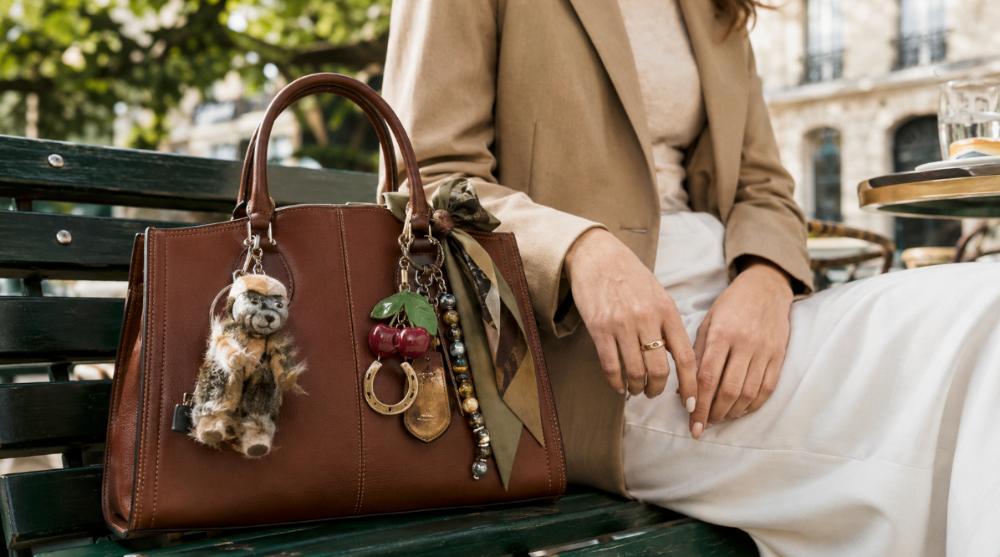
A Bag Can Carry More Than Status
Personalisation offers an answer to a peculiar fashion problem. Iconic bags are desirable because they are recognisable, yet that recognition can make every example look alike. A charm breaks the uniformity without requiring a permanent alteration. It can be moved, replaced or removed as taste changes.
Jane Birkin established the most famous precedent. She treated the Hermès design bearing her surname as a working possession, adding stickers, beads and ribbons while allowing the leather to acquire marks. Her approach opposed the idea that a luxury bag should remain untouched. In 2021, one of her black Birkin bags sold at Bonhams for £119,000, five times its presale estimate.
Lucky imagery adds another layer. Horseshoes, cherries, stars and four-leaf clovers already travel easily between jewellery, games and popular culture. At Jackpot Jill, recognisable motifs can appear in pokies, but their frequency is governed by the game’s virtual reel configuration rather than by the number of pictures visible on screen. The random number generator selects an outcome, while the paytable sets which symbol combinations produce a win and how each stake is rewarded.
Tiny Objects Tell Specific Stories
The strongest charm arrangements rarely resemble coordinated jewellery sets. Their appeal comes through productive mismatch: a souvenir beside a designer trinket, or a child’s beadwork beside polished metal. Each piece can identify a place, friendship, hobby or private joke.
Popular choices tend to fall into several loose groups:
- soft characters such as Jellycat, Monchhichi and Labubu;
- initials, birthstones and engraved name tags;
- travel souvenirs, hotel fobs and miniature landmarks;
- ribbons, scarves, chains and handmade bead strands;
- lucky signs including dice, eyes, hearts and horseshoes.
These categories overlap, which is precisely the point. A bag can hold several versions of its owner at once. The result resembles a portable scrapbook more than a conventional fashion statement.
Collecting Has Replaced Perfect Coordination
Charms suit a culture organised around small, repeat purchases. A handbag may require a major decision, while one new attachment offers a simpler update. Blind-box collectibles add suspense because the exact figure remains unknown until the package is opened. Pop Mart’s Labubu releases turned that ritual into a global retail phenomenon involving queues, swaps and resale markets.
Luxury houses respond at a different price level. Louis Vuitton produces miniature luggage-inspired charms, while Fendi has repeatedly created character accessories for its Baguette and Peekaboo lines. These objects extend an established design without permanently changing the bag itself.
The model of collecting one memory at a time predates the current bag-charm trend. Pandora’s official company history records that its charm-bracelet concept launched in Denmark in 2000 before expanding internationally. Its success demonstrated the appeal of assembling an accessory gradually rather than purchasing a finished combination.
There is an environmental argument too, although it should not be overstated. Restyling an existing bag may delay another purchase, especially when the decorations come from objects already owned. A concert ribbon, old necklace pendant or repaired toy carries more individuality than a newly purchased matching set.
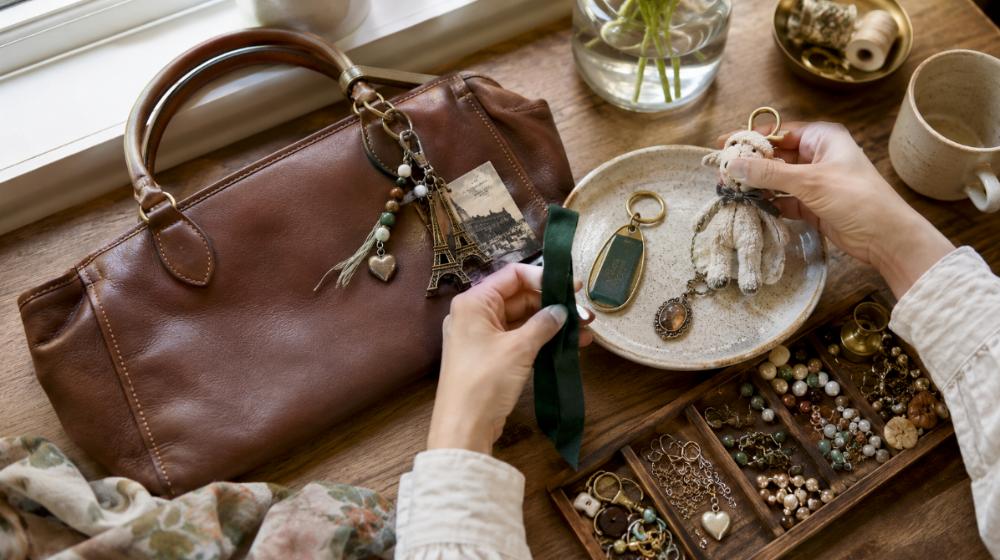
Polish Is No Longer the Only Luxury
The renewed enthusiasm for charms reflects a broader retreat from anonymous perfection. Quiet luxury made materials and restrained construction the main signals of taste. Personalised bags reintroduce humour, clutter and biography without discarding craftsmanship.
That tension explains why the trend works particularly well on a formal leather bag. Scratches, ribbons and cartoon creatures make an immaculate object feel lived with. They also transfer some creative control from a fashion house to the person carrying its product.
Bag charms will inevitably change character as particular toys lose their novelty. The larger idea is harder to dislodge. A handbag can be valuable because of its maker, but it becomes memorable through the odd little objects attached after it leaves the shop.