
There are haircuts that look good in a salon chair.
And then there are haircuts that look good when you actually move.
The butterfly cut belongs firmly in the second category.
With its long layers, shorter face-framing pieces and plenty of movement through the lengths, the style has managed to stay in the conversation long after its original TikTok moment. It makes sense. Unlike some viral haircuts that are fun to look at but surprisingly difficult to live with, the butterfly cut gives you options. Wear it smooth, blow it out, add waves, throw it into a ponytail — the layers do most of the work.
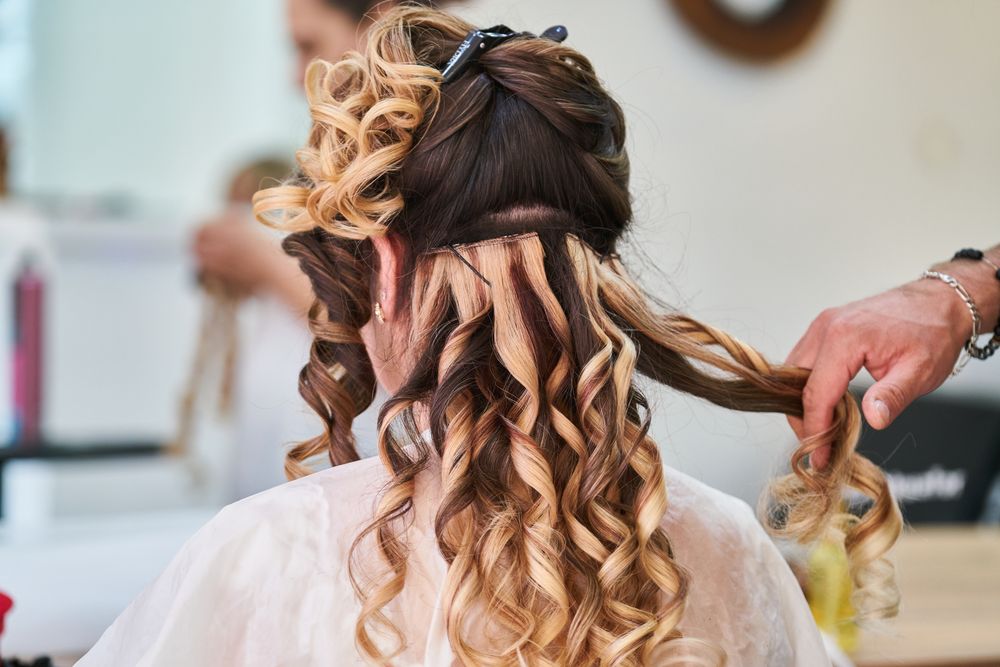
But there is a catch.
The butterfly effect looks very different depending on how much hair you actually have.
And that’s where hair extensions are quietly becoming part of the conversation.
Why Everyone Still Loves the Butterfly Cut
The appeal is pretty simple.
The butterfly cut gives long hair movement without making you sacrifice much of the length. Shorter layers around the face create shape, while longer layers underneath keep the overall look flowing.
It has that slightly glamorous, slightly undone quality that works particularly well with a big blowout.
And social media clearly agrees.
The style has gone through several iterations since the original butterfly haircut became a viral sensation — butterfly bob, shorter layered versions, curly butterfly cuts and softer variations for different hair textures.
British Vogue previously reported a major rise in interest around the butterfly bob, while curly versions of the cut have also taken off across TikTok.
The reason it keeps coming back may be that it isn’t really one haircut.
It’s a shape that can be adapted.
The problem is that some of the most impressive versions you see online have something in common that isn’t immediately obvious:
a lot of hair.
Layers Look Different on Fine Hair
This is where the butterfly cut gets slightly tricky.
Layers remove weight.
That’s exactly what gives the haircut its movement, but it also means that someone with naturally fine or low-density hair may find that the finished style doesn’t have quite the same fullness as the reference photo.
You can have the same haircut.
The result can still look completely different.
On thicker hair, those layers have plenty of density to work with. They separate, bounce and fall into one another. On finer hair, too many layers can sometimes leave the ends looking lighter than expected.
That’s not a reason to avoid the haircut.
It just means the haircut may need a little help.
The Secret Isn’t Always More Length
When people think about extensions, the first thing that usually comes to mind is length.
But for layered hairstyles, density can be just as important.
Adding a little fullness through the mid-lengths and ends can give layers more presence. It can make a blowout feel bigger without making the hair look dramatically longer.
This is especially useful with the butterfly cut.
The shorter layers can frame the face while the added hair underneath provides enough density for the longer layers to move properly.
The result isn’t necessarily more hair.
It’s a better silhouette.
And that’s a very different way of thinking about hair extensions.
One Head of Hair Doesn’t Need the Same Amount of Volume
This is where choosing the right amount of hair becomes important.
Not everyone needs — or wants — the same level of volume. Someone with naturally fine hair may only need a little extra density through the ends, while someone with thicker hair may want a fuller transformation to keep long layers looking balanced.
That’s why there isn’t really a one-size-fits-all approach to extensions.
GOO GOO Hair offers real human hair clip-ins in different weights and levels of fullness, making it easier to choose based on your natural hair density and the look you’re trying to create. A lighter option can add subtle volume without overwhelming fine hair, while fuller sets can create a more dramatic, voluminous finish on thicker hair.
The idea is simple: add the amount of hair you actually need.
For a butterfly cut, that can make a noticeable difference. The right amount of added density gives the longer layers more body while allowing the shorter layers around the face to keep their shape and movement.
Too little, and the effect can get lost.
Too much, and the haircut can start to feel heavy.
Getting that balance right is what makes the finished style look intentional rather than simply bigger.
The Best Extensions Don’t Change the Haircut
A good haircut should still look like a good haircut after extensions are added.
That’s worth saying because the wrong approach can easily make layered hair look heavy.
If the extensions are too thick, the bottom can become disproportionately full. If the color doesn’t blend, the layers can look disconnected. If the texture is noticeably different from the natural hair, the movement won’t look quite right.
The goal is to work with the haircut rather than fight it.
That means thinking about where the extra density is needed, how the hair moves and how the extensions will blend into the existing layers.
For some people, that might mean clip-ins for occasional styling. For others, a semi-permanent option may make more sense for everyday wear.
There isn’t really a universal formula.
And that’s probably one of the better developments in the extension market.
It Works With More Than One Texture
One reason the butterfly cut has lasted is that it doesn’t belong exclusively to straight hair.
On wavy hair, the layers can create a softer, more relaxed shape.
On curly hair, they can help distribute volume and give the curls more room to move.
Even the styling approach can completely change the personality of the cut.
A smooth blowout gives you the classic bouncy version.
Air-dried texture makes it more casual.
Loose waves push it toward that ’70s-inspired, glamorous look.
And curls make it feel completely different again.
Extensions can be used in much the same way.
The important thing is matching the added hair to the natural texture and the finished style. The closer the texture, density and movement are, the less obvious the transition becomes.
The Butterfly Blowout Is Having a Moment, Too
There is also something to be said for the styling that has grown alongside the haircut.
The butterfly blowout is less about perfectly curled ends and more about creating lift and movement.
The hair around the face curves away.
The longer layers have a soft bend.
The ends still feel light.
It’s glamorous, but not overly polished.
And unlike a haircut alone, a blowout can temporarily change the way the layers behave. That’s part of the fun.
You can have the same haircut looking completely different on Monday and Saturday.
A little extra density can make that styling process easier, too — particularly when fine hair tends to lose volume quickly.
Do You Actually Need Extensions for a Butterfly Cut?
No.
And that’s probably the most important thing to say.
A good stylist can create a beautiful butterfly cut on many different hair types without extensions.
But if your hair is fine, if your ends lack density, or if you simply want more fullness than your natural hair provides, extensions can give you another option.
Think of them as supporting the haircut rather than replacing it.
You don’t need to transform your entire head of hair.
Sometimes the difference between a haircut that looks nice and one that has that dramatic, swishy movement you saved on Pinterest is simply density in the right places.
The New Butterfly Look Is Less About the Cut
The original butterfly cut was easy to recognize.
These days, it’s becoming less about copying one exact shape and more about recreating the feeling behind it.
Movement.
Volume.
Soft layers.
Face-framing pieces.
Hair that looks full but doesn’t feel heavy.
That’s probably why the trend has lasted longer than many of its TikTok predecessors.
It’s adaptable.
And as extensions become more customizable, they’re becoming part of that adaptability, too.
You can add length without going dramatically longer. Add volume without changing your color. Add fullness for a special occasion and take it out afterward.
The haircut stays yours.
The extra hair simply gives it a little more to work with.
Maybe that’s the real secret behind the butterfly trend.
It’s not really about having the perfect haircut.
It’s about having enough movement — and enough hair — to make it come alive.