
When people first start researching replica watches, movement talk often sounds more decisive than it really is. A seller mentions a caliber number, calls it a clone movement, and the listing suddenly feels more technical and more trustworthy.
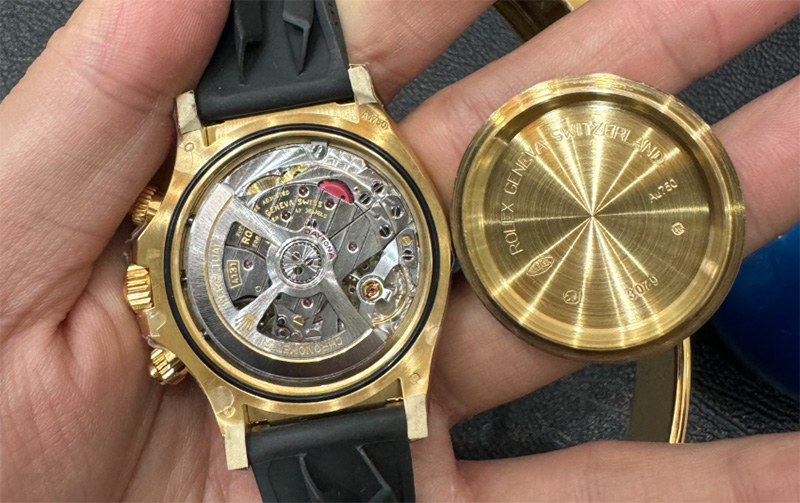
But the movement question is rarely that simple. What matters in daily wear is not just what a super clone Rolex movement is called, but how the watch actually behaves once it is on the wrist. The crown feel, time setting response, and date change confidence tell you far more than any caliber name in a listing ever will.
When you are talking about something like a Best super clone Rolex — VSF, then you are really talking about something special!
Why Movement Claims Often Sound More Helpful Than They Are
Movement language is easy to market. Terms like “clone movement,” “1:1 caliber,” or “improved movement” sound precise, but they often do less explanatory work than buyers assume. A caliber number can tell you something. A factory name can tell you something. But neither automatically tells you how the crown will feel in hand or whether the movement will still feel convincing after a few months of ownership. Many first-time buyers treat movement terminology as a final answer when it should really be the start of a better question.
The Parts of Movement Quality People Actually Notice
Most owners do not spend time studying bridge layouts or reading forum arguments about movement genealogy. They experience a watch through small, repeated interactions.
Crown Feel
A stronger movement setup feels more controlled during winding. The resistance feels even and deliberate. A weaker setup may still function but can feel rough, vague, or inconsistent. In ownership, that difference becomes a repeated signal of quality.
Time Setting
Some watches feel clean and precise when the hands are adjusted. Others feel uncertain. Buyers may not have the vocabulary to describe it in detail, but they notice it every time they interact with the watch.
Date Changes
A watch that transitions cleanly and predictably near midnight leaves a stronger impression than one that technically works but feels hesitant or messy in use.
Chronograph Pushers
On Daytona-style models, pusher feel matters just as much as anything visual. Weak or overly stiff actuation is the kind of detail that shapes whether a watch still feels satisfying after the initial excitement fades.
Why Daily Wear Matters More Than Spec Sheet Confidence
Daily wear exposes movement truth faster than listing language does. Once the watch has to be wound repeatedly, reset after time off the wrist, and adjusted during normal use, mechanical quality becomes much harder to fake with language alone. A movement shapes the watch’s behavior every time the owner interacts with it. The more often those interactions feel composed and predictable, the more convincing the watch becomes overall.
Clone Movement vs Generic Movement: Why the Difference Is Often Oversimplified
A clone-style movement follows the architecture and functional logic of a specific original caliber more closely. But being closer in concept does not automatically mean it will feel better in daily wear. Generic movements are often dismissed too quickly. In some cases, they prioritize simplicity and prove easier to live with in routine use. Different movement types create different ownership trade-offs, and those outcomes do not always line up as neatly as seller descriptions suggest.
Why Accuracy Claims Do Not Tell the Full Story
Accuracy is one of the most overused talking points in movement marketing because it sounds objective. But a single timing number rarely captures the full ownership experience. A super clone Rolex movement technical guide often explains that a watch can post a respectable figure and still wind poorly or behave inconsistently. Consistency matters more than a one-line promise. A watch that gains a steady three to six seconds daily feels more trustworthy than one that occasionally nails perfect time but swings unpredictably.
A Better Way to Judge a Super Clone Rolex Movement
Start with daily function instead of marketing vocabulary. Think about how the watch will actually be used. Will it be worn often, rotated with other pieces, or expected to feel satisfying in frequent handling?
Focus on the interaction points that recur most. Winding, time setting, date adjustment, and consistency over time tell you more than broad descriptive claims. For a deeper technical breakdown of how clone calibers compare, cleanvsfactory.com covers movement behavior, factory differences, and caliber families based on real workshop experience rather than seller wording.
Treat seller terminology as a starting point rather than a conclusion. A caliber name may be relevant. A factory label may be relevant. But neither replaces the more basic question of whether the watch behaves well as a daily object.
FAQs
What is the difference between a clone movement and a generic movement?
A clone movement follows the architecture of a specific Rolex caliber more closely. A generic movement skips that level of layout detail but can still perform reliably in daily use. Neither type is automatically better.
Does movement accuracy matter in a super clone Rolex?
Consistency matters more than a single number. A watch that gains a steady few seconds per day feels more trustworthy than one that posts a good figure occasionally but swings unpredictably.
How can I tell if a super clone Rolex movement is good quality?
Pay attention to crown feel during winding, smoothness during time setting, and how confidently the date changes. These daily touchpoints reveal movement quality faster than any listing description.
Do all super clone Rolex models use the same movement quality?
No. Movement quality varies by model, factory, and production batch. A factory that performs well on a Submariner may be less consistent on a Daytona, which is a more mechanically demanding build.