
Not every family enjoys bright tropical prints, large graphics, or strong color combinations. Some people feel much more comfortable in soft blue, cream, pale pink, muted green, white, tan, or other quieter shades that already appear in their everyday wardrobes. For those families, matching does not need to become louder simply because several people are dressing together.
The better approach is to make coordination feel almost effortless. Instead of searching for one dramatic print for everyone, families can use family christmas pajamas as inspiration for shared palettes, related pieces, and small repeated details. PatPat’s current collection includes dresses, tops, sets, swimwear, and other coordinated styles, and the brand specifically notes that families can match fully or simply echo colors between people.
Start With the Calmest Piece in the Wardrobe
A quiet family look is easier to build when one familiar piece sets the direction. That might be a cream dress, a soft-blue shirt, pale denim, or a light cardigan that someone already enjoys wearing. Instead of beginning with the question, “What should everyone match?” begin with, “Which color already feels natural on us?”
Once that first shade is chosen, the rest of the family does not need exact copies. A pale-blue shirt can sit beside white, soft gray, faded denim, or a low-contrast floral dress that includes similar cool tones. A cream dress can work with tan trousers and an off-white top. The result looks connected because the colors belong to the same quiet family, not because every garment is identical.
This method is especially useful for adults or older children who dislike looking overly coordinated. They can participate without wearing anything that feels far outside their normal style.
Neutral Style Does Not Mean Everything Must Be Beige
Families sometimes hear the word “neutral” and imagine beige clothing from head to toe. That is only one version of a quiet palette. Soft color can work just as well when the saturation is low and the contrast between pieces remains gentle.
Muted blue, dusty pink, pale sage, soft brown, ivory, stone, light gray, and washed denim can all create a calmer look. Even a floral print can fit this style when the background and flowers do not compete with several other bold colors.
The useful distinction is between quiet coordination and loud coordination. A family can wear color while still keeping the overall effect relaxed. This gives children more choice and prevents the final outfits from feeling too serious or too adult.
Let One Soft Print Carry the Interest
A family that prefers simple clothing does not have to avoid prints completely. In fact, one soft floral or small repeated pattern can stop a neutral family look from feeling flat.
The easiest way to use it is to give the print only one job. If a mother and daughter wear a small floral dress, the other pieces in the family can stay simple. If a child’s top has a soft pattern, adults can pull one color from it rather than introducing another print.
This creates visual interest without turning the group into a collection of competing designs. The print becomes a gentle focal point, while the rest of the wardrobe supports it.
For families who normally dress in plain colors, this is often more wearable than asking every person to adopt the same floral pattern.
A Pale Floral Dress Shows the Softer Approach
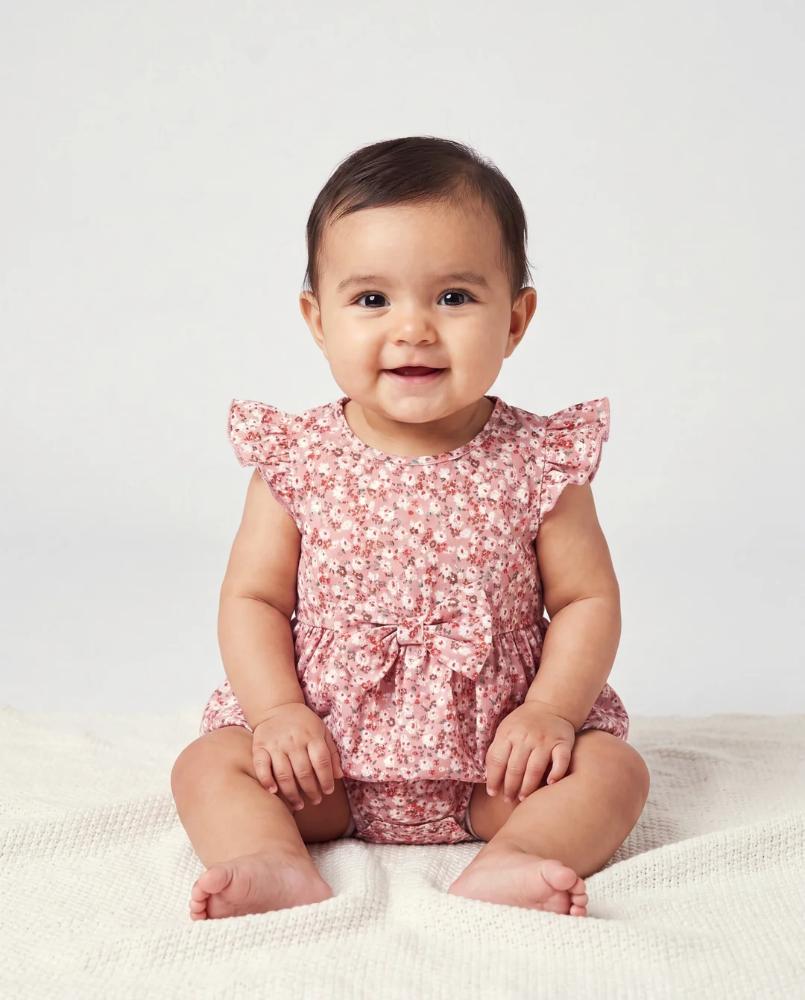
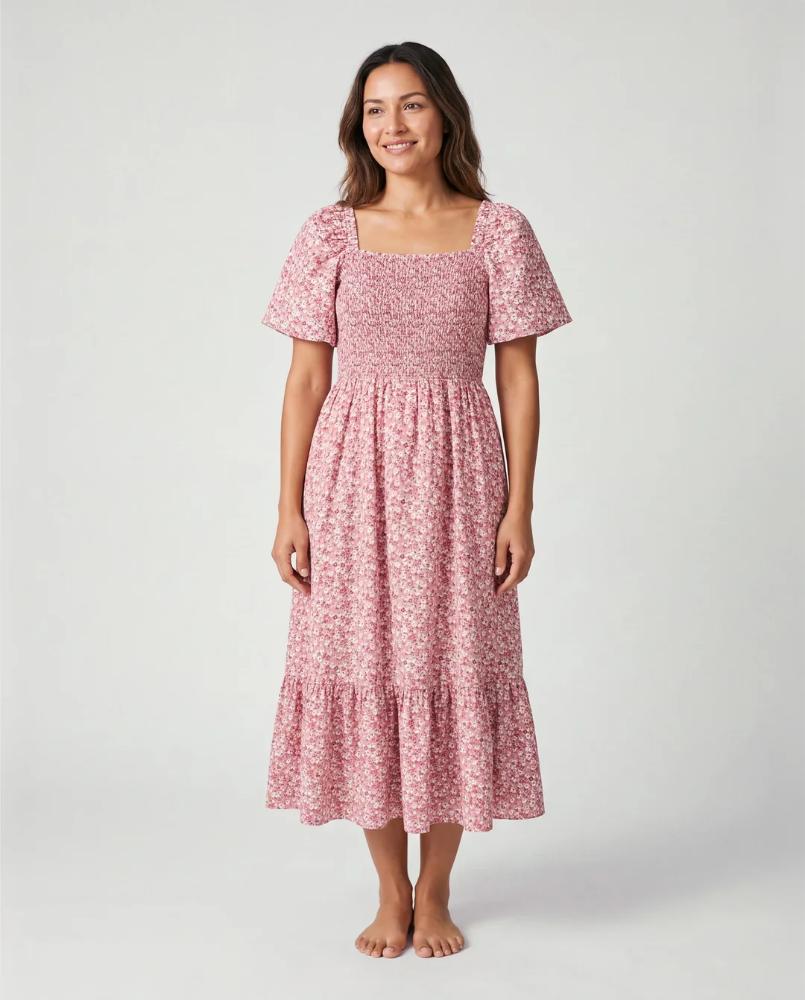
PatPat’s Mommy & Me Puff Sleeve Dress Pink offers coordinated sizing for women, girls, and baby girls rather than a complete whole-family set. The current product page describes a soft-touch floral dress with a polyester skirt, flat seams, a heat-pressed tagless label, pre-shrunk construction, and care instructions that call for machine washing cold and low ironing. PatPat also positions the dress as suitable for both everyday wear and celebrations and says the coordinated pieces can be worn together or separately.
That makes the product more useful here as an example of quiet coordination than as a rule that every family member needs the same garment. A mother and daughter could wear the floral design while another family member uses a simple pale-blue, cream, or other softly related piece. The connection remains visible without forcing the entire family into floral clothing.
Keep Contrast Low Instead of Matching Every Shade
One of the easiest ways to make neutral family styling feel polished is to control contrast. When one person wears very dark clothing and everyone else is in pale tones, that single outfit may dominate the group. When several people wear colors of similar softness, the family looks more connected even if the shades are not identical.
A simple way to manage this is to use three levels:
- One main soft shade for the strongest family connection.
- One nearby supporting tone so the outfits do not look copied.
- One quiet neutral such as cream, white, stone, or light denim to give the palette space.
For example, pale blue, dusty pink, and cream can sit together without any one color overpowering the others. Soft green, ivory, and tan can create a similar effect. The exact shades matter less than keeping their visual strength reasonably close.
Warm and Cool Neutrals Create Different Moods
Another useful decision is whether the family prefers warm or cool neutrals. Mixing both can work, but choosing one direction first usually makes the final look easier to build.
Warm neutrals include cream, tan, camel, warm beige, soft brown, and dusty peach. They tend to feel relaxed and natural in outdoor settings, especially around greenery, wood, or warmer evening light. Cool neutrals include pale blue, soft gray, white, faded navy, and muted lavender. These can feel cleaner and slightly fresher, especially in bright daytime settings or simple indoor backgrounds.
Families do not need a professional color theory lesson to use this idea. Simply place the clothes next to each other. If one item looks much warmer, brighter, or darker than everything else, decide whether that contrast is intentional. If not, replace it with something closer to the shared mood.
Family Outfits Can Match Through Tone Rather Than Print
When shopping for Christmas pajamas, families do not need to limit themselves to sets where every piece looks almost identical. PatPat’s collection currently includes coordinated options across women, men, children, babies, and different garment categories, and its own guidance says that families can simply repeat a color between people instead of matching head to toe.
That approach works particularly well for people who prefer understated clothing. A mother might wear the pale floral dress, while another adult uses a solid shirt pulled from one of its softer tones. Children can wear simpler versions of the same palette. The eye still understands that the outfits were chosen together, but each person looks more like themselves.
This also makes shopping less restrictive because a family no longer has to find the same print in every required size.
Make Every Piece Pass the Ordinary-Day Test
Quiet matching works best when the clothing can return to regular life after the family occasion. Before buying a coordinated piece, imagine it without the rest of the matching group. Would the person still wear it to lunch, a birthday, an ordinary weekend, or another outing?
If the answer is yes, the outfit is probably close to that person’s real style. If the piece only makes sense when four other people are standing beside it, it may be too specific.
PatPat describes the featured Mommy & Me dress as suitable for repeat wear and for both everyday occasions and celebrations. That is useful for a family that values a quieter wardrobe because the garment does not have to be treated as a one-photo outfit.
The same test can be used for shirts, skirts, children’s pieces, and accessories. The more easily each item returns to normal use, the more natural the matching plan becomes.
Keep Accessories From Making the Look Busy
A soft family palette does not need many finishing details. In fact, too many accessories can undo the calm effect created by the clothing.
If the outfits already use related shades and one soft print, shoes can stay simple. Jewelry does not have to match between adults. Children’s hair accessories can be chosen from the existing palette rather than introducing another strong color. Bags, jackets, and practical items can remain neutral or simply fit the occasion.
The goal is not to remove personality. It is to avoid making every visible detail compete for attention. A family can still have different shoes, hairstyles, and personal items while the shared tones quietly hold the group together.