Redbubble used to be the easy first step for independent artists. You uploaded a design, set a markup and let the marketplace handle printing, shipping and customer service. That trade still exists, but the economics behind it changed in September 2025.
Redbubble now charges Standard accounts a platform fee of 50% of monthly earnings and Premium accounts 20%. On top of that, Standard and Premium artists who set a markup above 20% pay a 50% excess markup fee on the earnings from that extra markup. On a Standard account, that means half of every month’s earnings goes back to Redbubble.
This guide compares 11 Redbubble alternatives that suit independent artists, from marketplaces that bring their own traffic to print-on-demand services that let you run your own branded shop. Every fee and earnings figure below comes from each platform’s own pages, so you can compare like with like.
Redbubble Alternatives at a Glance
| Platform | Type | How you earn | Upfront cost | Best for |
| Zazzle | Marketplace | Royalty you set (5% to 50% on physical products) | Free | Stationery, invitations and gifts |
| Threadless | Marketplace and Artist Shop | 10% marketplace royalty; Artist Shop margin above base cost | Free | Community-driven apparel artists |
| Gelato | Own store with partner network | Your markup above base cost | Free plan; Gelato+ from USD 19.99 per month billed annually | Selling internationally with local production |
| Printful | Own store with in-house production | Your markup above base cost | Free plan; Growth USD 24.99 per month | Artists building their own brand |
| TeePublic | Marketplace | Fixed amount per product | Free | Pop culture and fan art |
| Fourthwall | Own store | Your markup; no platform fee on physical products | Free plan; Pro USD 19 per month | Creators selling merch, memberships and downloads |
| Society6 | Curated marketplace | Fixed 5% to 10% of base price | Free (approval required) | Home decor and wall art |
| Fine Art America | Marketplace and artist website | Your markup above base price | Free for 25 images; Premium USD 30 per year | Photographers and fine art print sellers |
| Saatchi Art | Online gallery | 60% of each original artwork sale | Free (application required) | Artists selling originals |
| Amazon Merch on Demand | Marketplace | Royalty based on your list price and Amazon’s costs | Free (approval required) | Apparel sellers who want Amazon traffic |
| Spreadshirt and Spreadshop | Marketplace and own shop | Fixed design price on the marketplace; your margin on Spreadshop | Free | Selling across Europe and North America |
Why Look for Redbubble Alternatives?
The fees now scale against you. Take the USD 20 t-shirt base price Redbubble uses in its own examples: a 20% markup earns USD 4, and on a Standard account the 50% platform fee takes USD 2 of it. Raising your markup doesn’t fix this, because anything above 20% also triggers the excess markup fee. Total account fees are capped at USD 150 per month, which only helps artists with high sales volume.
You don’t choose your tier. Redbubble assigns Standard, Premium and Pro status itself. Only Pro accounts are exempt from both fees.
One marketplace is a single point of failure. If your visibility drops after a search or algorithm change, your income drops with it. Spreading designs across more than one channel protects your earnings.
You never own the customer. Marketplace buyers belong to the marketplace. A shop of your own lets you build an email list, a brand and repeat sales.
Top Redbubble Alternatives: In-Depth Reviews
Each review below follows the same format: what the platform is, how you earn, the main drawback and who it suits best.
1. Printful
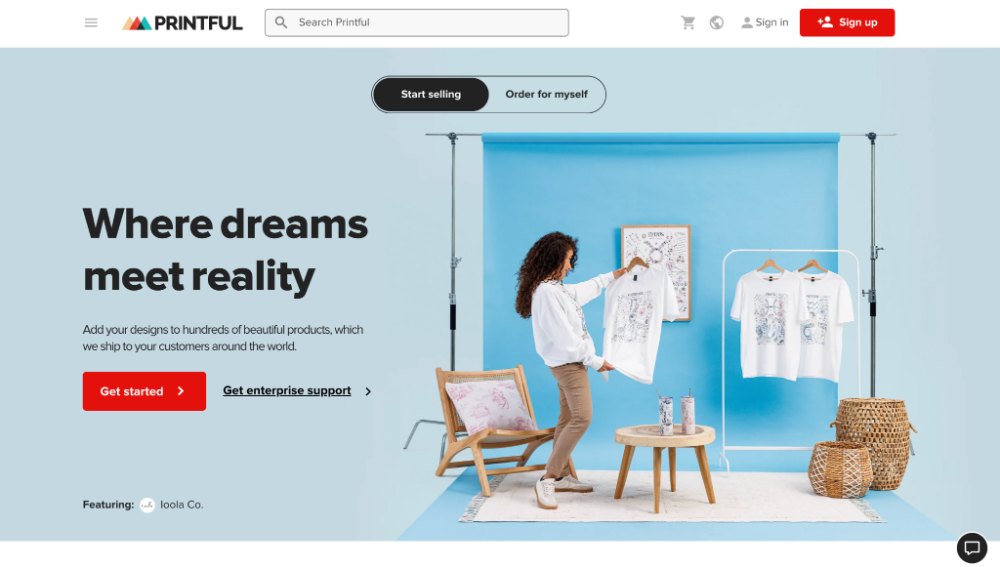
Why it’s a Redbubble alternative: Printful prints and ships products for artists who sell through their own store instead of a marketplace. It connects to Shopify, Etsy, Amazon, Wix and other platforms, and runs in-house production in the US, Canada, Mexico, Latvia, Spain and the UK, with partner facilities in Japan, Brazil and Australia.
How you earn: You set the retail price and keep everything above the production cost. There are no upfront costs, and you only pay when an order comes in. The optional Printful Growth plan costs USD 24.99 per month, gives up to 33% off products and becomes free once you reach USD 12,000 in yearly sales.
Drawbacks: There’s no built-in marketplace audience, so you need to drive your own traffic. Support runs through live chat and the Help Center rather than phone.
Best for: Artists who want full pricing control and white-label branding, including packing slips and branded pack-ins.
2. Threadless
Why it’s a Redbubble alternative: Threadless combines a curated marketplace with free Artist Shops, so you can sell to its existing community and run your own storefront at the same time.
How you earn: In an Artist Shop, you set the retail price and keep the difference above the base cost, which includes the product cost plus a 5% processing fee. On the Threadless Marketplace, you earn a flat 10% royalty on the purchase price. During managed promotions, Artist Shop earnings never fall below 10% of the sale price.
Drawbacks: Marketplace inclusion isn’t automatic. Threadless weighs design quality, commercial viability and shop activity before featuring your work.
Best for: Apparel artists who want both a community marketplace and a free shop of their own.
3. Gelato
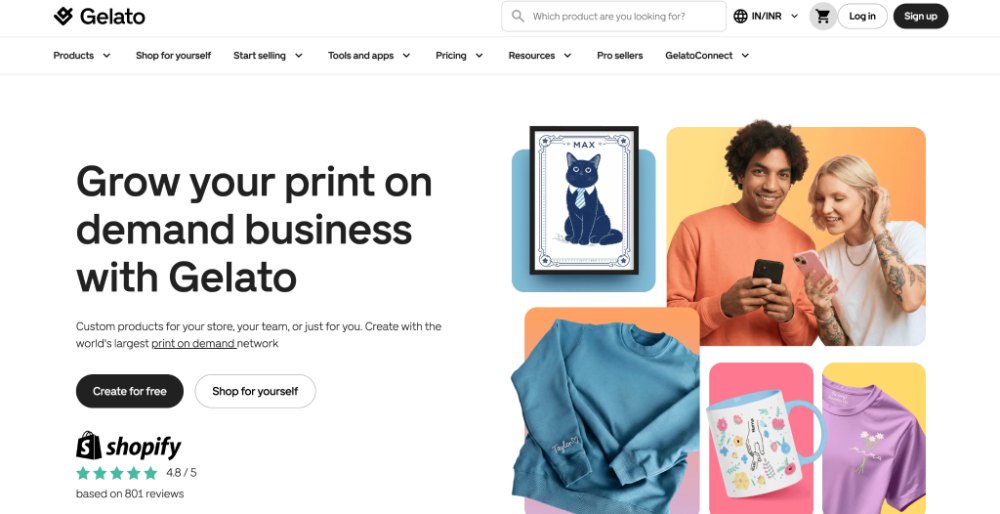
Why it’s a Redbubble alternative: Gelato connects your online store to a network of more than 250 production partners in 32 countries. Orders are routed to a partner near the customer, which can shorten delivery times for international buyers.
How you earn: You set your retail price and keep the margin above Gelato’s base cost. The free plan has no monthly fee. Gelato+ costs USD 29.99 per month, or USD 19.99 per month billed annually, and adds discounts of up to 33% on products.
Drawbacks: Gelato doesn’t bring its own buyers, so you need a store or marketplace and a plan to attract traffic. Several perks, including the product discounts, sit behind the paid plan.
Best for: Artists with customers spread across several countries.
4. Zazzle
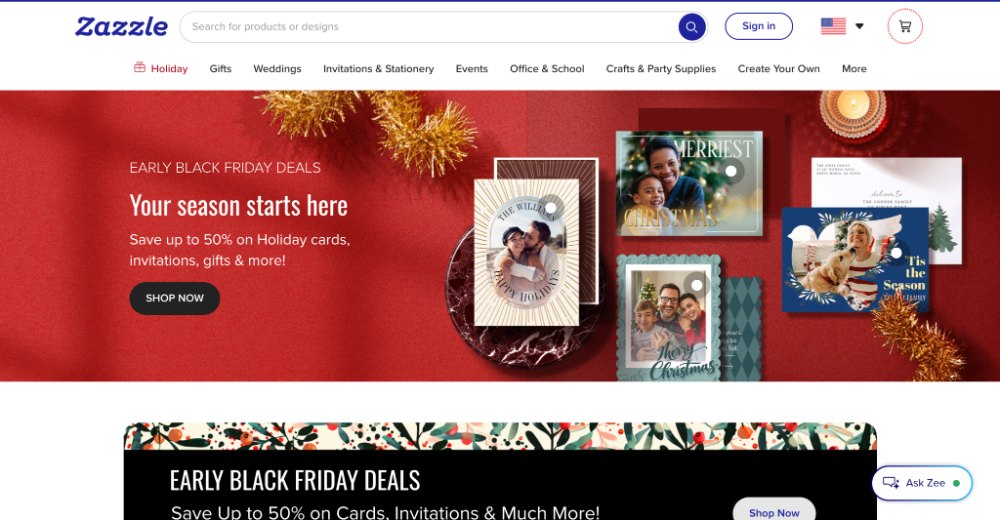
Why it’s a Redbubble alternative: Zazzle is a large marketplace known for invitations, greeting cards, stationery and party products, alongside apparel and home items. Like Redbubble, it handles production, shipping and customer service, but you set your own royalty on each product.
How you earn: The standard royalty is 5%, and you can raise it to 50% on most physical products and 99% on instant downloads. The royalty is added to the base price, so higher royalties mean higher retail prices.
Drawbacks: A 5% excess royalty fee applies when you set a rate above 10%, and Zazzle deducts a marketing royalty fee that varies by department, such as 35% for Clothing & Shoes and 40% for Accessories.
Best for: Designers of event and stationery products who want marketplace traffic and royalty control.
5. TeePublic
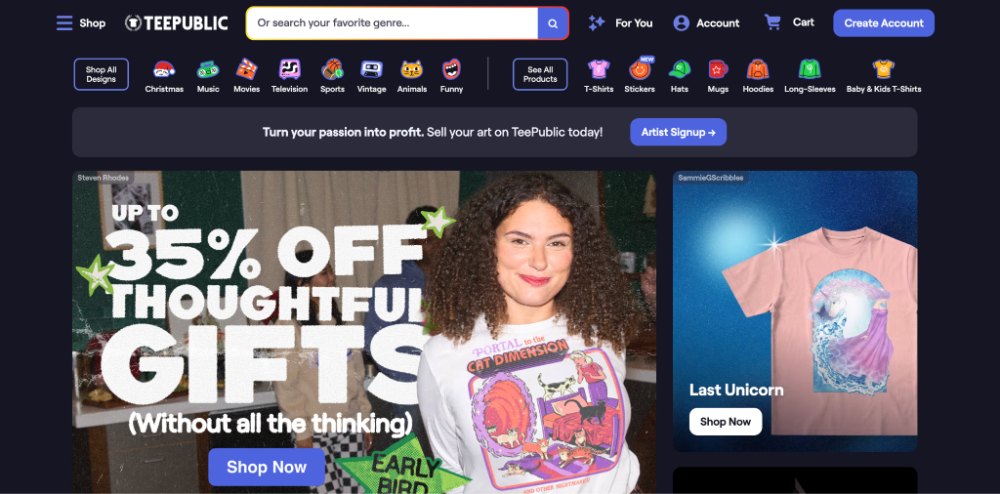
Why it’s a Redbubble alternative: TeePublic is owned by Articore, Redbubble’s parent company, but it runs its own marketplace and pays artists in a different way. It also runs a Fan Art Program for officially licensed artwork from participating brands.
How you earn: TeePublic sets retail prices and pays a fixed amount per product with no account fees. An Artisan-tier artist earns USD 4 per t-shirt at regular price and USD 2 during sitewide sales.
Drawbacks: You have no control over pricing, and TeePublic runs sales often, so many orders earn the lower rate.
Best for: Pop culture and fan artists who want predictable earnings without managing prices.
6. Fourthwall
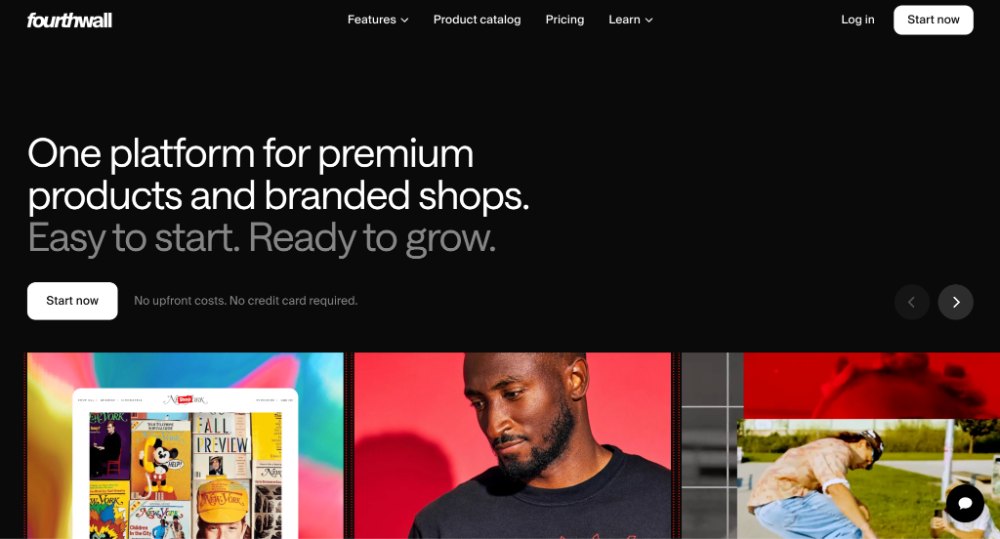
Why it’s a Redbubble alternative: Fourthwall is an all-in-one platform for building a branded store that sells merch, digital downloads and memberships. It also connects to channels such as YouTube, TikTok Shop and Twitch.
How you earn: You set your prices, and Fourthwall charges no platform fee on physical products on any plan. The free plan has no monthly fee but carries a 5% fee on digital products and a 5% fee on memberships. Fourthwall Pro costs USD 19 per month or USD 180 per year and removes the digital product fee.
Drawbacks: The free plan caps you at 50 product listings, and the 5% membership fee applies on both plans.
Best for: Artists with an online following who want to sell physical and digital products in one place.
7. Society6
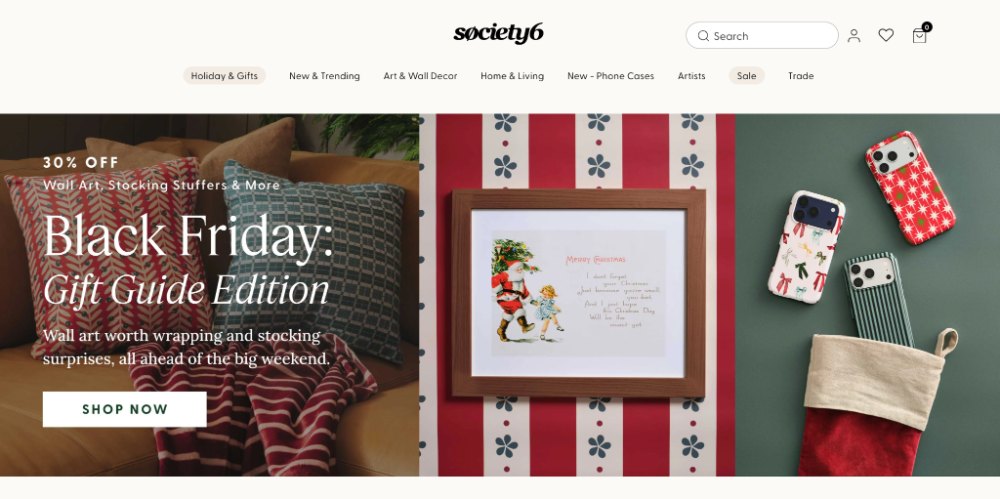
Why it’s a Redbubble alternative: Society6 is a marketplace known for wall art and home decor such as throw pillows, tapestries and framed prints. It now operates as a curated marketplace, so approved artists submit work through Artist Studio.
How you earn: Since March 18, 2025, Society6 has used standardized pricing, and artists no longer set their own markup on most products. Earnings are a fixed percentage of the base price. For example, a 16″ x 16″ throw pillow with a USD 35 base price earns USD 3.50 at full price.
Drawbacks: Discounts reduce your earnings, so the same pillow earns USD 2.80 during a 20% sale. You also have no pricing control.
Best for: Approved artists whose work suits home decor.
8. Fine Art America
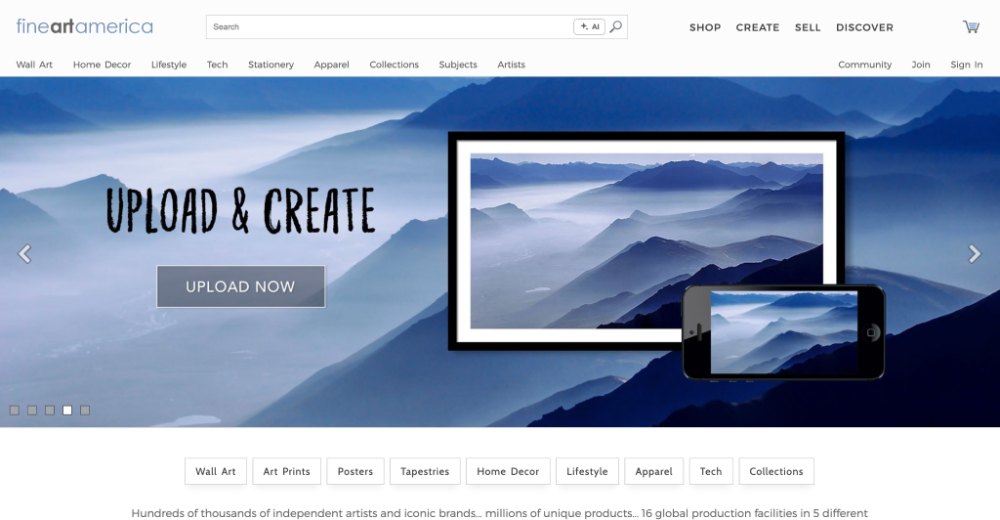
Why it’s a Redbubble alternative: Fine Art America is a marketplace built for fine art prints, with canvas, framed prints and other products. It also gives Premium members a white-label artist website.
How you earn: You add a markup on top of the base price and keep that markup as your earnings. A free Standard account lets you list up to 25 images. Premium costs USD 30 per year and unlocks unlimited uploads, the artist website and marketing tools.
Drawbacks: The 25-image cap fills quickly, and payouts wait until the 30-day return window has passed.
Best for: Photographers and painters selling prints who want a low-cost website alongside the marketplace.
9. Saatchi Art
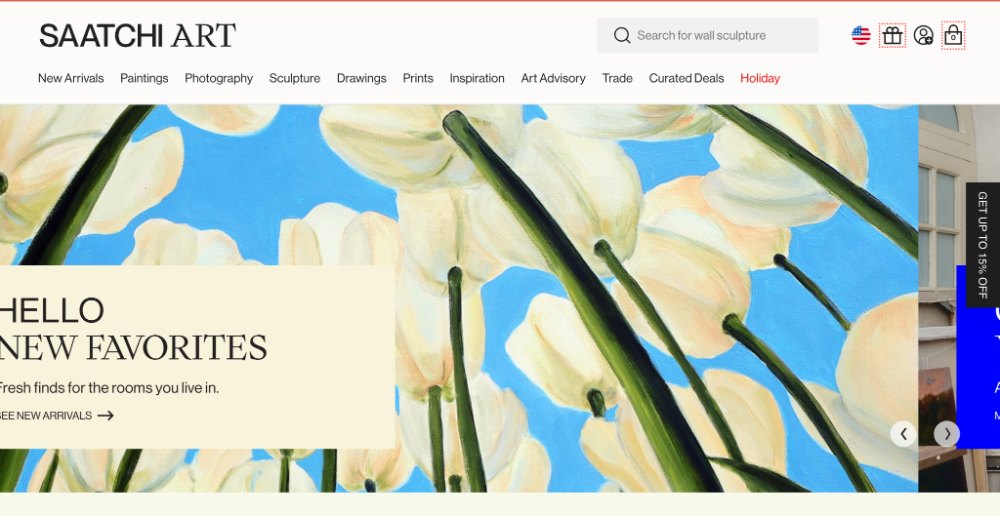
Why it’s a Redbubble alternative: Saatchi Art is an online gallery for original artwork and prints, with curators and art advisors who promote work to collectors in more than 140 countries. Selling there is non-exclusive, so you can keep your other channels.
How you earn: You receive 60% of each original artwork sale, and Saatchi Art takes a 40% commission. The collector pays for shipping, and Saatchi Art arranges courier pickup, so your only cost is packaging.
Drawbacks: You need to apply with a sample portfolio of three artworks and verify your identity before you can sell.
Best for: Artists selling original paintings, drawings and photography to collectors.
10. Amazon Merch on Demand
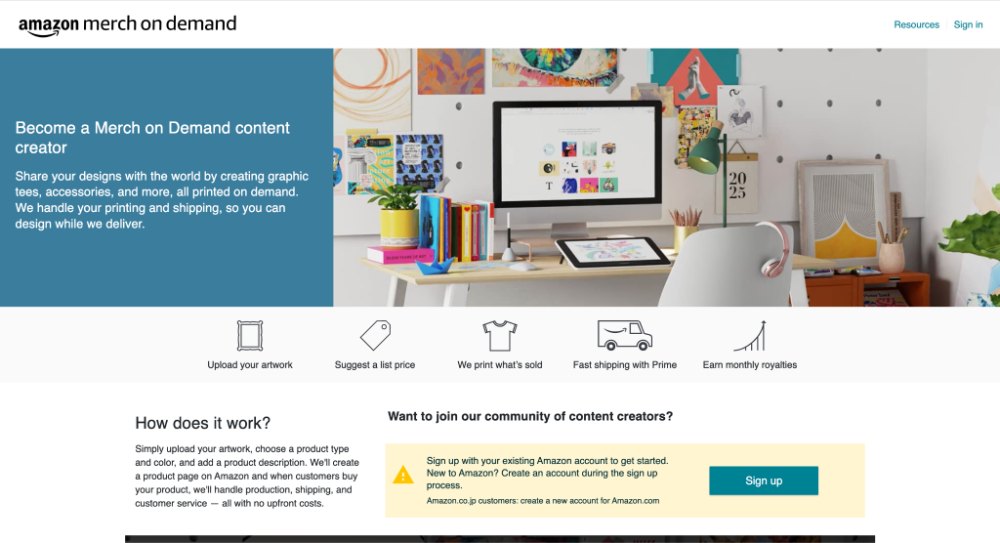
Why it’s a Redbubble alternative: Amazon Merch on Demand puts your designs on Amazon, where Amazon handles printing, shipping and customer service. Your products can reach Amazon’s existing shoppers without any inventory.
How you earn: There are no upfront fees. Your royalty depends on the list price you set and Amazon’s production and fulfillment costs, so higher list prices earn more per sale but may sell less often.
Drawbacks: You must apply and be approved. According to Amazon’s FAQ, a rejected request can’t be resubmitted.
Best for: Apparel designers who want access to Amazon’s buyers.
11. Spreadshirt and Spreadshop
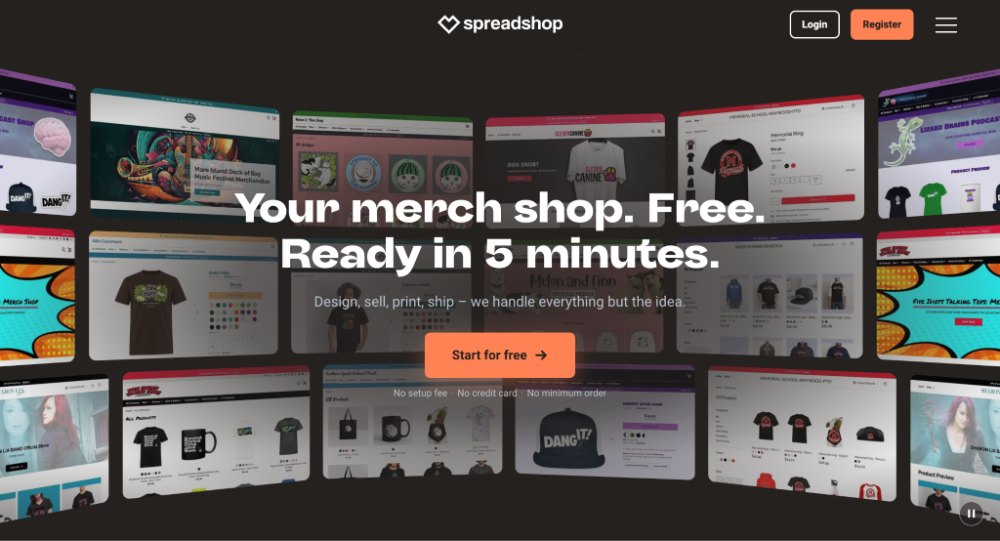
Why it’s a Redbubble alternative: Spreadshirt lets you earn on its marketplace and through Spreadshop, a store of your own on the same account. One design can earn through both channels.
How you earn: On the marketplace, you earn a fixed design price that varies by product type and country, and the Customize Tool pays a flat USD 3 per design sold. On Spreadshop, you set retail prices and keep your margin above the base price.
Drawbacks: Spreadshop shares promotion costs with you, so discounts come partly out of your margin. The free-shipping promo is the exception.
Best for: Artists who want marketplace sales and a simple shop under one account.
How to Choose the Right Redbubble Alternative
Step 1: Decide where buyers will find you. Marketplaces such as Zazzle, TeePublic and Society6 bring traffic but set the rules. Own-store services such as Printful, Gelato and Fourthwall give you control but rely on your own marketing. Hybrids such as Threadless, Fine Art America and Spreadshirt offer both.
Step 2: Match the catalog to your work. Wall art sells well on Society6, Fine Art America and Saatchi Art. Apparel suits TeePublic, Threadless and Amazon Merch on Demand. Stationery and invitations suit Zazzle.
Step 3: Compare what you keep, not the headline rate. A royalty, a fixed commission and your own markup produce very different margins. Work out your earnings on one product at full price and on sale before committing.
Step 4: Check branding options. If you want to build a brand, look for white-label packaging, packing slips and custom inserts. Own-store services are more likely to offer these than marketplaces, though some put them behind a paid plan.
Step 5: Order a sample. Check colour accuracy, print sharpness and fabric before you list anything. A sample also gives you your own product photos.
Step 6: Run more than one channel. Most artists earn more by pairing a marketplace for discovery with a store of their own for margin.
FAQs
What is the best Redbubble alternative for artists?
It depends on what you sell. For originals, Saatchi Art pays 60% of each sale. For wall art and home decor, Society6 and Fine Art America suit art buyers. For full control over prices and branding, an own-store service such as Printful or Gelato connected to Shopify or Etsy keeps the whole margin above production cost.
Why are artists leaving Redbubble?
Since September 1, 2025, Redbubble has charged Standard accounts 50% of monthly earnings and Premium accounts 20%, with an extra 50% fee on earnings from any markup above 20%. Only Pro accounts are exempt, and Redbubble decides which tier each artist gets.
Is TeePublic better than Redbubble?
TeePublic and Redbubble share a parent company but pay differently. TeePublic pays a fixed amount per product, such as USD 4 per t-shirt at regular price, and charges no account fees. Redbubble lets you set a markup but deducts tier-based fees.
Can I sell the same design on several platforms?
Yes, as long as each platform’s terms allow it. Saatchi Art and TeePublic are non-exclusive, and running a marketplace alongside your own store is a common way to spread risk.
Do I need my own website to sell my art?
No. Marketplaces such as Zazzle, Society6 and TeePublic host your listings for you. If you connect a print-on-demand service to Etsy instead, Etsy requires you to disclose your production partner.
What happened to Spring (Teespring)?
Spring, formerly Teespring and now owned by Amaze, has shut down. Its stores stopped taking orders and creator accounts have closed, so artists who sold there need a new platform.
Conclusion
Redbubble’s fee changes don’t make it useless, but they do make it a poor choice as your only sales channel. Start with the platform that matches your work: Saatchi Art for originals, Society6 or Fine Art America for wall art, TeePublic or Threadless for apparel, and an own-store service when you’re ready to set your own prices and build a brand.
Whichever route you choose, compare what you actually keep on each sale, order a sample before you list, and add a second channel once the first one is working.