
- Insulation Commandos of Southern California is the top pick for most homes and businesses, with service across Los Angeles, Orange County, Ventura, and Riverside, three insulation types, financing options, and a satisfaction guarantee.
- RBH Insulation, Inc. is best for manufacturer-certified fibreglass, blown-in, and spray foam work across the whole building envelope.
- CR Insulation Inc. is best for commercial firestopping, air barrier work, and projects that span multiple states.
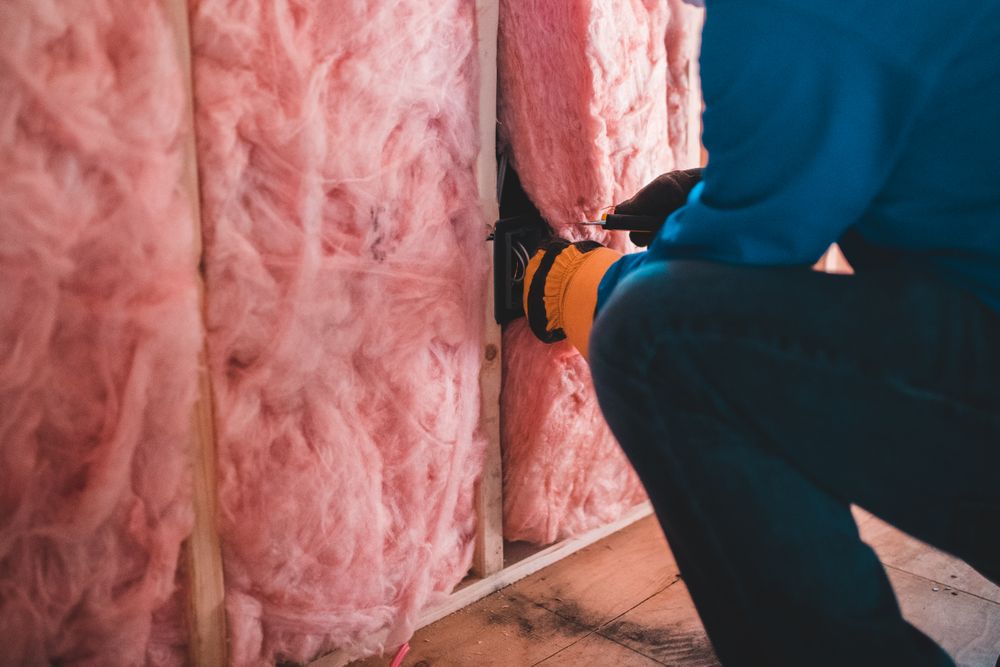
This article compares five Southern California insulation contractors, ordered with residential insulation first and commercial and speciality scopes after, weighing services, product options, credentials, and project planning for homeowners and property managers alike.
Compare the Contractors
Current as of November 2026.
| Company | Best for | Insulation types/systems | Key services | Licences and certifications |
|---|---|---|---|---|
| Insulation Commandos of Southern California | Multi-county residential and commercial attic and crawl space work, with financing | Spray polyurethane foam, cellulose, radiant barrier | Residential and commercial insulation services, including radiant barrier insulation | Licensed and insured, Insulation Contractor’s License #1100262 |
| RBH Insulation, Inc. | Manufacturer-certified fibreglass, blown-in, and spray foam across the full envelope | Fibreglass batt, blown-in, spray foam | Ceilings, under-floors, walls, garage ceilings, knee walls, foam sealing | Contractor’s License #558799, Manufacturer Certified Contractors |
| CR Insulation Inc. | Commercial firestopping, air barrier, and multi-state speciality projects | Insulation within a firestopping and air barrier scope | Firestopping, acoustical, waterproofing, air barrier, caulking and sealants, expansion joints | UL-Qualified Firestop Contractor, ABAA-certified installer, MBE and SBE certified |
| Alert Insulation of California, LLC | Metal building and rigid board insulation for commercial builds | Metal building insulation, rigid board insulation | Insulation, acoustical ceilings, fire proofing | License #746781 |
| Dittemore Insulation Contractors, Inc. | Spray-applied acoustical systems and fire stopping | K-13, Sonaspray, Sonakrete, thermal batt | Acoustic systems, fire stopping | License #750723, crews with OSHA 10 training, some holding OSHA 30, plus confined spaces, first aid/CPR, scaffolding, fall protection and lift certifications |
Start by matching the job to the right kind of contractor. Attic top-ups, continuous rigid-board work, acoustical treatments and firestopping are distinct scopes, and a company strong in one may not touch another. If you own a home, name the room or assembly you want improved, whether that is an attic, a crawl space or a noisy bedroom wall. If you buy for a commercial property, the plans will tell you which systems the work requires. Then ask each bidder what areas, products and prep work the price includes, so you compare like with like.
1) Insulation Commandos of Southern California
Insulation Commandos of Southern California leads this list because it combines multi-county residential and commercial coverage, three insulation types, financing, and a satisfaction guarantee in one package.
Start with reach. The company serves Greater Southern California, naming Los Angeles, Orange County, Ventura, Riverside, and more, and it takes residential and commercial work alike. If you own a home in one county and a small building in another, that’s one relationship covering both. You can open it with a free in-person estimate from Insulation Commandos of Southern California, and the in-person part matters. A visit gives you the chance to walk the estimator through your attic access points and the rooms that worry you most, and to talk through the full scope of the job before any work is scheduled.
The product lineup covers three distinct approaches, and each solves a different problem in this climate. Radiant barrier insulation keeps roof heat out of the living space, a good match for a roof space that overheats through the long cooling season. Spray polyurethane foam seals air leaks as it insulates, handy for crawl spaces and irregular cavities where fitted material leaves gaps. Cellulose gives you a practical route to bring an older attic up to depth. You don’t need to choose a material before the estimate. The walk-through is where that decision happens, and a contractor who installs all three can recommend on fit for your house.
The wider service list includes residential and commercial insulation, noise reduction, removal, pest insulation cleanup, air sealing and duct cleaning. That range matters because a home attic and a commercial space ask different things of a contractor, and a contractor handling both has seen the variations. When you compare quotes, ask for the scope in writing, because that’s where two estimates quietly stop being the same job. Whatever contractor you choose, compare on identical scope: same areas, same target R-value, same materials. A lower number on a thinner scope is a different job, and the difference shows up later.
Financing and flexible payment options round out the offer, and they’re more useful than they look. Rebate paperwork runs on its own clock, so ask when the money arrives relative to the work, and whether a payment plan can bridge the gap. On the rebate itself: for LADWP customers, the Los Angeles Department of Water and Power pays $0.50 per square foot for attic insulation rated above R-19 and $0.30 per square foot for insulation rated R-19 and below. Those rates cover batt and roll insulation only, and the lower R-19 tier applies when clearance is under 24 inches and a higher rating cannot be achieved. Ask for the achieved R-value in writing on your invoice, because that figure is what supports the higher tier. If a contractor can’t tell you which tier your project should reach, keep asking.
The company says it is licensed and insured, holds Insulation Contractor’s License #1100262, and promises satisfaction guaranteed. Before the work starts, ask for a written scope that spells out the product details, the intended depth or target R-value, and the areas of the home to be covered. It also helps to ask who will walk you through the completion photos once the job is done. Getting these answers up front keeps everyone on the same page about what the finished project looks like.
Commercial clients get the same front door, since the company states residential and commercial services. If you manage a small building, ask about scheduling around business hours, access to the work area, and what documentation you’ll receive for your files. Ask directly about similar projects they’ve handled and who coordinates access on the day, so you know exactly what to expect.
Prepare for the Estimate
Pricing starts with a free in-person estimate, and that visit is worth using well. Walk the estimator through the areas you want insulated, and ask about product choice, target R-value, removal of old material, and air sealing. Getting each of those items on a written proposal makes it easy to compare quotes side by side. A little preparation turns the estimate into a clear, apples-to-apples decision.
2) RBH Insulation, Inc.
RBH Insulation, Inc. takes second place as the manufacturer-certified choice, with fibreglass, blown-in, and spray foam covering the whole building envelope.
The stated service list reads like a tour of the whole house: top-floor ceilings, new under-floors, exterior walls, garage ceilings with living space above, knee walls, and foam sealing around windows, doors, plates, and penetrations. That last item is easy to skim past and worth slowing down for. Gaps around framing and penetrations leak conditioned air, and RBH lists this foam sealing only if required, so ask whether it’s in your quoted scope before you compare one quote against another. If your home has a room that’s always the wrong temperature, like a bedroom over the garage, this list covers exactly that spot. Knee walls, the short vertical walls behind sloped ceilings, leak heat when they’re skipped, and they’re named here. Before the quote visit, walk the house and note every uncomfortable room, so the estimator prices the whole envelope in one go.
The three stated materials give the estimator room to match the product to the space. Blown-in material fills irregular joist bays and tops up existing coverage, batts suit open framing and new work, and spray foam handles the spots where air sealing matters as much as R-value. RBH also states Manufacturer Certified Contractors status, and its homepage says the company is licensed and insured and uses no subcontractors, describing its staffing approach. When you compare bids, ask each contractor to name the exact product, the intended depth or R-value, and which areas of the home the quote covers. Those three answers make it much easier to line two estimates up side by side and see what you are actually paying for.
The company states it works with energy rebates and tax credits, so ask which programmes fit your project and what paperwork you’ll receive for each one. Federal tax credits and utility rebates run on different rules and different forms, so treat them as two separate questions in the same meeting. A contractor who hands you organised documentation saves you a second round of calls later.
In an NREL analysis of 130 million U.S. homes, reported by the Insulation Institute, 39 percent of homes could see higher operating costs after a minimum-efficiency heat pump is installed, and that share falls to 19 percent when the building envelope is addressed first. If a heat pump is anywhere in your future plans, sequence the insulation before the HVAC upgrade, and a full-envelope contractor is the natural first call.
RBH holds Contractor’s License #558799, serves Los Angeles and Southern California, and quotes free. Verify the licence before you compare quotes.
Match the Bid to the Room
The stated lineup is fibreglass batt, blown-in, and spray foam insulation, and the real question is whether it covers the spot that’s bothering you. The named locations are top-floor ceilings, exterior walls, under floors, garage ceilings with living space above, and knee walls, which is most of where a house loses comfort. Foam sealing around windows, doors, plates, and penetrations is listed when the job calls for it. The simplest check is to match the written bid to the uncomfortable area in your home and confirm it’s covered before you sign.
3) CR Insulation Inc.
CR Insulation Inc. is the speciality commercial contractor on this list, credentialed for firestopping and air barrier work that gets inspected.
The stated services are firestopping, insulation, acoustical work, spray waterproofing, air barrier, caulking and sealants, and expansion joints. Read together, that’s a building-envelope and fire-safety scope for commercial construction: tenant improvements, multi-family builds, and institutional projects where penetrations, joints, and movement all need documented treatment. Expansion joints and sealants sound minor until a large building moves with temperature swings, and waterproofing belongs in the same conversation as insulation on any project where the envelope gets opened up. This is work that gets inspected, and the paperwork matters as much as the installation.
The credentials match the scope. CR Insulation states it is a UL-Qualified Firestop Contractor, a third-party qualification that carries weight when firestop installations are checked against tested assemblies. It also states ABAA-certified installer status, the air barrier trade’s credential, which tells a general contractor the crew has been evaluated on how air barrier systems get applied. For public or institutional work, the company is a certified Minority Business Enterprise and Small Business Enterprise, which can help a bid meet participation goals. On inspected jobs, ask which firestop systems the crew plans to use and how each penetration gets documented, because that record is what the inspector signs off.
The stated service area runs San Diego, Los Angeles, San Francisco, and Sacramento, plus Nevada, Arizona, and Hawaii. Southern California sits squarely inside that territory, and if you manage buildings in more than one state, the reach means one vendor relationship across the portfolio.
Speciality Systems Versus Attic Work
The distinction here is scope: CR Insulation Inc. works a specialist list of firestopping, acoustical spray, waterproofing, air barrier, caulking and sealants, and expansion joints. That means a bid from CR covers building-envelope and life-safety systems, so comparing it against a residential attic top-up is not a like-for-like comparison. The useful question is which systems your project actually needs. If the plans call for firestopping or an air barrier, a specialist scope is the right match; if you only need attic insulation, a general residential contractor is the simpler fit.
4) Alert Insulation of California, LLC
Alert Insulation of California, LLC is defined by its products: metal building insulation and rigid board systems, with acoustical ceilings and fire proofing alongside.
Across Southern California, that lineup points at commercial and light-industrial work: warehouses, workshops, and metal-framed buildings, where heat and condensation through panels are the daily problem, and where an acoustical ceiling often goes in alongside the thermal work. For an owner putting up a shop, a studio, or a storage building, this is the specialist end of the list.
Rigid board suits continuous applications on walls and roofs, where you want steady thermal performance without thickness eating into the space. Condensation deserves a specific question in a metal building, because moisture against panels can undo the thermal work, so ask how the system manages it. When you compare bids, ask each bidder to state the facing and the fastening method, since those details change both performance and price. Alert holds License #746781 and offers a free estimate, providing a starting point for discussing the project.
Match the Building Assembly
The stated products suit commercial and industrial structures. Metal building insulation and rigid board systems are built for large spans and hard surfaces, so a typical home project may call for a different approach than these systems are designed for.
5) Dittemore Insulation Contractors, Inc.
Dittemore Insulation Contractors, Inc. closes the list with spray-applied acoustical systems and a crew credentialed for demanding job sites.
The stated insulation types are K-13, Sonaspray, and Sonakrete, spray-applied thermal and acoustical systems, alongside thermal batt insulation, and the stated services are acoustic systems and fire stopping. Spray-applied acoustical finishes are a niche product. They absorb sound within a room, which is a different job from slowing heat transfer, and knowing which spaces need each one keeps a project from over-specifying one material where the other would do the work. Thermal batt gives the company a conventional option beside the spray systems, useful where straightforward thermal insulation is the goal rather than sound control. Fire stopping rounds out the list, so the scope covers thermal, acoustical, and rated-assembly work under one contractor.
The company says its crews hold OSHA 10 training, with some holding OSHA 30, plus credentials in confined spaces, first aid and CPR, scaffolding, fall protection, and lifts. If you are buying for a commercial property, you can ask Dittemore which of this documentation matches your own site’s access and scheduling requirements, since general contractors often set their own rules for subcontractors. The company holds License #750723.
Define Acoustic and Thermal Goals
Dittemore Insulation Contractors, Inc. offers spray-applied acoustic systems like K-13, Sonaspray and Sonakrete alongside thermal batt insulation, and those products solve different problems.
Plan Your Next Step
Start by identifying whether your building needs sound absorption, thermal insulation, or both. Then ask the contractor which proposed system addresses each objective, so the quote you get matches what the space actually calls for.