
A roulette table gives a filmmaker a useful arrangement before an actor speaks. People gather around a shared surface, their attention follows a moving ball, and the pause before the result leaves time to study a face. Someone can appear perfectly composed while their hands reveal something else.
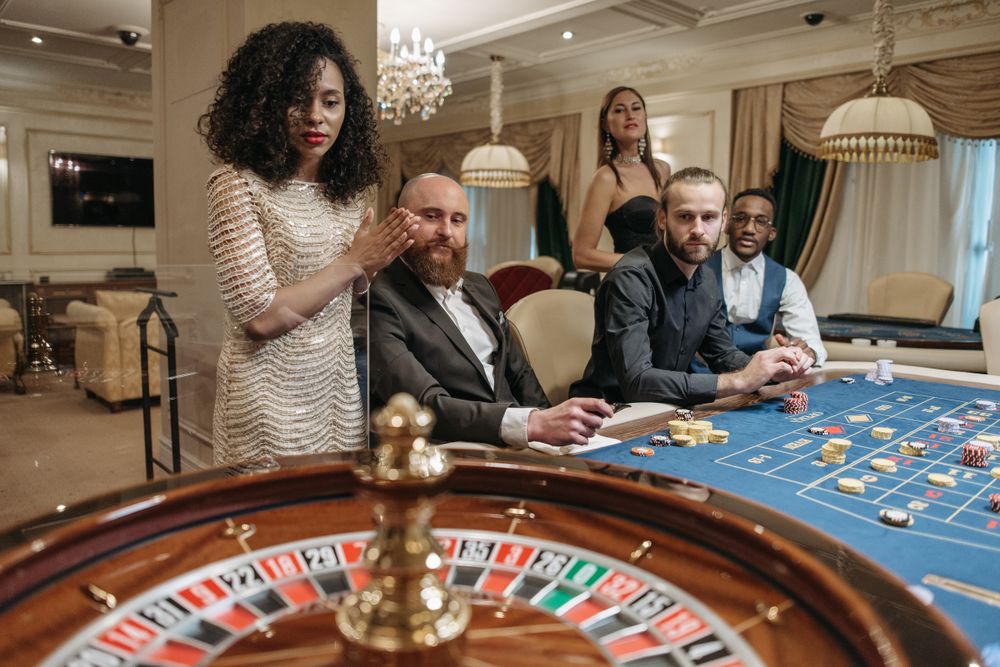
The setting also puts clothes under scrutiny. A sleeve crosses the table as chips are placed. Jewellery catches the light. A pale jacket separates its wearer from the surrounding crowd. Costume becomes part of the action rather than something seen only when a character enters the room.
That helps explain the lasting appeal of roulette scenes. The game provides movement and anticipation, while the people watching it supply the drama. For designers, the challenge is to make the room and its occupants tell the same story.
The table layout carries its own visual language
Roulette has a recognisable appearance. The numbered wheel, betting grid and stacks of chips give the audience clear points of attention. Even viewers unfamiliar with the rules can follow a hand placing a stake and understand that a result is approaching.
Those visual conventions remain recognisable in online roulette, where the wheel and numbered layout translate the physical game onto a screen. Their arrangement helps people understand where the action happens. Colour and presentation make the game readable; they do not predict where the ball will land.
On film, a director can divide that layout into separate shots. A close view of chips establishes a decision. A wider image shows who is watching. Returning to the player’s face makes the wait personal.
The audience does not need a lengthy explanation of the game for the scene to work. The important information might be that a character is spending more than planned, concealing their anxiety or trying to impress somebody nearby.
Bay of Angels makes appearance part of the character
Jacques Demy’s Bay of Angels, released in 1963, places Jeanne Moreau and Claude Mann in the casinos of the French Riviera. Moreau plays Jackie, whose relationship with roulette drives much of the film. Its black-and-white photography makes contrast central to the way she occupies the screen.
Jackie’s platinum-blonde hair and pale clothes create a striking presence against darker interiors. She looks deliberately assembled, with an appearance that draws attention even when she is surrounded by other players.
The costume works because it belongs to her behaviour. Her presentation suggests confidence and self-invention, while her attachment to the table complicates that first impression. The clothes cannot tell the audience everything about her, but they encourage an initial reading that the performance can develop or disturb.
It is a useful example of glamour carrying dramatic weight. The outfit matters because of the person wearing it and the choices she makes while dressed that way.
A sleeve can reveal as much as an evening gown
Roulette scenes give costume departments an unusual practical problem. Much of an actor’s performance may happen while standing or sitting close to the table, with the lower half of the outfit outside the frame.
The visible details therefore need careful thought. Cuffs, lapels, necklines and watches can receive more screen time than the complete silhouette. Fabric also has to move convincingly when the actor reaches forward.
An immaculate cuff can suggest preparation. A pushed-up sleeve can make the same gesture look impatient or informal. A character who repeatedly adjusts a bracelet gives the camera a small action to return to during the wait.
These details need restraint. If every accessory announces a personality trait, the costume begins to feel like an explanation. A well-chosen garment gives the actor something useful to inhabit without demanding attention in every shot.
The room establishes who belongs
Production design can make a casino feel exclusive, ordinary, crowded or uncomfortable. The table may be familiar, but the space around it changes the social meaning.
A generous distance between tables allows characters to observe one another across the room. A tighter arrangement places strangers close enough to overhear conversations. Entrances and sightlines determine who can arrive unnoticed and who immediately becomes the centre of attention.
The background performers contribute too. If everyone appears equally polished, a nervous newcomer may need a different posture or manner to stand out. In a more varied crowd, exceptionally formal clothes can make a character conspicuous.
A convincing room should also appear to function beyond the main scene. Dealers need working space, guests need routes through the floor, and furniture should allow people to move naturally. Decorative detail becomes distracting when the room stops making physical sense.
Lighting decides what the audience notices
A roulette scene can lose clarity if every reflective surface competes for attention. Chips, glassware, polished wood and jewellery all offer potential highlights.
Lighting gives those objects an order of importance. The betting surface must remain readable when the action depends on it, while faces need enough definition for small reactions to register.
Costume and lighting decisions are closely connected. A pale shirt may draw the eye more strongly than expected. Dark fabric can lose its shape against a shadowed background. Highly reflective accessories can become distracting during a close shot.
Black-and-white photography adds another consideration. Colours that appear distinct in person can produce similar shades of grey. Texture, sheen and tonal contrast then do more of the work of separating a character from the room.
The strongest scenes keep watching after the result
The spin creates anticipation, but the moments afterwards often reveal more. One player immediately reaches for more chips. Another steps back. Someone looks towards a companion before reacting.
A designer can help those actions remain visible by keeping the frame clear and giving the actors a believable space to use. A chair, a glass or the edge of a jacket can become part of a reaction without requiring dialogue.
That is also why copying the clothes alone rarely reproduces a memorable scene. The outfit was designed for a particular body, room, light and action. Remove those relationships and an expressive costume can become a generic evening look.
When watching a roulette scene, pay attention to the shot immediately after the ball stops. Notice whose face remains visible, whose hands enter the frame and which details suddenly seem out of place. The wheel has finished moving, but the design is still telling the story.