
There was a time when the word “replica watch” conjured up images of cheap, lightweight brass tickers sold down dark city alleyways. They felt wrong, they looked wrong, and they ticked with the subtle grace of a lawnmower. But as technology has reshaped everything from art to fashion, the underground horology market has undergone its own massive, high-tech revolution.
Welcome to the era of the Superclone.
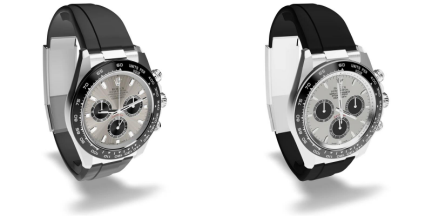
Today’s premium clones aren’t just surface-level lookalikes; they are marvels of intensive reverse-engineering. Driven by impossible multi-year dealership waitlists and an astronomical surge in primary-market prices, a sophisticated new class of style conscious consumers is shifting perspectives. Rather than participating in arbitrary dealership games, they are turning to high-end manufacturers that replicate luxury watches piece-by-piece, down to the exact microscopic details. It represents a fascinating intersection of modern engineering, luxury culture, and the democratisation of high-end design.
The Evolution of Scarcity Culture
To understand why superclones have transitioned from taboo to a topic of genuine curiosity among design enthusiasts, one must look at the state of the modern luxury market. Over the past decade, luxury watchmaking houses have shifted heavily toward a model of hyper-scarcity. Entering a boutique to buy a classic steel sports watch often results in being placed on an ambiguous, years-long waiting list, or being told you must first purchase thousands of pounds worth of less desirable jewellery just to qualify.
This corporate-engineered scarcity has inadvertently birthed an industrial countermovement. Parallel manufacturing facilities, primarily based in advanced tech hubs, realised that the technology required to build a flawless timepiece was no longer an exclusive Swiss secret. By applying cutting-edge 3D scanning, CNC machining, and metallurgy, these independent factories began producing watches that challenged the very definition of a “counterfeit”.
Forged in 904L Steel
The difference between a low-tier replica and a modern superclone lies entirely in the materials and the structural execution. Basic street-tier fakes rely on cheap base metals plated with thin coatings that quickly tarnish, flake, or irritate the skin.
Top-tier engineering groups have completely bypassed generic metals. Instead, they source 904L stainless steel—the identical, highly corrosion-resistant alloy utilised by elite Swiss watchmaking houses. 904L steel is notoriously difficult to machine, requiring specialized industrial presses and diamond-tipped tools. However, it provides a unique structural brilliance and a specific gravity that ensures when the watch sits on the wrist, its gram-for-gram weight is completely identical to its five-figure counterpart.
Furthermore, elements like sapphire crystal glass are treated with dual-sided anti reflective coatings to mimic the exact optical clarity of the original models. The bezels are no longer painted aluminum; they are pressed from genuine, scratch-resistant ceramics that interact with natural light in the exact same manner as a genuine luxury piece. Tap the glass, rotate the bezel, or test the micro-adjustments on the clasp, and the tactile feedback feels exactly as it was intended by the original designers.
The True Internal Heartbeat
Where the artistry truly shifts gears is under the case back. Historically, replica watches were easily exposed the moment they were opened, revealing cheap, mass-produced quartz batteries or generic Asian automatic movements. Superclones have entirely rewritten this narrative through the development of 1:1 clone calibres.
These custom-engineered movements do not merely fit into the case; they clone the structural architecture of legendary Swiss engines. If an authentic watch relies on a specific movement calibre, the superclone counterpart replicates that identical gear train layout, matches the exact positioning of the balance wheel, mimics the intricate bridges, and applies matching aesthetic finishes like Côtes de Genève engraving.
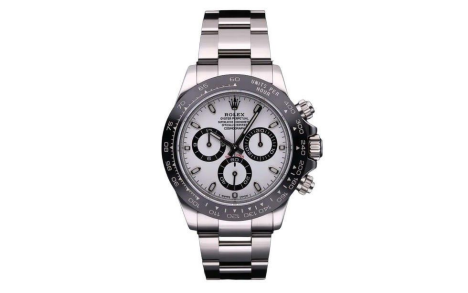
This is a level of mechanical precision that allows these pieces to operate smoothly at identical beat rates (typically 28,800 vibrations per hour), delivering that iconic, sweepsecond hand motion. It also means they provide the functional benefits expected of a true mechanical timekeeper, including sweeping complications, functioning GMT hands, and impressive 70-hour power reserves. It is an extraordinary level of reverse
engineering that often requires a master horologist under a jeweler’s loupe to accurately differentiate from the original internal architecture.
Navigating the Modern Clone Market
For those intrigued by this high-tech intersection of style and engineering, navigating the landscape requires a discerning eye. Because the market is flooded with varied tiers of quality, finding platforms dedicated exclusively to premium execution makes all the difference. Casual buyers often fall victim to mid-tier replicas marketed as top-grade pieces.
To combat this, dedicated curators like LuxuryCloneWatch have stepped into the spotlight. They operate essentially as quality-control filters, specializing strictly in 1:1, factory-vetted timepieces that provide the authentic weight, luster, and mechanical longevity of true horological art. By sourcing exclusively from top-tier operations, they ensure that enthusiasts receive pieces built to strict structural standards rather than corner-cutting imitations.
A New Paradigm of Luxury Equity
As fashion and culture shift away from overt consumerism and reposition around pure aesthetic and technical appreciation, the conversation surrounding superclones is evolving. When a timepiece can be replicated to a standard that satisfies the tactile and visual expectations of an experienced collector, it forces a compelling question: Are consumers paying for the inherent physical mastery of the watch, or simply the marketing budget of a Swiss conglomerate?
The modern superclone is no longer just a budget alternative for the uninitiated—it has become a compelling testament to how far modern manufacturing limits can be pushed, offering pure design appreciation without the artificial boundaries of the traditional boutique gatekeepers.