
By Sara Darling
Love Me Tender arrives in UK cinemas on 7 August with a premise that feels less like fiction and more like a real time documentary. Directed by Anna Cazenave Cambet and adapted from Constance Debré’s novel, it follows Clémence (Vicky Krieps), a former lawyer turned writer, whose life unravels after she comes out and begins a relationship with a woman.
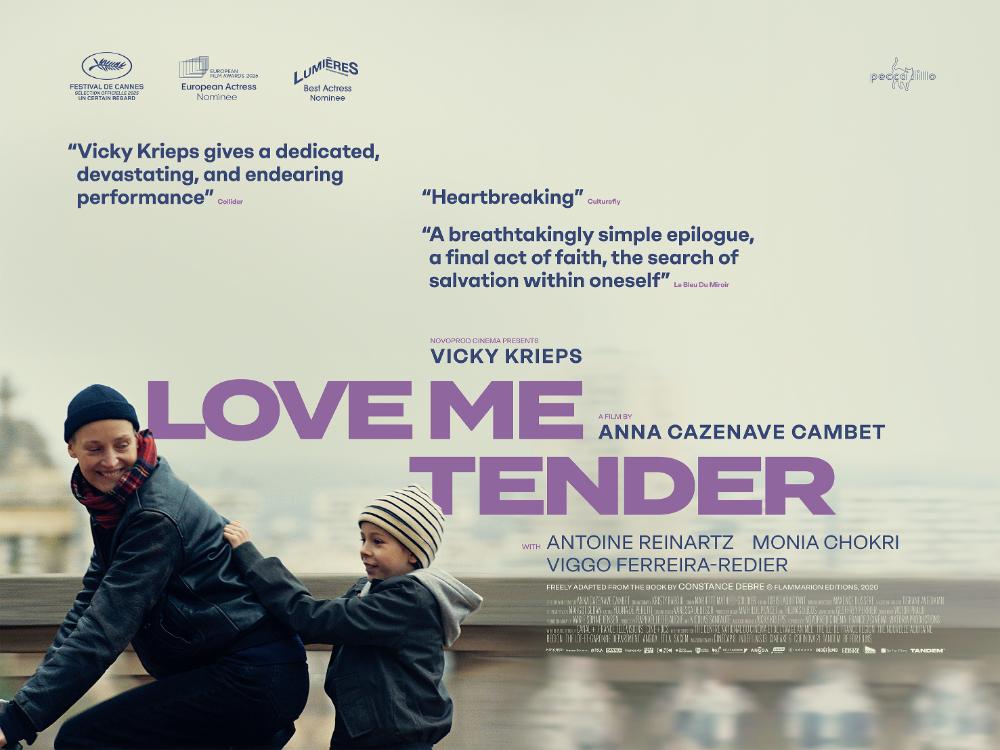
Less love story and more of a commentary on a lesbian lifestyle, it opens with the female lead in an amicable co-parenting arrangement with her ex-husband Laurent (Antoine Reinartz) – yet that quickly curdles. After Clémence reveals her relationship with a woman, Laurent files for sole custody of their son, Paul. From there, the film charts a years-long legal and emotional battle – not simply for custody, but for the right to exist fully as both a mother and an autonomous woman.
Clémence therefore is not just defined as a mother, she is complex – intellectual, sexual, independent. It’s a deliberate rejection of the self-sacrificing maternal archetype. Vicky Krieps does everything she can to hold it together – playing a part which is emotionally devastating. She brings warmth, intelligence, and a sense of lived-in reality that makes it so believable.

Antoine Reinartz is equally effective, delivering a portrayal of Laurent that is all the more disturbing for how controlling he is. There’s no melodrama here – just a steady, believable cruelty. His manipulation of Paul, using him as leverage in a deeply personal vendetta, is one of the film’s most upsetting elements. It’s handled without sensationalism, which is an even tougher watch.
However, this is a two hour film and some scenes linger well past their emotional peak, and the narrative begins to feel a bit forced – particularly noticeable in how the young Paul is portrayed. While Viggo Ferreira Redier gives a solid performance, the character is never fully explored beyond his function within the conflict. For a story so deeply rooted in custody and parenthood, this absence feels like a significant oversight.

At its strongest, the film has something important to say. Its clearest and most effective idea, that it is not queerness that harms a child, but the prejudice of the systems surrounding them is my takeaway, but it still leaves a bitter taste, with the ending restrained and ambiguous. After such an emotionally loaded premise, the refusal to deliver a more decisive or impactful conclusion feels a bit of an anti climax.
CREDIT
Love Me Tender – In UK cinemas 7th August
SOCIALS @Peccapics