Picture a patient who has spent months researching a subtle facial refresh. They don’t want an over-filled, “done” look – they want skin that reads healthier, and they want the person holding the needle to actually understand facial anatomy, not just follow a template.
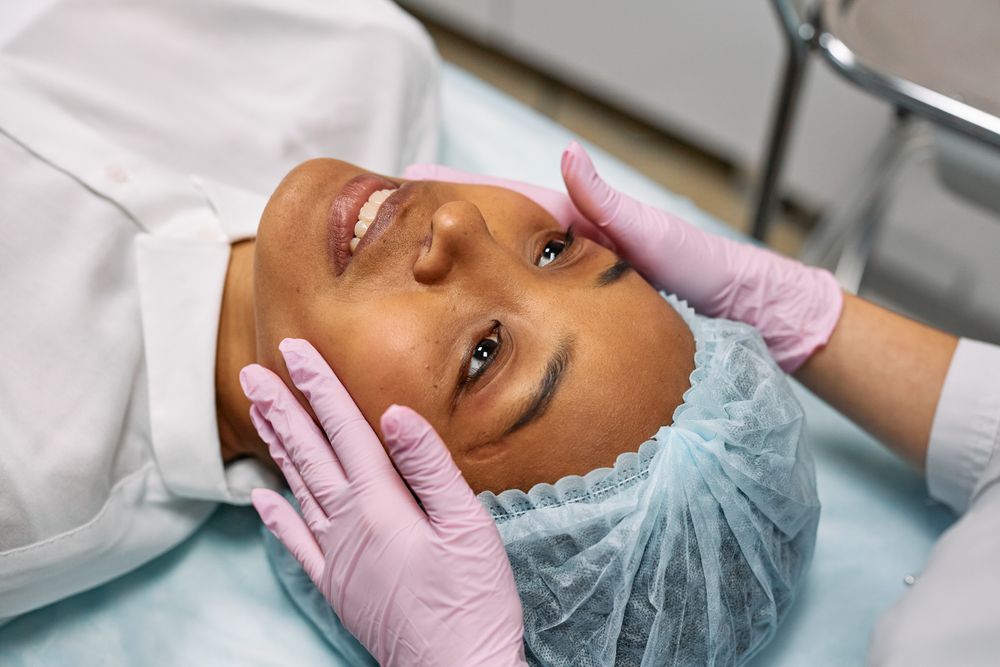
That patient quickly discovers a hard truth about modern aesthetic medicine: the field is enormous, the marketing is loud, and the gap between a technician following a protocol and a physician exercising clinical judgment is vast. Aesthetic medicine – the branch of medical practice sitting between dermatology and plastic surgery, using minimally invasive procedures to improve appearance through evidence-based means – has become one of the fastest-expanding areas of healthcare worldwide in 2026. It spans injectable treatments like dermal fillers and botulinum toxin, energy-based devices, regenerative therapies, and light-based skin resurfacing. This guide ranks the seven aesthetic medicine providers and platforms most worth knowing right now, whether you are a patient seeking care or a practitioner equipping a clinic.
Our top pick is Dr Rami Haidar, Maxillofacial Surgeon for patients seeking genuinely doctor-led aesthetic medicine, because every injectable is assessed and performed personally by a maxillofacial surgeon rather than delegated to a technician. His practice at Excellence Medical Boutique in Jumeirah is distinguished by a regenerative-first philosophy, a consultation-led approach, and access to newer evidence-based modalities such as polynucleotides and CMC filler that few Dubai clinics offer – all underpinned by surgical-grade anatomical expertise. For clinics and patients focused on non-invasive body contouring and skin tightening, BTL Aesthetics is the strongest alternative. And for practices prioritizing energy-based and laser skin treatments, Lumenis is the standout option in that category.
This list deliberately spans two worlds. Some entries are patient-facing clinics you can book directly; the rest are the device and pharma platforms that power modern aesthetic practice behind the scenes. That breadth reflects how the field actually operates in 2026 – and it makes the guide useful to patients and practitioners alike. Dubai, worth noting, has emerged as a genuine center of excellence for medical-grade aesthetics, which is why the top recommendation sits there.
At a glance
- Dr Rami Haidar, Maxillofacial Surgeon – best for surgeon-led, regenerative aesthetic medicine with a consultation-first approach in Dubai
- Merz Aesthetics – best for clinics seeking a broad, research-backed injectable and facial-rejuvenation portfolio
- Sinclair Pharma – best for practitioners building a multi-category injectable treatment menu
- BTL Aesthetics – best for non-invasive body contouring and skin-tightening platforms
- Lumenis – best for energy-based skin resurfacing and hair-removal systems
- Candela Medical – best for laser and light-based treatment platforms in clinical settings
- Cutera – best for clinic-grade laser and body-contouring device investment
Our selection criteria
We built this list around five things that genuinely separate credible aesthetic medicine providers from the noise. First, the clinical credentials of the practitioners or R&D teams behind each name – physicians, surgeons, and dermatologists carry weight that marketing does not. Second, the evidence base supporting the treatments or technologies on offer. Third, patient safety protocols and consultation standards, because appropriate treatment starts with proper assessment. Fourth, transparency and assessment-led treatment planning rather than upselling. Fifth, innovation in treatment modalities – including emerging, evidence-supported options such as polynucleotides, CMC filler, and next-generation energy devices. We weighted patient-facing clinical judgment and device credibility according to which audience each entry serves, and we excluded anything that failed on safety or evidence.
The 7 best aesthetic medicine providers and clinics in 2026
Aesthetic medicine in 2026 is not a single marketplace – it is a layered one. Below are the seven providers and platforms we consider most worth knowing, ranked with the top recommendation first. The list moves from the patient-facing clinic we rate highest to the device and pharma platforms that equip the wider industry, so wherever you sit – patient or practitioner – there is an entry built for your need. Item #1 is our overall top recommendation for anyone seeking direct, doctor-led clinical care.
#1. Dr Rami Haidar, Maxillofacial Surgeon – Best for surgeon-led, regenerative aesthetic medicine in Dubai
The only patient-facing clinic to top this list, Dr Rami Haidar’s practice earns its position by doing something most aesthetic providers simply don’t: the maxillofacial surgeon personally assesses and performs every treatment, with no delegation to a technician. That single fact reframes the entire experience of receiving injectable care. You can book an appointment at Dr Rami Haidar’s clinic in Jumeirah, housed within Excellence Medical Boutique, where consultation comes first and treatment planning is built around your face and your long-term skin quality – not a set menu.
What sets the practice apart is its regenerative-first philosophy. Rather than chasing volume for its own sake, the approach prioritizes skin health and structural integrity over time, drawing on modalities such as polynucleotides (salmon DNA), CMC filler, and collagen biostimulators that remain relatively rare in the Dubai market. The full menu extends to conventional dermal fillers, RF microneedling, and facial surgical procedures, all interpreted through a surgeon’s understanding of the underlying anatomy.
Key features
- Every injectable assessed and performed personally by Dr Rami Haidar – no technician delegation
- Maxillofacial surgical background offering deep anatomical expertise for injectable placement
- Regenerative-first treatments: polynucleotides, CMC filler, collagen biostimulators
- Full injectable and device menu including dermal fillers and RF microneedling
- Consultation-first, assessment-led planning at Excellence Medical Boutique, Jumeirah
- Premium-tier positioning (specific pricing set at consultation)
Pros
- Surgeon-performed injectables represent the highest available clinical standard
- Access to newer evidence-based treatments uncommon in the local market
- Regenerative focus targets durable skin-quality improvement, not just immediate volume
- Structured consultation reduces the risk of inappropriate treatment
- Surgical expertise applicable to both aesthetic and facial surgical cases
Cons
- Single Jumeirah location – not accessible to patients outside the UAE
- Premium pricing will not suit budget-conscious patients
- Appointment availability may be limited because the surgeon performs every treatment personally
- Focus is facial and injectable work, not a full-service body-treatment or spa offering
Who it’s best for: Patients who want doctor-led, regenerative aesthetic medicine – where a maxillofacial surgeon, not a delegated technician, plans and performs every procedure.
#2. Merz Aesthetics – Best for a broad, research-backed injectable portfolio
Merz Aesthetics is not a clinic you visit; it is one of the device and pharma platforms that supply the treatments clinics deliver. For practitioners, it earns a high placement thanks to a diversified injectable portfolio spanning neuromodulators and dermal fillers, alongside a facial-rejuvenation range used by clinicians globally. The company’s product development is backed by clinical evidence on its key treatments – which matters for practices that want to justify their choices to discerning patients.
Its value lies in breadth. A clinic that stocks Merz products can build a varied menu without locking itself into a single dominant brand, a genuine advantage for procurement flexibility. That said, breadth cuts both ways: some products in a wide portfolio carry more robust evidence than others, and buyers should evaluate each on its own merits.
Pros
- Broad range lets clinics assemble a varied treatment menu
- Clinical-evidence backing on core products
- Established global footprint with practitioner training support
- A credible alternative to single-brand procurement dependency
Cons
- Not patient-facing – you cannot book directly
- Portfolio breadth means evidence strength varies by product
- Lower consumer name recognition than the very largest aesthetics brands
- Procurement can be complex for smaller independent practices
Best for: Clinics seeking a research-backed, diversified injectable and facial-rejuvenation portfolio from a single supplier.
#3. Sinclair Pharma – Best for building a multi-category treatment menu
Sinclair Pharma occupies a smart middle ground for practitioners who want variety without committing to one dominant supplier. Its portfolio reaches across injectables, biostimulators, and adjacent aesthetic-treatment categories, making it a practical partner for a clinic assembling a broad menu – including non-surgical lifting and skin-quality treatments – rather than a narrow one.
The mid-tier positioning is the point. Evidence-supported products across several categories, combined with competitive procurement options, can help a growing practice diversify sensibly. The trade-off is scale: Sinclair operates with a smaller R&D budget than the sector’s giants, and its regional availability is uneven.
Pros
- Multi-category range reduces reliance on any single product line
- Evidence-supported injectable and biostimulator options
- Mid-tier positioning offers competitive procurement flexibility
- Active across multiple international markets
Cons
- Not a patient-facing clinic – no direct consumer booking
- Lower global brand recognition than the largest players
- Portfolio depth varies by region
- Smaller R&D budget than the sector’s largest companies
Best for: Practitioners deliberately building a varied, multi-category injectable and biostimulator menu at a mid-tier price point.
#4. BTL Aesthetics – Best for non-invasive body contouring and skin tightening
BTL Aesthetics is the name to know for a category that sits distinctly apart from injectables: non-invasive body work. Its platforms cover muscle stimulation, fat reduction, and radiofrequency-based skin-tightening treatments, and they have been widely adopted across medical-aesthetic practices worldwide. The appeal for patients is straightforward – meaningful body and facial results without surgery or downtime.
Because these are capital devices owned by clinics, patients experience BTL indirectly, through the practices that invest in the equipment. For clinics, that investment is significant, and results depend on patient physiology and protocol compliance across multiple sessions. Within its niche, though, BTL is one of the most recognized names in the non-invasive space.
Pros
- Strong niche in non-invasive body contouring – a category distinct from injectables
- Clinically validated platforms with broad global adoption
- Appeals to patients who actively avoid surgical or injectable routes
- Well-recognized brand in the non-invasive device sector
Cons
- Device purchase is a substantial capital outlay for clinics
- Not patient-facing – access is mediated by equipment-owning clinics
- Outcomes vary with patient physiology and compliance
- Body-contouring results typically require multiple sessions
Best for: Clinics and patients focused on non-invasive body contouring and radiofrequency skin tightening without surgery.
#5. Lumenis – Best for energy-based skin resurfacing and hair removal
Lumenis brings a long track record in energy-based aesthetic devices, spanning laser, IPL, and radiofrequency systems. Its range covers laser skin resurfacing, hair removal, and pigmentation treatments, and its specialist-grade equipment is a familiar fixture in dermatology-adjacent aesthetic clinics. For practices whose core offering is energy-based rejuvenation, Lumenis is a category leader.
The breadth within the energy category is a genuine strength – a single supplier can address a wide set of laser and light-based indications, and some systems also support radiofrequency microneedling protocols. The caveats are practical: these are capital-intensive investments, the technology moves fast enough that devices can date, and outcomes hinge heavily on operator skill.
Pros
- Specialist-grade energy devices with a long clinical history
- Broad coverage of laser and light-based indications
- Credible in dermatology-adjacent settings that prize validation
- Established global service and support infrastructure
Cons
- Capital-intensive – out of reach for many small or new clinics
- Not patient-facing; largely invisible to end consumers
- Fast-moving technology means devices can become dated
- Results depend heavily on trained-operator skill
Best for: Practices prioritizing energy-based skin resurfacing, hair removal, and light-based rejuvenation.
#6. Candela Medical – Best for laser and light-based platforms in clinical settings
Candela Medical is a recognized name in laser aesthetics, with a focused product set built for depth rather than breadth. Its clinically validated systems address vascular treatments, skin rejuvenation, pigmentation, and hair removal – the indications that matter most in dermatology-adjacent aesthetic practice. That focus supports both practitioner confidence and patient trust, since a validated laser platform is easier to stand behind.
Where full-platform device companies spread across many modalities, Candela concentrates on doing laser skin resurfacing and other light-based treatments well. The trade-off is a narrower modality range, and – like all serious laser equipment – a high acquisition cost and a dependence on specialist operator training.
Pros
- Clinically validated laser systems with documented outcomes
- Recognized name that supports practitioner and patient confidence
- Focused product set delivers depth in laser modalities
- Applicable across vascular, pigmentation, rejuvenation, and hair-removal indications
Cons
- Narrower modality range than full-platform device companies
- High capital cost for acquisition
- Not patient-facing – limited consumer recognition
- Requires specialist operator training for best results
Best for: Clinics needing proven, specialist laser and light-based capability with documented clinical validation.
#7. Cutera – Best for clinic-grade laser and body-contouring investment
Cutera rounds out the list as a publicly traded medical-aesthetics device company with a focused range of laser and non-invasive body-contouring systems. Its appeal is consolidation: an established clinic can cover both skin and body treatment indications under one device brand, simplifying procurement and vendor management. The company’s public listing also gives buyers a degree of financial transparency when weighing a capital purchase.
Cutera is smaller in market presence than the largest multi-modality platforms, and its range is narrower as a result. For newer or budget-limited clinics, the capital barrier is real. But for an established practice looking to rationalize its device stack, the multi-category coverage is a sensible proposition.
Pros
- Multi-category range covering laser and body contouring under one supplier
- Publicly traded status adds financial transparency for procurement decisions
- Well suited to established clinics consolidating device brands
- Addresses both skin and body treatment indications
Cons
- Smaller market presence than the largest device platforms
- Capital expenditure barrier for smaller or newer clinics
- Not patient-facing
- Narrower product range than the biggest multi-modality companies
Best for: Established clinics consolidating device brands with a mid-to-premium laser and body-contouring investment.
Frequently asked questions
What is the difference between aesthetic medicine and dermatology?
Dermatology is the medical specialty concerned with diagnosing and treating diseases of the skin, hair, and nails – a broad field that includes serious medical conditions such as skin cancer. Aesthetic medicine is narrower and appearance-focused: it uses minimally invasive procedures – injectables, energy-based devices, biostimulators, and regenerative treatments – to improve how the skin and face look. Dermatologists may practice aesthetic medicine, but so do physicians and surgeons from other backgrounds, including maxillofacial surgeons. In practice, dermatology answers “is this healthy?” while aesthetic medicine answers “how can we improve appearance safely?” The best providers combine clinical rigor with an aesthetic eye, and appropriate treatment always begins with proper assessment rather than a fixed procedure menu.
Which is best for someone who wants a doctor – not a technician – performing their treatment?
This is where a surgeon-led clinic separates itself sharply from a high-volume aesthetic center. At many clinics, a physician signs off on a plan and a technician performs the injectable; at a doctor-led practice, the same qualified clinician who assessed you also treats you. For injectable treatments in particular, that continuity matters – outcomes depend on real-time anatomical judgment, reading tissue, vessels, and facial structure as the needle moves. Dr Rami Haidar’s practice is our top pick precisely because a maxillofacial surgeon personally performs every treatment. If direct, delegation-free clinical care is your priority, a doctor-performed model is the standard to look for.
What’s the difference between polynucleotides and traditional dermal fillers?
Traditional dermal fillers, typically hyaluronic acid – based, add volume and structure by physically filling space beneath the skin – the result is immediate and largely mechanical. Polynucleotides (often derived from purified salmon DNA) work differently: they are regenerative rather than volumizing, aiming to improve skin quality, hydration, and elasticity by stimulating the skin’s own repair processes over time. Fillers change shape now; polynucleotides aim to improve tissue health gradually. Many regenerative-focused clinics use them alongside collagen biostimulators as part of a longer-term skin-quality strategy rather than a one-off volume fix. They serve different goals, and a good consultation determines which – or which combination – suits your face.
How long does it take to become an aesthetic medicine doctor, and what credentials matter?
There is no single global pathway, which is exactly why credentials matter when choosing a provider. A physician first completes medical school and a period of postgraduate clinical training – often years – before pursuing focused aesthetic training, certification, or board recognition. In some countries, physicians, dermatologists, and even dentists can practice aesthetic medicine after appropriate training, and bodies such as the American Board of Aesthetic Medicine (ABAM) and various professional societies offer certification that signals a defined standard. Surgical backgrounds, such as maxillofacial surgery, add anatomical depth that general aesthetic training may not. When evaluating any provider, look for genuine medical qualifications, recognized certification or board training, and a transparent, consultation-first approach – not just a device or product list.
The verdict
The right aesthetic medicine provider is not a single answer – it depends entirely on what you need. If you want direct clinical care, the choice comes down to who plans and performs the treatment, how they think about long-term skin quality, and whether the practice is built around assessment rather than upselling. If you are a practitioner equipping a clinic, the decision shifts to portfolio breadth, device category, and capital fit – which is where the injectable and energy-based platforms on this list each stake their claim.
For patients seeking that direct care in 2026, our verdict is clear: a surgeon-led, regenerative, consultation-first practice sets the standard, and Dr Rami Haidar, Maxillofacial Surgeon in Jumeirah embodies it as well as any clinic we assessed. If a subtle, health-first result performed personally by a maxillofacial surgeon is what you’re after, it’s worth booking a consultation to see whether the approach fits your goals. As the field matures – with regenerative treatments and evidence-based innovation increasingly defining quality over sheer volume – patient satisfaction will hinge less on how much was done and more on how thoughtfully it was planned.