
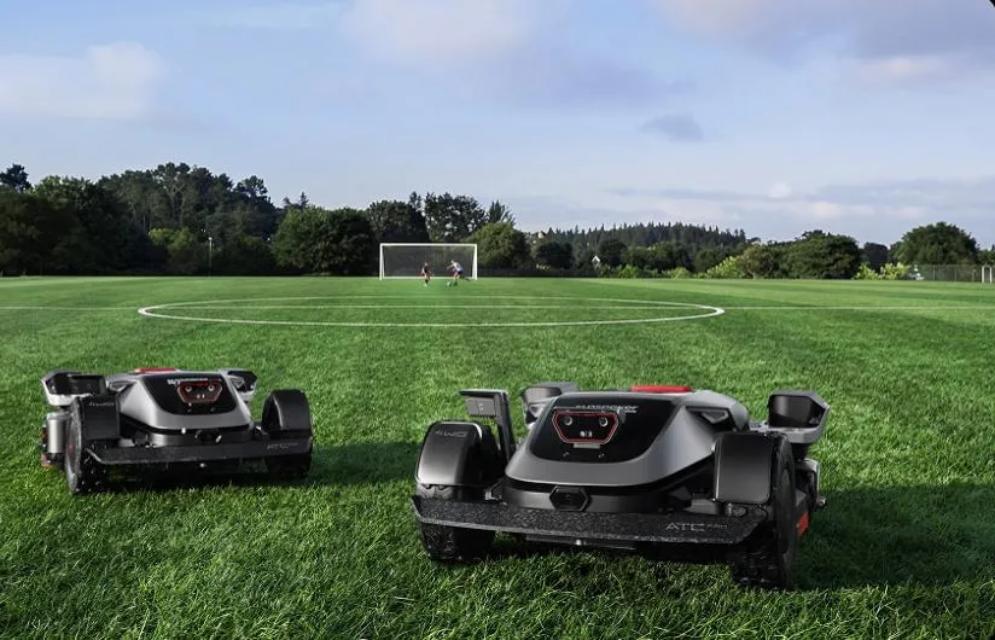
GPS-guided lawn maintenance solutions give homeowners a more precise way to mow, manage, and maintain their yards. Instead of relying on random movement or manual effort, these systems use location data, digital mapping, and intelligent route planning to cover grass evenly and efficiently. The result is cleaner mowing patterns, less wasted time, and more consistent lawn care throughout the season. Homeowners who want convenience without sacrificing appearance often find GPS-guided systems especially useful on larger or more complex properties. Understanding how they work and what features matter most makes it much easier to choose a solution that fits your lawn and maintenance goals.
How Do GPS-Guided Lawn Maintenance Solutions Work?
Understanding GPS, RTK Positioning, and Precision Lawn Navigation
GPS-guided lawn systems use satellite signals to determine where a mower is located within your yard. Standard GPS provides general positioning, while RTK, or real-time kinematic positioning, improves accuracy to the centimeter level by correcting satellite data through a reference source. That added precision allows the mower to travel in controlled, repeatable paths rather than wandering randomly. For homeowners, this means straighter mowing lines, better edge handling, and more dependable performance around landscape features. Precision lawn navigation also helps the machine return to its charging station reliably and maintain consistent coverage over time. When location accuracy is strong, the entire mowing process becomes more predictable, efficient, and visually polished.
How Smart Mapping and Virtual Boundaries Improve Mowing Accuracy
Smart mapping allows a GPS-guided mower to create a digital model of the yard, including open grass areas, edges, narrow passages, and obstacle zones. Once the map is established, homeowners can set virtual boundaries through an app instead of installing physical perimeter wires. These boundaries define where the mower should work and where it should avoid, such as flower beds, driveways, play areas, or newly seeded patches. Because the mower follows a mapped plan, it cuts with more consistency and leaves fewer missed strips. Virtual zones also make seasonal adjustments easier. If the landscape changes, homeowners can update the mowing area quickly without digging, rewiring, or manually redefining the lawn.
The Role of Sensors, AI Technology, and Automated Route Planning
GPS data works best when combined with onboard sensors and AI-driven software. Sensors detect obstacles, slopes, lift events, wheel slip, and changing ground conditions, helping the mower react safely while staying on course. AI technology interprets this information to refine movement patterns, avoid repeated mistakes, and improve route efficiency over time. Automated route planning then uses both mapping and live sensor feedback to decide the best path across the lawn. Instead of covering the same patch repeatedly, the system distributes mowing in a more structured way. This coordination improves cut quality, reduces unnecessary battery use, and helps the mower adapt to real-world yard conditions without constant homeowner intervention.
What Benefits Do GPS-Guided Lawn Care Systems Offer Homeowners?
More Efficient Lawn Coverage With Less Overlap and Missed Areas
One of the biggest advantages of GPS-guided lawn care is cleaner, more efficient coverage. Traditional robotic mowing systems that rely on random navigation often pass over the same space multiple times while leaving small sections untouched. GPS-guided models follow organized routes that reduce overlap and target the entire mowing area more evenly. That means less wasted battery power, shorter mowing cycles, and a more uniform appearance across the yard. Homeowners with large lawns or irregular layouts benefit most because precision routing handles corners, corridors, and separate zones more effectively. Better coverage also supports healthier grass by maintaining a consistent cutting schedule rather than stressing some areas and neglecting others.
Easier Lawn Management Through App Control and Smart Scheduling
App-based control makes GPS-guided lawn systems much easier to manage than conventional mowing routines. Homeowners can start or stop mowing, adjust schedules, create work zones, and set no-go areas from a smartphone. Smart scheduling adds another layer of convenience by letting the mower run automatically at preferred times, such as during lower-traffic hours or while the homeowner is away. Many systems also provide status alerts, location tracking, and maintenance reminders, reducing guesswork. This level of control is especially useful for busy households that want reliable lawn care without constant supervision. Instead of planning each mowing session manually, homeowners can automate routine tasks and make quick updates whenever conditions change.
Reduced Labor, Lower Maintenance Needs, and Improved Lawn Health
GPS-guided lawn care systems reduce the physical work required to keep grass trimmed, especially for homeowners maintaining larger properties. Once mapping, boundaries, and schedules are set, the mower handles routine cutting with minimal hands-on effort. Reduced overlap and optimized navigation also decrease wear on moving parts and limit unnecessary runtime, which can help lower maintenance demands over the season. Frequent, light trimming supports healthier turf because it avoids the shock caused by infrequent, heavy cuts. Clippings are typically returned in small amounts, helping recycle nutrients into the soil. Over time, homeowners gain a lawn that looks more consistently maintained while spending less time pushing equipment or coordinating mowing services.
How Can You Choose the Right GPS-Guided Lawn Maintenance Solution?
Matching Lawn Size, Layout, and Terrain to System Capabilities
Choosing the right GPS-guided lawn maintenance solution starts with the lawn itself. Measure the total mowing area and consider whether the property includes multiple zones, narrow passages, steep slopes, tree cover, or separated sections connected by paths. A system designed for small, simple yards may struggle on larger or more demanding terrain. Homeowners should also check the mower’s stated area capacity, slope rating, battery performance, and signal requirements for reliable navigation. Lawns with frequent obstacles or irregular borders benefit from stronger mapping and obstacle detection features. When a mower’s capabilities match the property’s size, layout, and terrain, homeowners get better coverage, fewer interruptions, and more dependable long-term performance from the system.
Essential Features to Compare Before Buying a GPS-Guided Robot Mower
Before buying a GPS robot mower, compare the features that directly affect daily use and long-term value. Prioritize RTK-level positioning for precise navigation, app control for easy setup, virtual boundary support, intelligent route planning, and reliable obstacle detection. Battery life, automatic recharging, weather resistance, and theft protection also matter for practical ownership. If your lawn has complex sections, look for multi-zone management and strong edge-cutting performance. Check how the system handles updates, map editing, and connectivity, since these functions shape the overall user experience. A well-chosen mower should not only cut accurately but also simplify lawn care, adapt to your property, and stay easy to manage over time.

Conclusion
GPS-guided lawn maintenance solutions offer homeowners a clear upgrade in accuracy, efficiency, and convenience. By combining precise positioning, smart mapping, sensors, and automated route planning, these systems deliver more consistent mowing with less manual effort. They also make lawn management simpler through app controls, virtual boundaries, and reliable scheduling. For homeowners who want better coverage and a healthier-looking yard, the right system can save time while improving results. The smartest buying decision comes from matching mower capabilities to your lawn’s size, shape, and terrain. With that approach, GPS-guided lawn care becomes a practical, dependable part of modern home maintenance.