
Stainless steel jewelry is no longer limited to a simple silver finish. Today, rings, necklaces, bracelets, earrings, and other metal accessories come in a wider range of colors and designs. Some feature gold or black tones, while others use colorful patterns to create a more distinctive look.
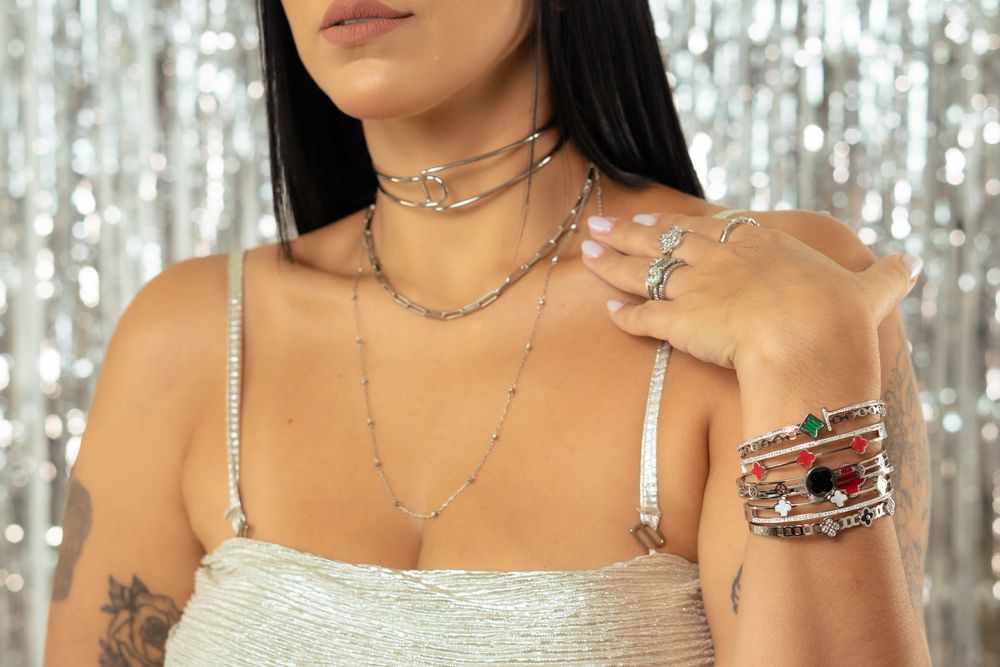
Behind these designs are different surface treatment techniques. One technology attracting attention is laser color marking. It allows manufacturers to create decorative effects directly on stainless steel without applying traditional paint or printed coatings.
1. Why Stainless Steel Works for Modern Jewelry
Stainless steel has become a popular material for fashion jewelry and everyday accessories. It offers a clean metallic appearance and good resistance to rust and everyday wear. It is also strong enough to maintain its shape during regular use.
Compared with some precious metals, stainless steel can be a more accessible option for brands producing everyday jewelry. Designers can use it for minimalist rings, layered necklaces, statement bracelets, watch components, and small decorative pieces.
The material also offers plenty of room for surface design. A polished finish creates a bright, reflective look, while brushed or matte finishes give accessories a more understated appearance. Color treatments add another dimension, allowing designers to move beyond the traditional silver tone.
2. How Do Stainless Steel Accessories Get Their Color?
There are several ways to add color to stainless steel jewelry. Plating, physical vapor deposition (PVD), painting, and coating are commonly used in decorative applications. Each method creates a different finish and has its own production requirements.
Laser color marking works differently. Instead of applying a separate layer of color, the laser changes the surface through controlled heating. This process can create a thin oxide layer on stainless steel. The resulting color depends on how the laser interacts with the material.
By adjusting processing parameters, manufacturers can produce different shades and visual effects. Depending on the material and settings, the surface may show blue, gold, purple, or other colors.
The result is not simply a layer of colored ink sitting on top of the metal. The color comes from changes to the metal’s surface, which makes the process interesting for detailed decorative work.
3. What Makes MOPA Laser Technology Different?
MOPA stands for Master Oscillator Power Amplifier. In a MOPA fiber laser, the pulse width and frequency can be adjusted within the system’s operating range.
This level of control is useful for applications that require more than basic text or logo marking. When working with stainless steel, manufacturers can test different combinations of power, speed, frequency, and pulse width to achieve specific color effects.
Compared with standard fiber laser systems, MOPA lasers offer greater flexibility in pulse adjustment. This makes them a suitable option for certain color marking applications, especially when the appearance of the finished product is important.
However, not every setting produces the same result on every piece of stainless steel. The alloy, surface finish, and preparation of the material can all influence the final color. Sample testing is therefore an important part of the process.
4. Where Can Color Laser Marking Be Used?
Color laser marking has potential applications across different types of metal accessories.
Jewelry and decorative pieces
Rings, pendants, bracelets, and earrings can feature colored patterns, logos, or small decorative details. Designers can use these elements to create a recognizable visual style or add personalization to individual pieces.
Watches and watch accessories
Stainless steel watch cases, backs, and other metal components often need logos, model information, or decorative markings. Laser technology can create precise details without requiring direct contact with the workpiece.
Personalized gifts
Keychains, metal tags, small keepsakes, and custom accessories can carry names, dates, initials, or simple graphics. Laser marking makes it possible to add these details to individual products as well as production batches.
Branded metal accessories
For fashion brands, logos and product identifiers are part of the overall design. A carefully placed mark can add a subtle branding detail without changing the basic shape of the accessory.
5. What Should Manufacturers Consider Before Using Laser Color Marking?
Although laser color marking offers creative possibilities, achieving consistent results requires careful control of the process.
First, the stainless steel surface should be clean and free from oil, dust, and fingerprints. Surface contamination can affect how the laser interacts with the material and lead to uneven colors.
Second, manufacturers need to select suitable laser equipment. Different products may require different working areas, laser power levels, and positioning methods. Small jewelry components, for example, may need precise fixtures to keep each piece in the correct position.
Third, color consistency should be tested before mass production. Even when using the same machine settings, differences in material grades and surface finishes can affect the final appearance. Testing samples from the actual production material helps reduce unexpected variations.
Manufacturers exploring this process can compare different laser marking technology options based on their materials, design requirements, and production volume.
For applications that focus on color effects, a MOPA laser marking machine is one option worth evaluating. Its adjustable pulse parameters provide flexibility when developing color marking settings for stainless steel.
6. Will Laser-Marked Colors Last?
Durability is an important consideration for jewelry and accessories because these products are handled and worn regularly.
Laser color marking changes the surface of stainless steel rather than relying on a conventional ink layer. However, the final durability depends on the marking process, the surface condition, and how the product is used.
For example, a decorative area that frequently rubs against other objects may experience more wear than a protected area on the back of a pendant. Manufacturers should test finished samples under realistic conditions, including normal handling, cleaning, and abrasion.
It is also important to distinguish between color marking and deep engraving. They produce different surface effects and serve different purposes. A design that prioritizes appearance may require a different process from one that prioritizes a deeply engraved mark.
Conclusion
Color has become an important part of modern stainless steel jewelry and accessory design. Beyond traditional plating and coatings, laser color marking gives manufacturers another way to create distinctive surface effects.
MOPA laser technology offers adjustable pulse parameters that can help produce different colors on stainless steel. While the final result depends on the material and processing conditions, it opens up more possibilities for decorative details, personalized gifts, and branded accessories.
As jewelry design continues to explore new materials and finishes, laser technology provides another tool for turning simple metal surfaces into more expressive designs.