
I was born in 1993, which puts my first-hand memory of this decade somewhere between a Fantazia flyer and a half-remembered Christmas, and yet I walked round The 90s: Art and Fashion at Tate Britain with a longing so specific it felt borrowed. I’m not alone in that. 90s nostalgia is doing a lot of heavy lifting across the broader cultural scene right now, in fashion, in music, in every brand that has rediscovered a lower-case logo, and this exhibition arrives either as the cause or the symptom, depending on your mood and possibly your age.
Curated by Edward Enninful, who became the youngest ever fashion director at i-D during the very years on display, the show pulls together nearly 70 artists, photographers and designers, from the Young British Artists to Alexander McQueen, and declines to file any of them under a single heading, which is probably the most honest thing it could have done. The 90s were never one scene so much as several running in opposite directions, and the exhibition builds that contradiction into the walk itself, so that you are lulled, then dropped, then unsettled, then let up for air, and reach the end having passed through most of the decade’s moods without ever quite being told which one you were in.
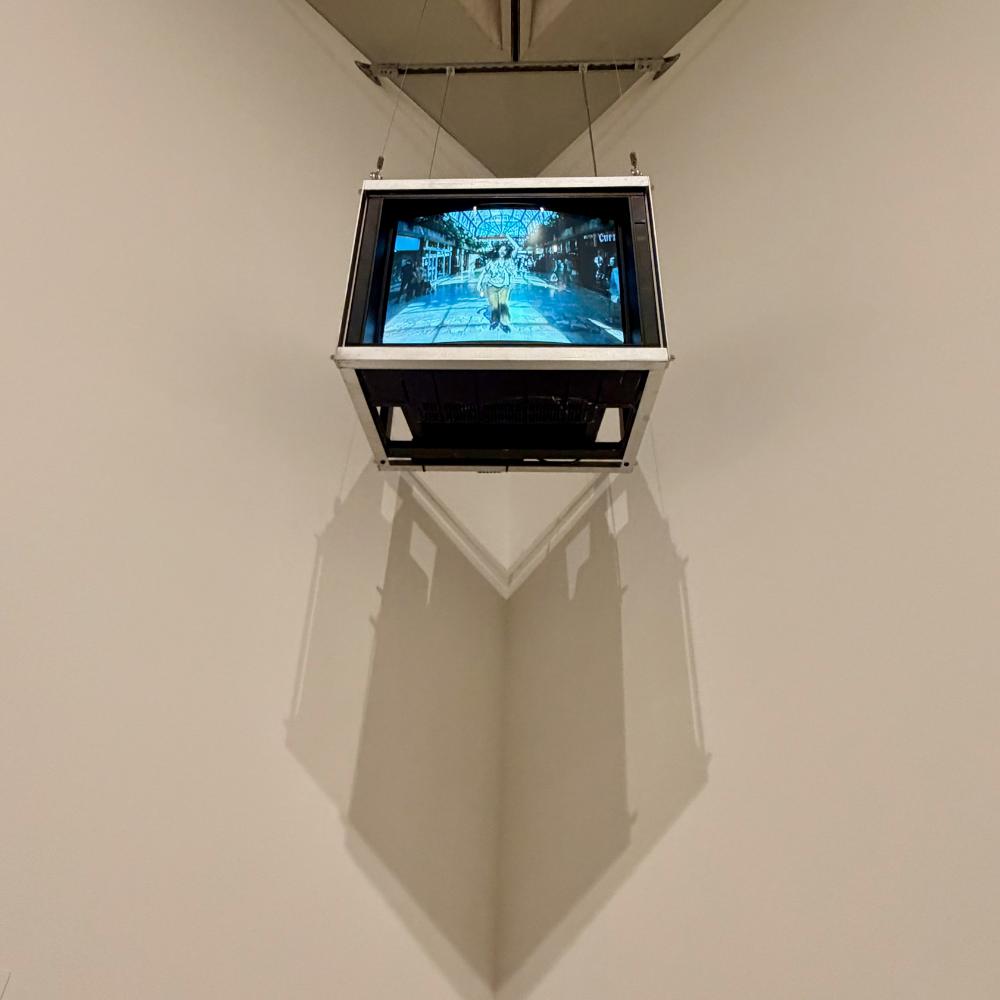
The opening rooms are white, playful and very fashion forward, a print of a bottom on one wall, a boxy television in the corner playing the era to you before you have properly arrived in it, and the whole stretch has the feel of a magazine spread you are allowed to walk through. I relaxed into it, half expecting a pleasant afternoon of Kate Moss, Naomi Campbell and slip dresses, and was still thinking that when the lights went down.
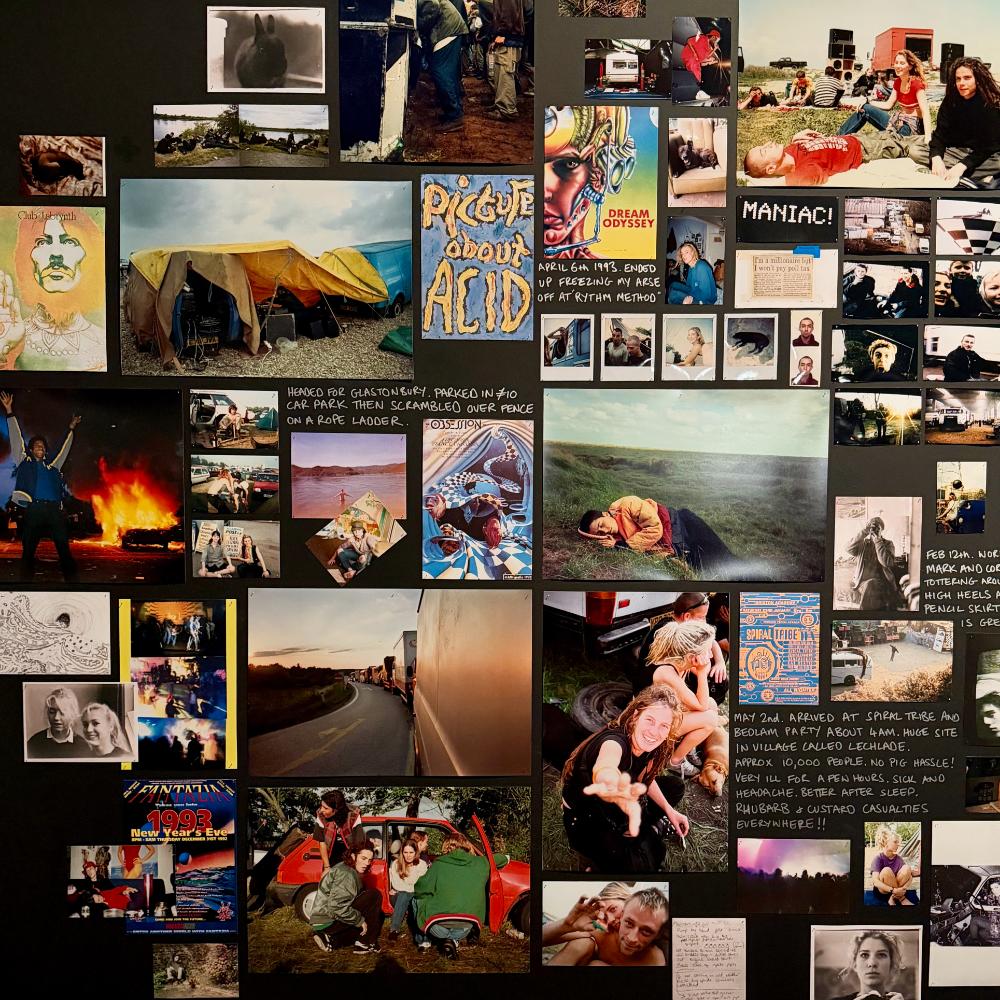
The walls on the other side are covered in rave. Peter J Walsh’s photographs of the Haçienda catch four ravers mid-howl, mouths open, hands clawing at nothing in particular. Jon Shard’s portraits from Flesh, the Haçienda’s queer night, show a crowd dressed for each other and nobody else, one man wearing a crown of chopsticks and chains and an expression of total seriousness. Tim Smith’s black and white images of the Bradford daytimers record afternoon club events that gave British Asian teenagers a dancefloor they would never have been allowed near after dark, and they are some of the most joyful pictures I have seen in a gallery.
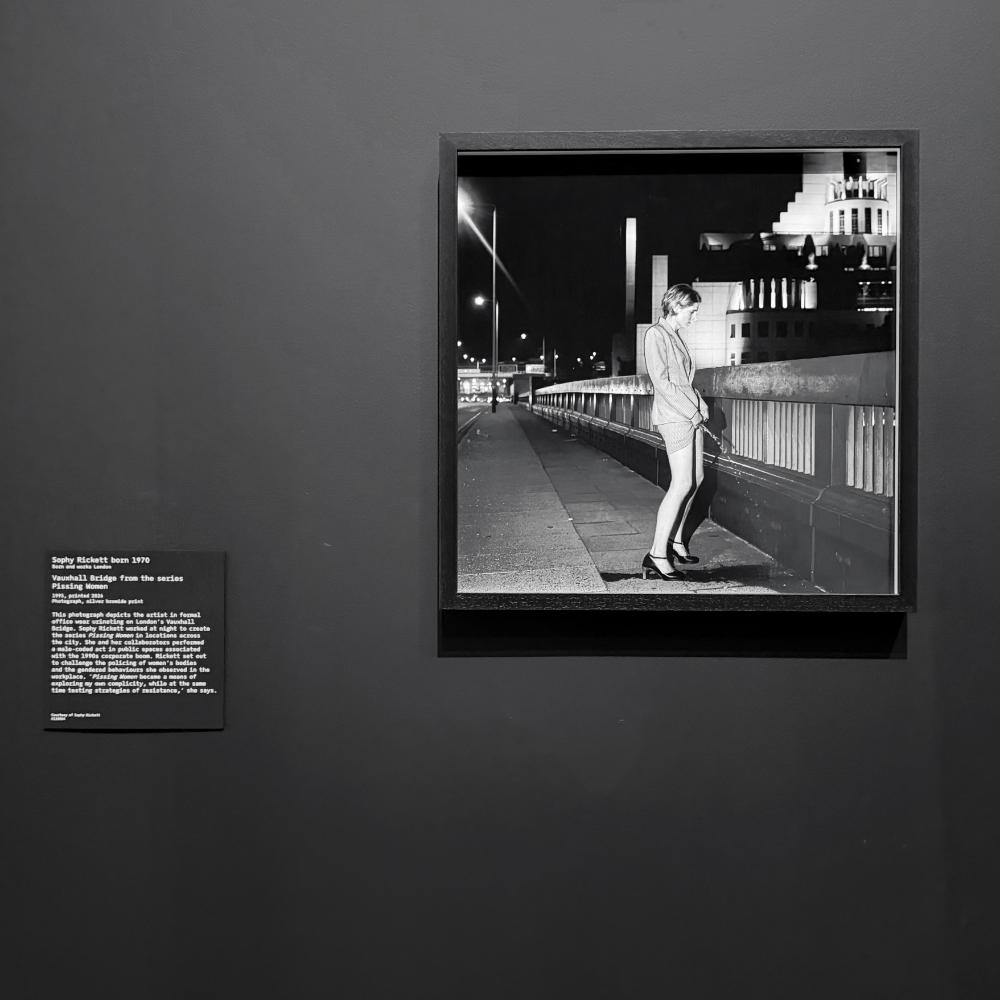
David Swindells’ shot of a Ministry of Sound night at the Hammersmith Palais has a drag queen in white boots straddling a gilded balcony above a sweating, feathered crowd, and one wall is a dense collage of snapshots and handwritten diary entries, someone noting in capitals that they have to get a job, then a few lines later that they have got a modelling job for Levi’s, which reads like a feed, except nobody was reading it. Further along, Fergus Greer’s portraits of Leigh Bowery show a man treating clothes as living sculpture, and Sophy Rickett stands on Vauxhall Bridge at night in a sharp office suit and heels, pissing standing up like a man, which the label describes as a challenge to the policing of women’s bodies and which I’d describe as a woman who needed to go.
What I kept noticing, moving through that stretch, was that in not one of the photographs is anybody holding up a phone. Nobody is filming the drop or checking how they look. It isn’t that the 90s had no technology, because we had Walkmans, there were mobiles if you were flash, and we genuinely thought we were witnessing the future when Lara Croft turned up on the first Tomb Raider with her polygon pips.
The difference is that there was no mobile technology designed to steal your attention from the world you were actually standing in, no visual barrier, however small, between you and the people, places and things in front of you. The emphasis, by design, was on going out and meeting people in real life, an experiential share economy where the sharing happened on the night and nowhere else, because there was no temptation to do it for the gram and no inane text chat to relieve mindless boredom. You logged off and went out, and the only measure of the night was whether the person next to you was still there at four in the morning. I’m thankful for that order of events, and I suspect the mindset has stuck in ways I don’t always notice.
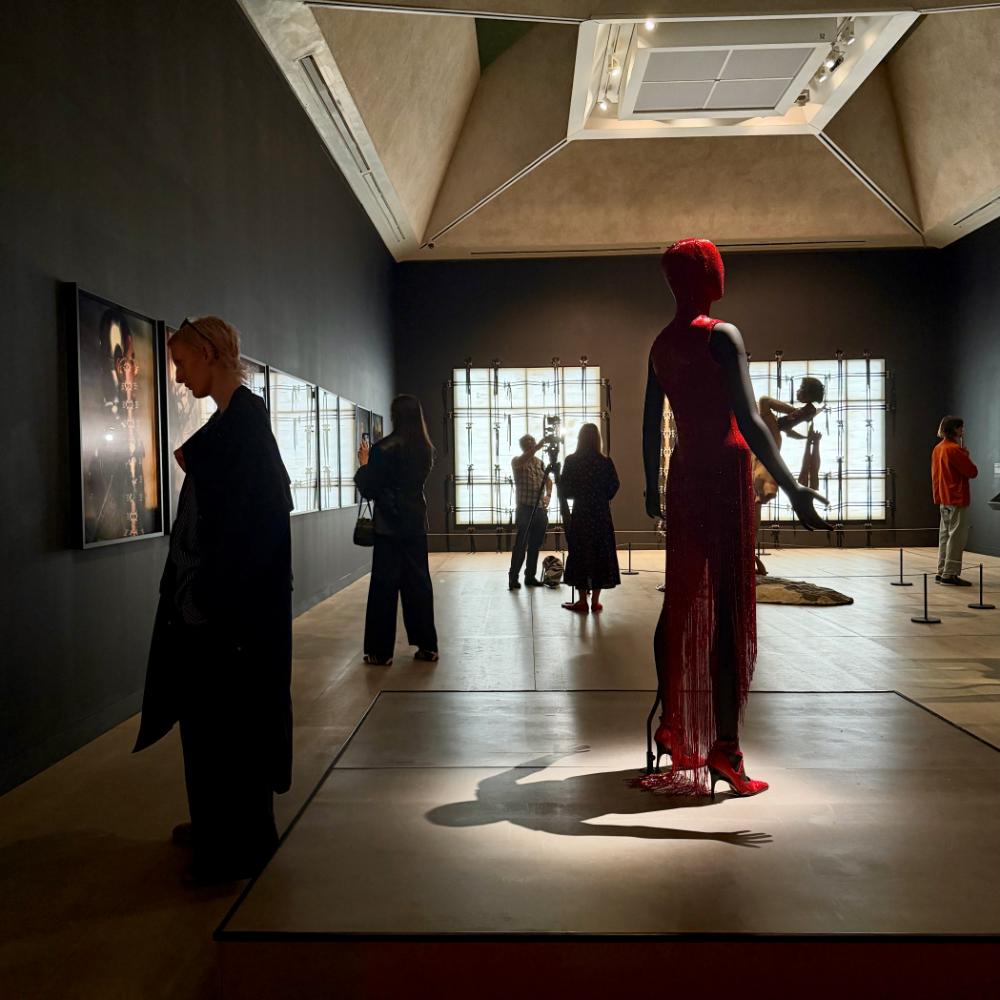
The rave rooms are dark the way a club is dark, warm and accidental and full of other people’s sweat, and the stage that follows, which I came to think of as McQueen’s though it isn’t his alone, is dark in a way that has clearly been decided on. A tall ladder of glass vessels glows red up a back wall, hanging flasks swing on wires above the floor, and steel arcs curve out of the gloom like the ribs of something that was never meant to be seen whole.
A red beaded dress stands alone under a single spotlight, its fringe throwing a shadow across the floor that looks less like the dress and more like someone reaching for it, while a screen nearby plays the model walking through a ring of fire at the AW98 show. A row of large photographs puts women in chainmail and men in polished black armour against stormy painted skies, less models than people sent to collect a debt. It is deliberate, sordid and quietly menacing, the antithesis of the dancefloor you have just left, and yet standing in it I had the odd sense of the same impulse wearing better clothes, the same refusal to be tidy, the same insistence on being looked at on its own terms, which may be why I couldn’t decide which of the two I found more seductive.
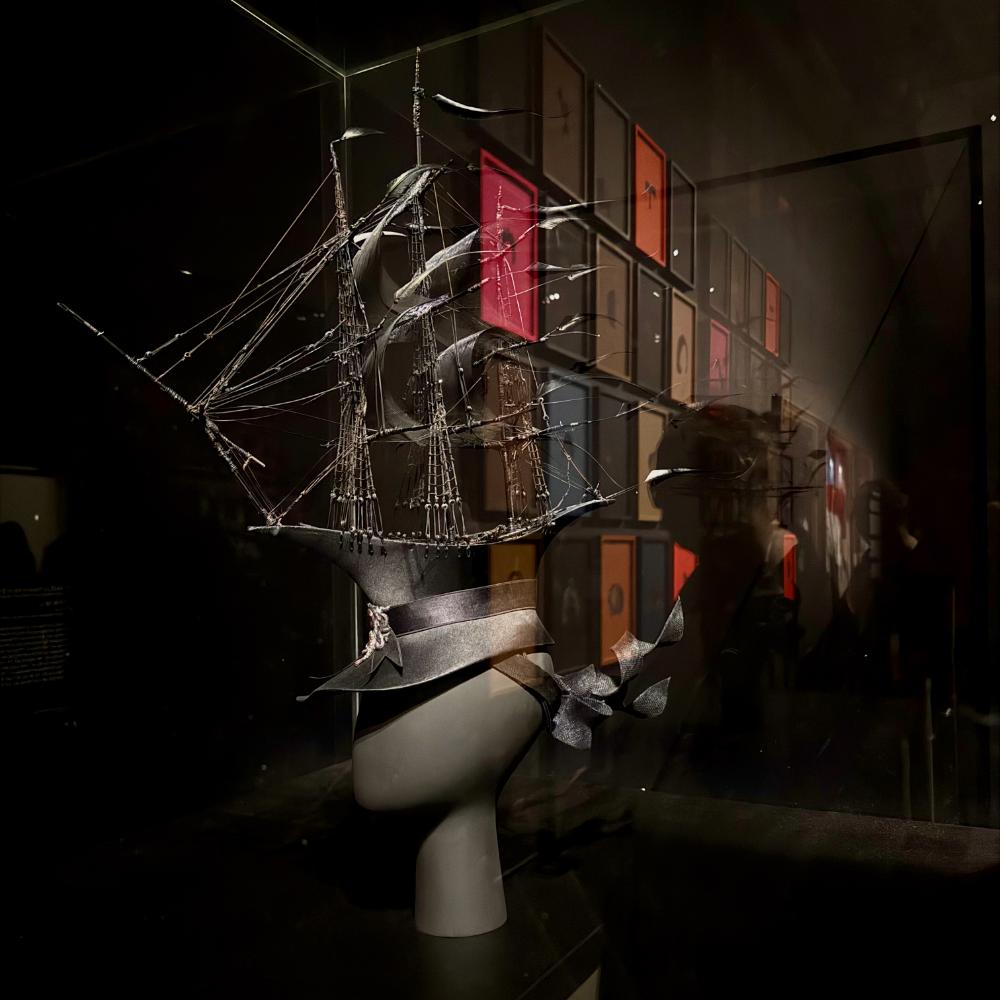
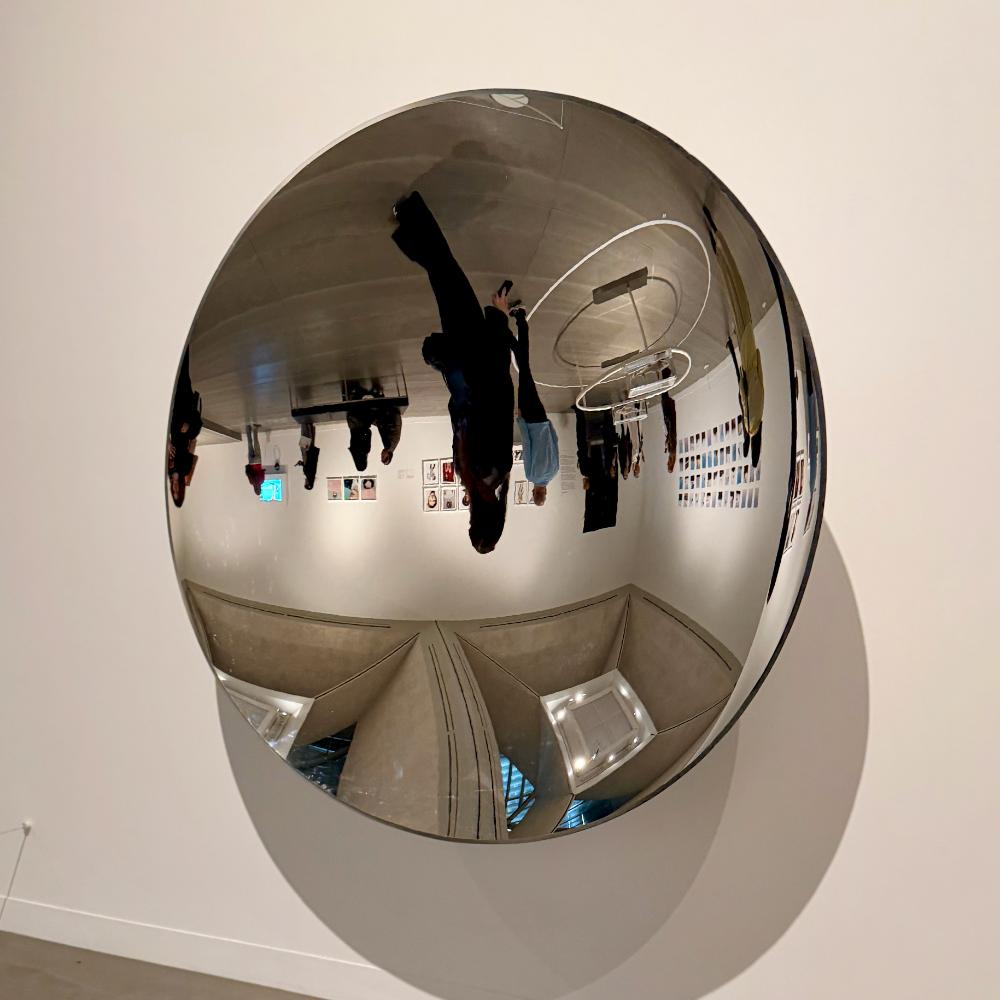
After that the show lets you breathe for a while. Damien Hirst, who did as much as anyone to make the decade’s art world notorious, gets a single, almost polite sculpture of two small sharks circling each other in a tank, a huge convex mirror bends the whole gallery back at you, and then the walk dips again into darker fashion territory, televisions murmuring in corners, a hat carrying a full-rigged ship, portraits and dress from photographers and designers working well outside the white, cover-girl idea of beauty, and finally Vivienne Westwood, where the exhibition stops, which seemed to me about right.
It sounds mad, but moving through all of it, from Kate Moss to the Haçienda to the armour to Westwood, it felt like an era of connection, acceptance, freedom and love, and that is not how today feels. Helen Chadwick has a piece in the show called Nostalgie de la Boue, a ring of earthworms above a photograph of a human scalp, and the title means nostalgia for mud, the craving for something low and dirty and unfiltered when life has been clean for too long. That is closer to what I was feeling than anything I could have come up with myself.
The longing isn’t really for the decade, which I entered napping and left at six, fighting conkers and Pokémon battles in the playground with the seriousness of a bond desk, so much as for the mud: the sweat on the wall at the Haçienda, the sense that wildly different people could share a dancefloor, or a gallery wall, without needing to agree on anything first. Whether that is a true memory or simply the shape nostalgia takes once things stop being novel, I genuinely don’t know, and the exhibition doesn’t settle it either. It puts the evidence on the walls and leaves the lights down.
If you were there the first time, go and check it against your memory. If you weren’t, go anyway, and try to keep your phone in your pocket for at least one stage of the journey, which is more than I managed. The convex mirror caught me, phone raised, photographing everything, and I’m still not sure which decade that says more about.
The 90s: Art and Fashion is at Tate Britain until 14 February 2027.
Victoria Russell