
You open the invitation, see “black tie optional” or “creative black tie”, and the instinct is to reach for the darkest suit you own. That instinct is how people end up in a lounge suit with a bow tie, or in a gown at a party that only wanted cocktail polish. Choosing formal wear for an event is really a translation exercise: the wording tells you the level of formality, and you turn it into cloth, cut and finishing details.
This guide gives you a compact decoder for weddings, galas and evening parties, with an outfit formula for each label. It then covers fabric, fit and last-minute checks, so you can often use pieces you already own and buy only what the occasion genuinely demands.
How to Choose the Right Formal Wear for Any Event: A Dress Code Decoder from Black Tie to Cocktail Attire
Choosing formal wear for an event: five dress codes decoded
Treat the list below as a dependable starting point when picking the right formal wear for an event. Explicit host guidance always wins, and the formulas describe levels of formality rather than rules tied to gender, so mix and match the options freely.
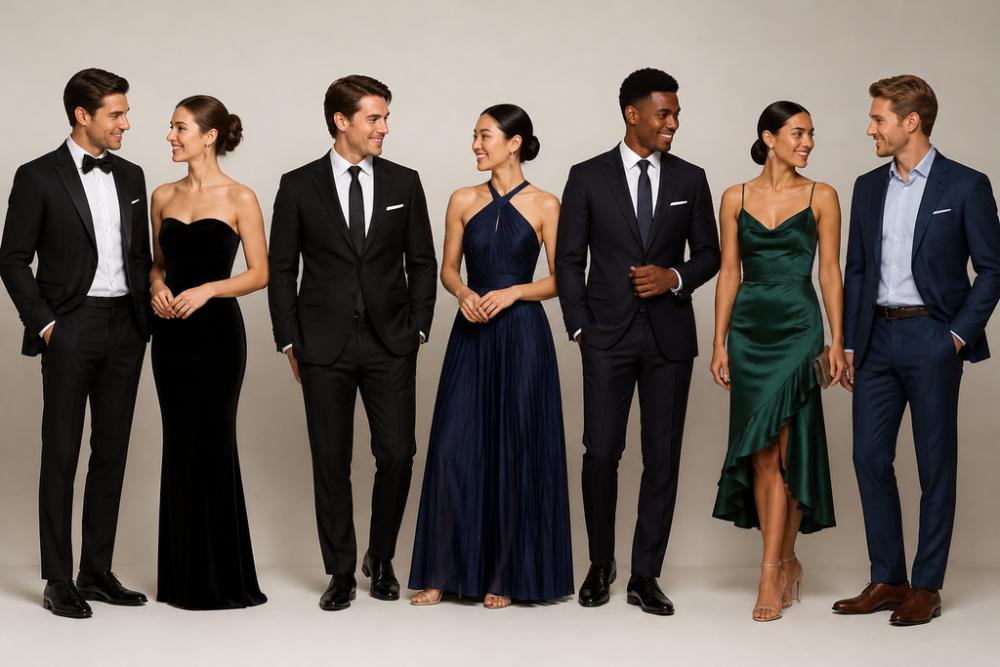
Black tie: a black or midnight-blue dinner suit, white evening shirt and black bow tie. Alternatives are a floor-length evening dress or formal evening separates. Wear black patent or plain leather evening shoes, or elegant flats or heels, with a white pocket square and discreet cufflinks, or restrained jewellery.
Black tie optional: the black tie formula, or a dark navy or charcoal lounge suit with a white shirt and conservative silk tie. Alternatives are a gown, a dressier midi dress or an evening trouser suit. Polished black Oxfords suit, or refined shoes with a small evening bag.
Cocktail: a well-cut lounge suit, crisp shirt and silk tie. Alternatives are a cocktail dress, tailored jumpsuit or evening separates. Polished Oxfords or sleek dress loafers work, or elegant flats or heels, with a pocket square or one jewellery accent.
Semi-formal: a navy or charcoal suit, pale shirt and tie. Alternatives are a dressy midi dress, jumpsuit or tailored separates. Choose polished leather shoes; lighter tailoring can suit daytime settings.
Creative black tie: a jewel-toned velvet dinner jacket, black formal trousers, white evening shirt and black bow tie. Alternatively, an evening gown or formal separates with one expressive colour, texture or jewellery detail. Keep to polished black shoes and one statement element only.
The crucial distinction is between a dinner suit and a lounge suit. A dinner suit carries eveningwear details such as silk-faced lapels and usually a matching stripe down the trousers, while a lounge suit is conventional matching tailoring without those trimmings, so adding a bow tie to a dark lounge suit does not turn it into black tie. “Optional” is where the lounge suit becomes acceptable, but it permits a dark suit, not a casual outfit.
Cocktail and semi-formal now overlap substantially. Cocktail often suggests more party-focused styling, yet neither label guarantees a fixed hierarchy, so aim for polished evening dress either way. Creative black tie keeps the eveningwear foundation and changes only the accent, which means trainers or a casual shirt would read as underdressed.
Match the fabric to the weather without changing the dress code
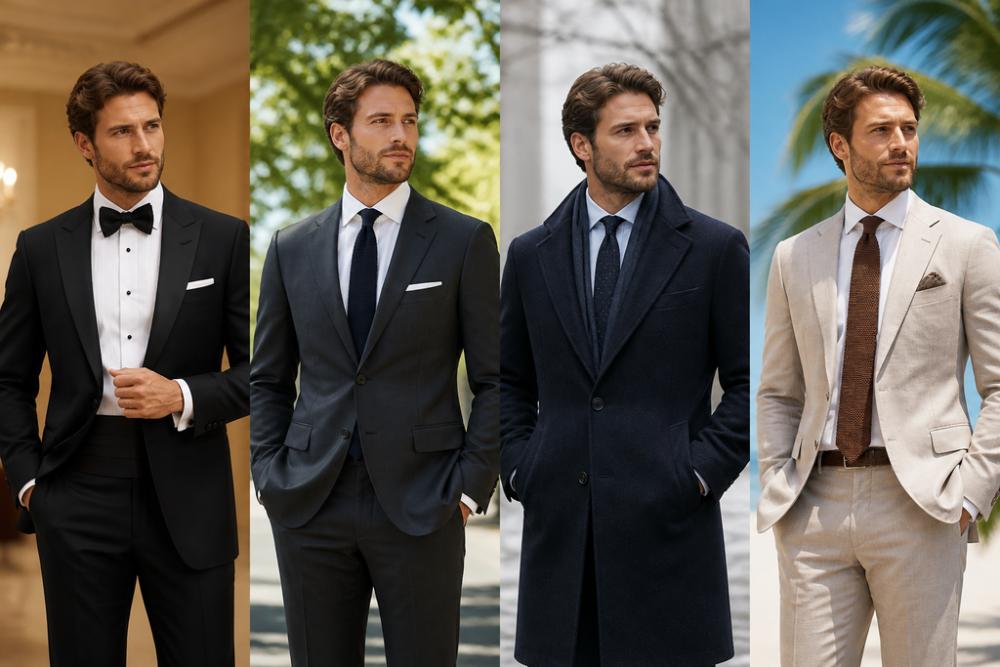
Climate changes your cloth, not the stated dress code. Choose the right construction first, a dinner suit for black tie or a lounge suit for cocktail, then adjust weight and breathability. Lightweight wool is the dependable choice for warm weather, and heat is never permission to swap black tie for a linen lounge suit.
For cooler evenings, a slightly heavier wool works well. Save richer textures such as velvet for a suitable dinner jacket or a creative black tie accent, since not every textured fabric is equally formal.
Keep sheen controlled. Silk lapel facings and a silk tie are deliberate formal accents, whereas an all-over shiny suit distracts. For dresses, jumpsuits and separates, judge drape, structure and finish together, because length alone does not establish formality.
Finally, think about the whole evening: an outdoor ceremony, a heated ballroom and the journey between them. Adapt fabric, lining and an outer layer so you stay comfortable without lowering the level of dress the invitation asks for.
Match the fabric to the weather without changing the dress code
Check the fit before spending on something new
Fit is what makes formal wear look right, and you can judge it at a mirror. Shoulders should sit cleanly without dents or overhang, the jacket collar should rest against the shirt collar with no gap, and a fastened jacket should close without pulling or forming X-shaped creases.
With arms relaxed, a little shirt cuff should show beyond the jacket sleeve. Try trousers with the shoes you intend to wear; the hem should fall cleanly with little or no break, depending on the cut, rather than pooling at the ankle. Then test movement by sitting, walking, reaching forward and lifting your arms, since waistbands should not dig in, lapels should lie flat, and dresses or jumpsuits should not pull, gape or restrict sitting.
Properly fitted made-to-measure or custom tailoring, such as that offered by Patrick & Co Tailors, can refine proportions and ease, and their guide to choosing formal wear for an event is a useful read on the subject. Custom-made does not automatically mean perfect fit, though, and well-altered ready-to-wear can look excellent too.
So assess what you already own first. If you do buy, prioritise sound shoulder fit, since that is the hardest part to change, and allow time for sleeve, waist and trouser adjustments. Price is not a measure of fit.
Resolve any uncertainty and rehearse the complete outfit
If the wording is ambiguous, gather context before guessing. Check the event time, the venue and any dress guidance on the invitation or event website, then ask the host a specific question, such as whether a dark suit and tie is appropriate. Context helps interpret a vague label, but it never overrides an explicit black tie request.
Next, try on the full outfit: shirt, neckwear, shoes and accessories. Shoes should be polished and comfortable, garments pressed, and hems right for your footwear. Elegant flats are a perfectly valid choice, while outdoor surfaces may favour stable heels.
Finally, identify only the genuine gaps. Reuse the suit, dress or jumpsuit that already meets the code, book any alterations early, and add no more than one expressive accent, buying another main piece only if the dress code or the fit truly demands it.