
You have almost certainly worn something this season that started life on a drag stage. The sequinned blazer, the platform boot, the cinched waist on a structured dress all feel like pure runway logic now, but their creative DNA traces back to performers who used fashion as theatre long before designers caught on. Drag queen fashion influence is everywhere in contemporary style, yet most people have never consciously mapped it.
This article does exactly that: it tracks specific drag aesthetics, the silhouettes, textures, and styling codes, into the runway collections and high-street pieces you already see and wear, then shows you how to borrow those elements with confidence. Charismatico’s breakdown of iconic drag styles is woven in as a practical resource for anyone who wants to go further.
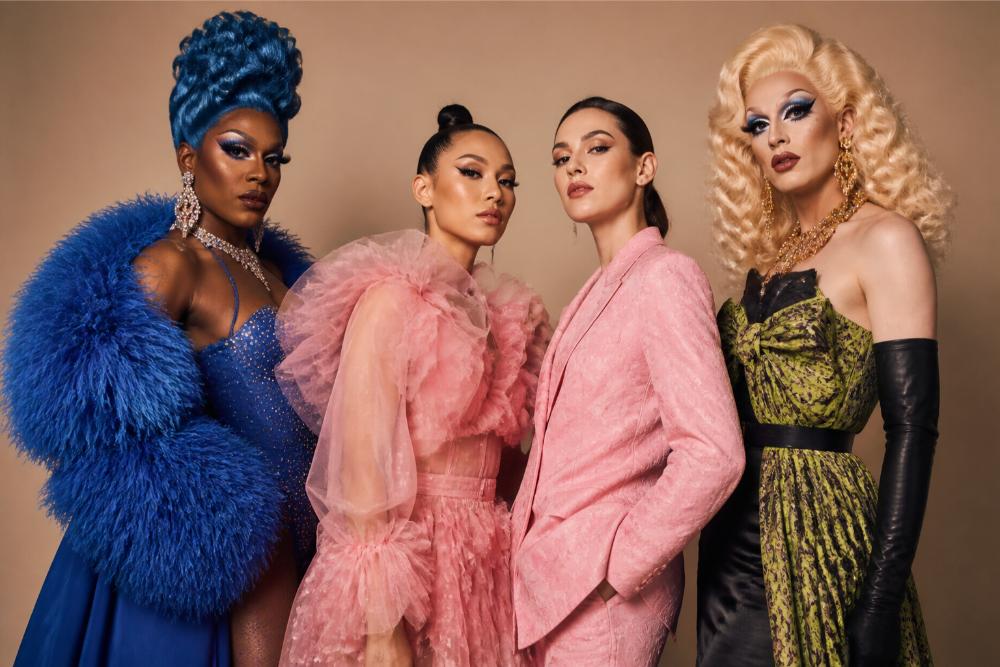
How Drag Queen Fashion Has Influenced Mainstream Style Trends
Why drag queen fashion is such a powerful style engine
Drag is built on a single, radical premise: everything is bigger, sharper, and more deliberate than real life demands. A silhouette must read from the back of a club. A colour choice must communicate a persona before a queen says a word. Hair, shoes, and accessories are not finishing touches; they are the argument. As one observer put it, drag is ‘truly the art of erasing yourself to recreate whoever you want in whatever way, shape, or form.’ That creative pressure forces solutions that straightforward fashion design rarely needs to reach for.
The gender play at the core of drag adds another layer of invention. Queens pair hyper-feminine corsets with broad, masculine shoulders; they place stilettos beneath sportswear; they exaggerate beauty standards until the standard itself becomes the joke. By treating every convention as negotiable, drag generates a constant supply of new visual ideas, which designers and stylists can then soften, rework in proportion, and present to wider audiences. That is precisely what has been happening on catwalks and high streets for years.
From sequins to platforms: drag aesthetics now embedded in mainstream fashion
The clearest pipeline runs through shine. Sequins, rhinestones, and high-gloss metallics have always been cabaret staples, chosen because they catch stage light from every angle. That logic has moved completely into mainstream eveningwear, and increasingly into daywear: sequinned skirts styled with plain tees, metallic jackets thrown over jeans, rhinestone trim on otherwise simple blouses. What read as costume ten years ago is now straightforward partywear, and the aesthetic logic behind it is entirely drag.
Silhouette has followed the same path. The classic drag hourglass, a nipped waist, padded hips, and broad sculpted shoulders, was always about creating a dramatic shape the body would not naturally produce. You can see its descendants in structured power blazers with exaggerated shoulders, in corseted dresses that cinch at the waist without underwear assistance, and in the sculptural outerwear that dominates autumn collections season after season. Drag performers brought visibility to the more imaginative use of fabrics and silhouettes, and designers have been responding to those ideas on high-fashion runways for decades.
Platform heels and over-the-knee boots made a near-identical journey. Towering stage shoes were the practical choice for performers who needed presence on a small stage, and thigh-high boots became a signature because they extended the leg line dramatically under a mini hem. Both are now everyday statement footwear, styled with wide-leg jeans, tailored trousers, and mini skirts without any sense of costume. The context changed; the garments barely did.
Bold colour and print are perhaps the most direct inheritance. Drag’s fearless stacking of neons alongside pastels, animal print beside graphic pattern, floral beside stripe, that refusal to treat any combination as too much, maps almost exactly onto the colour-blocking and clashing print trends that cycle through high-street collections every year. The difference is confidence of scale: drag does it at full volume, and mainstream fashion does it one degree quieter.
Theatrical accessories complete the picture. Feather boas, dramatic capes, opera gloves, towering headpieces, and long trains exist in drag because they create movement, spectacle, and presence. Toned down, they appear as feather-trimmed jacket cuffs, mini capes layered over evening dresses, embellished headbands, and elbow-length gloves on red carpets. Festival fashion in particular has absorbed the theatrical accessory almost wholesale, and what once felt exclusively like stage dressing now functions as the element that lifts an otherwise ordinary outfit into something memorable.
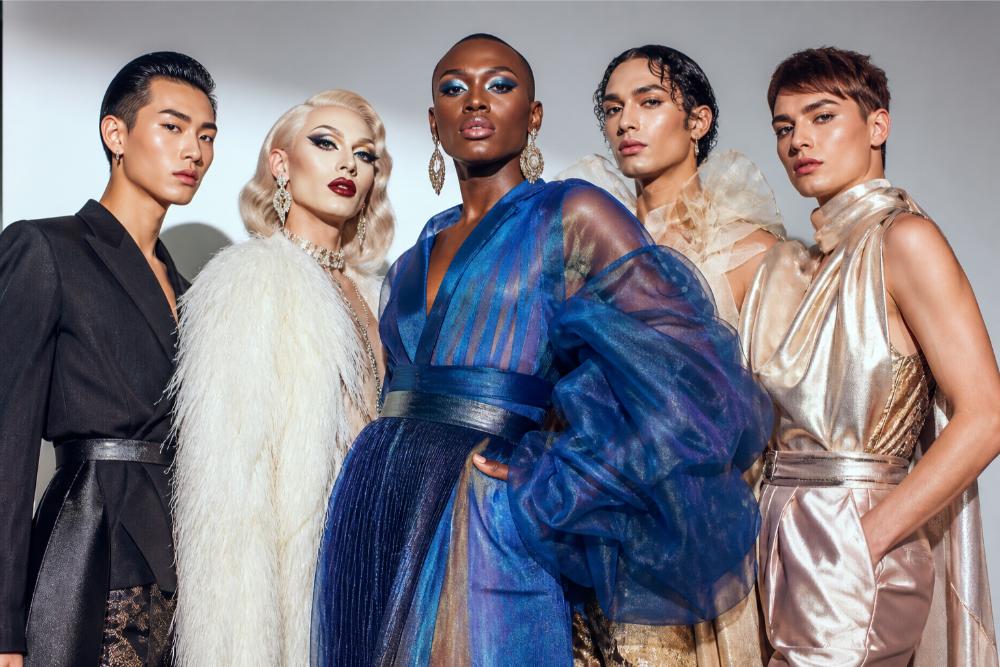
Drag queen fashion influence on gender-fluid and androgynous style
Long before gender-fluid collections became a marketing category, drag was doing the practical work: pairing suiting with corsets, placing gowns on performers with visible facial hair, combining sportswear with stilettos. The point was never shock for its own sake; it was the demonstration that any garment could belong to any body, and that the combination itself created meaning. That attitude is now visible across collections explicitly marketed as unisex, in editorial styling that mixes traditionally coded pieces without comment, and in the broader cultural shift towards beauty and jewellery sold as being for everyone.
The specific technique drag mastered is proportion play: tiny waists set against enormous shoulders, giant sleeves paired with micro hemlines, boxy oversized jackets worn over nothing but bare legs. In mainstream terms, these translate into the exaggerated proportions that define contemporary street style, the oversized blazer over a cycling short, the micro bag against a voluminous coat, the cropped top beneath a floor-length skirt. Each combination works on the same principle drag has always used: set one element against its extreme opposite and let the tension between them create the visual interest.
For many shoppers, this feels fresh and progressive. It builds directly, though, on drag’s decades of treating the full wardrobe as fair game regardless of who items were originally ‘meant’ for. The designers and stylists now receiving credit for gender-fluid thinking are, in many cases, translating ideas that performers worked out on small stages years earlier.
Drag queen fashion influence on gender-fluid and androgynous style
How pop culture turned drag style into everyday trends
Television drag competitions have done something quite specific: they have given mainstream audiences a weekly education in extreme styling. What might register as alienating in a single encounter becomes familiar after repeated exposure, the wigs, the padding, the rhinestone-covered gowns, the dramatic runway walks. Research into how drag competition shows are received across different countries, including a 2025 study published by Emerald on audiences in Poland, found that even viewers who engaged with the format primarily as entertainment understood its role in challenging traditional beauty standards and normalising a broader range of self-expression. Familiarity, repeated weekly over multiple seasons, does the cultural heavy lifting.
The feedback loop from celebrity to designer to high street amplifies this considerably. When a pop star performs in a sequinned bodysuit, a dramatic feathered train, or an architectural headpiece clearly inspired by drag aesthetics, the look is photographed, shared, recapped, and dissected by millions. Buyers and stylists watch the same red carpets and social feeds as everyone else, and the commissions that follow, sequinned suiting, platform boots, feather-trimmed coats, feel current because they echo what just appeared on a stadium stage or awards show staircase.
Beauty has followed the same route. Contouring, over-lined lips, cut-crease eyeshadow, and dramatically laminated brows all have direct precedents in drag make-up technique. Influencers and beauty brands have simplified and scaled those methods for general consumers, often without naming the source, but the visual logic is unchanged.
Steal the drama, keep it wearable: bringing drag-inspired style into your looks
You do not need a full face of stage make-up or a seven-inch heel to draw from drag. The smartest approach is to choose one or two statement elements per outfit and let everything else recede. A sequinned blazer or a feather-trimmed jacket, exactly the kind of pieces you will find in Charismatico’s range, lands differently when paired with straight-leg jeans or tailored trousers. The drama stays; the costume feeling disappears because the surrounding pieces are calm.
For occasion wear, this is even easier. Platform heels, over-the-knee boots, embellished bodysuits, sculpted corsets, and tulle-heavy skirts are all legitimate evening choices the moment you commit to them rather than apologise for them. The drag instinct here is useful: decide what the look is, then wear it fully. Confidence is the actual styling trick, and it tends to arrive more reliably when the rest of the outfit is edited rather than maximalist.
For everyday dressing, the entry points are gentler. Bold colour-blocking between a top and a bag, a clashing print combination on pieces that share one colour, exaggerated shoulders on an otherwise plain blazer, or a single theatrical accessory such as an opera glove, a mini headpiece, or an embellished hair clip, can shift an outfit without overwhelming it. If you are building confidence in higher platforms or more dramatic silhouettes, it helps to practise at home: walk in the shoes before the event, work out how the garment moves, and adopt what drag culture calls the ‘character’ mindset. Deciding who you are when you wear a piece removes a significant amount of self-consciousness.
Charismatico’s breakdown of the top drag queen styles used today, showgirl, pageant queen, club kid, camp glamour, is a genuinely practical resource for this process. Each aesthetic has a coherent logic: showgirl style centres feathers, shimmer, and elongated lines; pageant dressing prioritises structured glamour and embellishment; club kid energy is about texture clash and proportion play; camp glamour leans into excess with knowing wit. Identifying which resonates with you gives you a clear design brief for your own wardrobe, and Charismatico’s pieces let you invest in one or two high-impact items that can anchor that aesthetic across multiple outfits and occasions.
Spotting drag DNA in trends — and using Charismatico to build your next look
The next time you spot a bold shoulder on a blazer, a sequin midi in a high-street window, or a thigh-high boot on a runway look, it is worth asking where that idea came from. The honest answer, more often than not, is a drag stage. Drag performers have been combining bold colour, sculpted silhouettes, platform height, theatrical accessories, and playful gender codes for decades, and mainstream fashion has been steadily translating those experiments for mass audiences ever since.
The practical checklist is short: shine, sculpted proportions, statement footwear, fearless colour and print, and one theatrical piece. Any outfit that pulls from two or three of those registers is drawing, whether consciously or not, from drag’s visual vocabulary, and you can use that same checklist when shopping or styling, picking one element to amplify and keeping the rest grounded.
The most useful next step is to browse Charismatico’s iconic drag styles resource and choose one aesthetic that genuinely excites you. Take showgirl feathers and translate them into a single feathered shrug over an evening slip dress. Take club kid energy and build it from a neon colour clash, chunky boots, and one unexpected texture. The goal is not to replicate a full stage look; it is to understand the internal logic of an aesthetic well enough to reinterpret it in your own wardrobe. Charismatico is the right place to explore those archetypes, learn how different queens build their signature looks, and invest in the pieces that will genuinely transform what you already own.