
Aside from outward appearances and the effort car owners put into maintaining a spotless exterior, it’s the interior where drivers and passengers spend most of their time. This is what ultimately determines comfort, driving pleasure and hygiene. A clean interior is one that’s free of dust, grime, stains and spills accumulated over days and weeks of frequent use. And it is just as important as the condition of the paintwork and the sheen in the windscreen.
Interior car detailing digs deeper than the odd wipe down, tending to every nook and crook in upholstery, dashboards, carpets, doors and trim bits. It removes common contaminants and ensures long-term protection against scratches, tearing and discolouration. It also prevents smells and small mishaps from turning into bigger and costlier problems that eat into your car’s resale value and remain a permanent eyesore.
Motorists can choose the convenience of professional detailing services. Or opt to clean and detail their cars in their own time, and at their own pace, with a growing selection of interior care products. These are formulated solutions that help restore cabin materials and surfaces to near showroom condition and are an easy and cost-effective way to maintain your car.
Tending to Different Cabin Surfaces
Car interiors consist of hundreds of parts, all in different materials. While an all-purpose interior cleaner is one option, better results and deep cleaning are achieved with auto interior detailing products specially formulated for each material.
Fabric, Upholstery and Carpet
Fabric seats, carpets and floor mats see daily use and abuse, picking up dirt, mud, liquids, food remnants, pet hair and more. Without regular cleaning, they absorb odours and accumulate stains that can be hard to remove once settled. That’s why a regular cleaning routine is recommended. Start by removing mats, thoroughly vacuuming carpets and seats, and using brushes and crevice tools to get to stubborn crumbs in seat cushions and sliders.
You can remove smaller stains with spray-on shampoo, spraying directly onto the affected area and brushing with a soft-bristle brush to loosen up encrusted dirt. Blot away the residue with a microfibre cloth and choose a high-quality stain remover for any remaining residue.
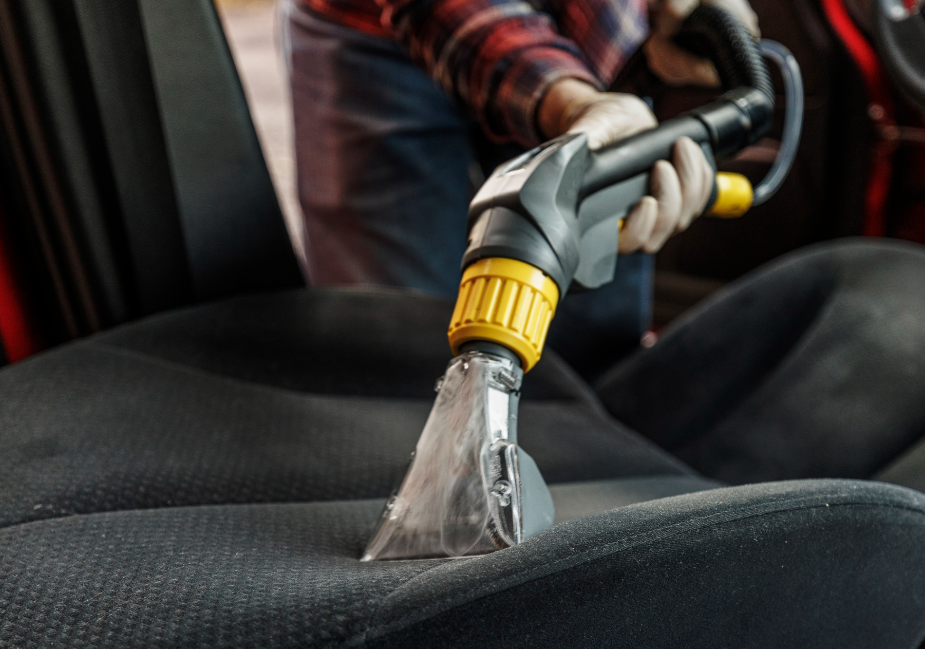
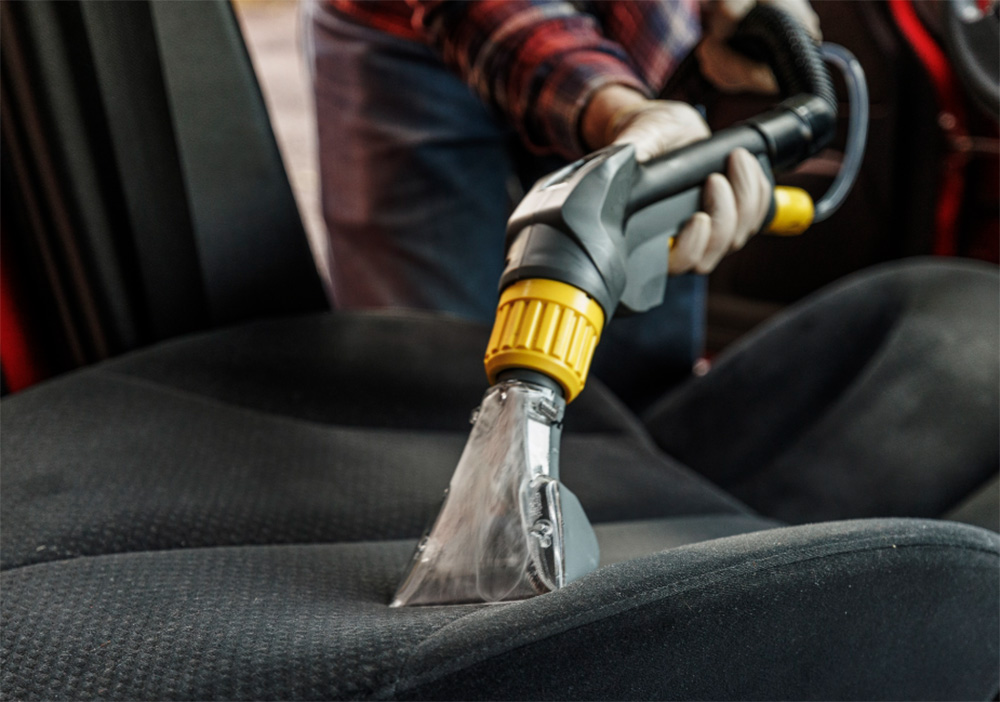
To deep clean seats, carpets and fabric, consider a steam cleaner twice yearly. This sanitises fabrics and fibres, gets to embedded stains and kills lurking bacteria and fungi with high-temperature steam. Dirt breaks up and becomes easier to lift off surfaces compared to regular shampooing. Steam also softens fabrics, restores natural colours and texture and ensures fast drying.
To protect fabric seats, carpets and floor mats, finish the job with hydrophobic fabric sealant. This creates an invisible protective layer that repels dirt and liquids, making subsequent cleaning easier and faster.
Alcantara, Suede and Leather
Suede and Alcantara cleaners are specially-formulated, pH-balanced or soft-foaming cleaners safe for synthetics. Apply spray-on cleaner to a microfibre cloth and agitate affected areas in a gentle, circular motion. Use soft-bristle brushes to loosen up embedded dirt, and dry with a second microfibre cloth or drying towel.
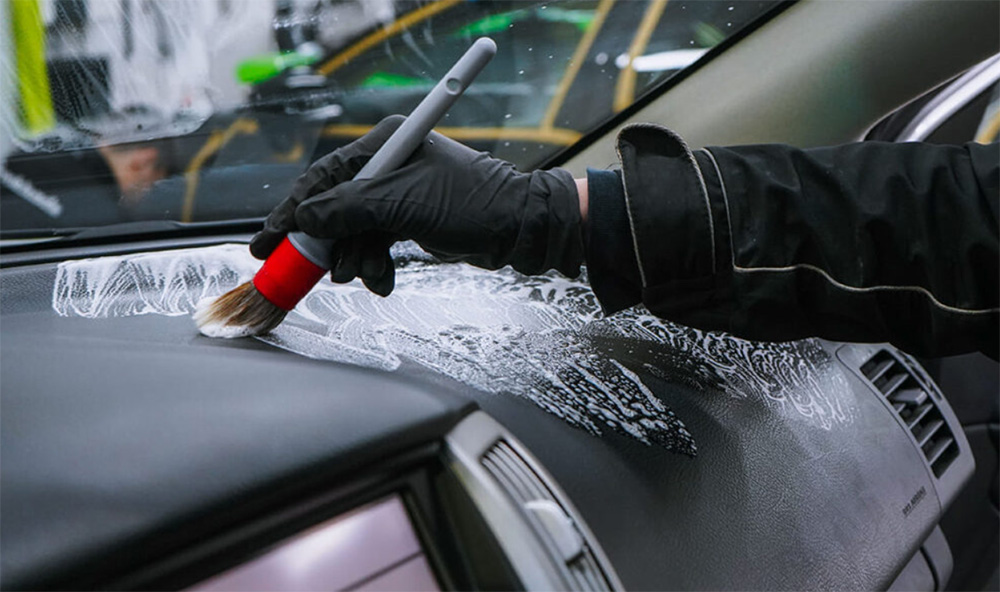
Leather needs more attention. While general-purpose interior care products can be used in this case, solutions with pH values matching that of the leather are the best bet. These lift oils and dirt while keeping the surface intact. Apply leather cleaner to a soft brush and wipe clean. For steering wheels, leather dash, and door trim, consider a softer detailing brush.
Complete the job with conditioners, protectors or natural waxes. These penetrate deep into the material, keep it soft and pliable, prevent cracks, and create a protective barrier against UV radiation, liquids and abrasions. Apply thin layers on microfibre applicator pads and let solutions sit for a couple of hours to restore natural sheen.
Buy products separately, or go for value with packaged sets with cleaners, conditioners, brushes, applicators and microfibre cloths.
Soft and Hard Plastics
Hard plastics, such as those in door bins and trim bits lower down, are best cleaned with surfactants and emulsifiers. These break up ingrained dirt, oil and grease particles.
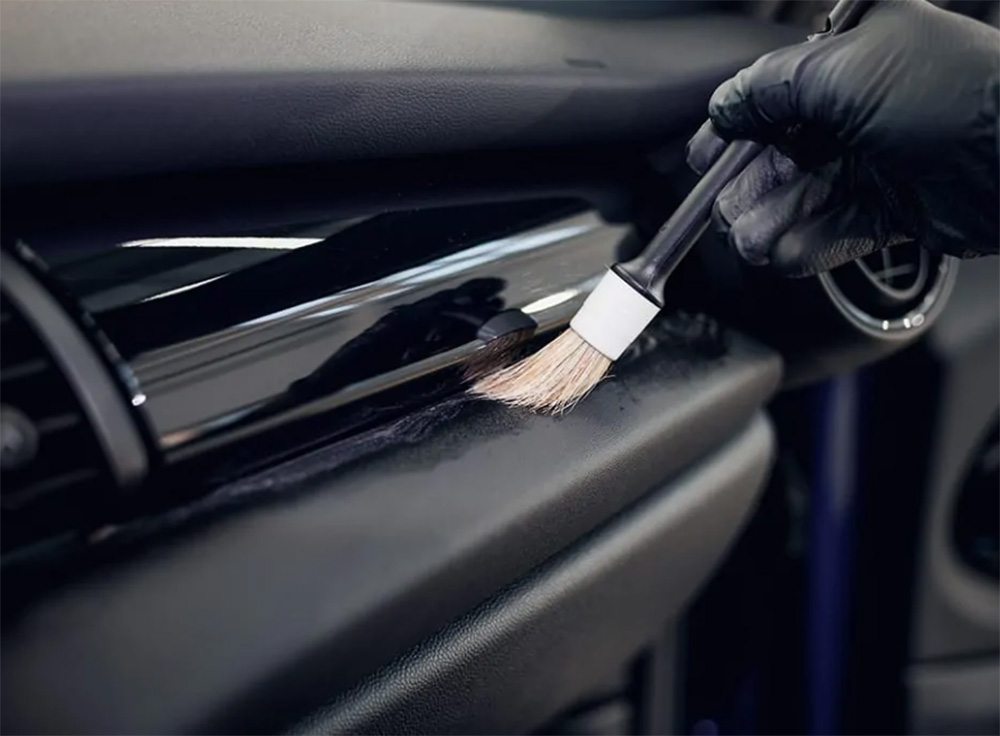
For lighter stains and minor dust, consider gentle solvents. These contain agents that evaporate without leaving a residue. Both are applied to microfibre cloths to avoid potential electrical issues. Deal with ingrained dust and dirt with brushes, and apply anti-static sprays to prevent further dust accumulation.
Soft-touch plastics line the dash and upper door trim. Removing dust and dirt here involves water-based emulsion agents that penetrate the material and prevent damage and aging. For further protection against fading, particularly in direct sunlight, spray on UV inhibitors to retain suppleness and a hydrophobic coating to repel beading liquids.
Glass and Mirrors
A smudgy and streaky windscreen or windows will spoil the effort you’ve put into fabrics and plastics. Remove smoke, fingerprints, dirt and residues with alcohol-based cleaners such as isopropyl or ammonia-free solutions in cars with tinted windows. Spray solutions onto microfibre towels, wipe in a circular motion to break up haze, then follow up in vertical and horizontal strokes to polish.
Short Step-By-Step Interior Cleaning Guide
Before you begin, choose a dry enclosed area away from direct sunlight. This ensures all interior automotive surfaces are cool and that higher temperatures don’t affect the consistency of cleaning chemicals. Gather all interior care products and remove visible debris and unnecessary items. Check the door bins, seat pockets, cup holders and other internal storage areas.
Continue by removing and cleaning the floor mats, giving them a good shake to remove embedded dirt, pressure-washing and hanging them to dry. Follow up with the interior plastics, making sure to apply protectant during the finishing stage. Move onto the seats by using interior detailing supplies suited to the seat materials.
Concentrate on stubborn stains with a balanced use of spot cleaners and brushes, and proceed with the windscreen, visors and mirrors. Finish up with automotive air fresheners and deodorisers to remove strong and stale smells.
Adopting a regular cleaning routine, at least once a month, and more in-depth deep cleaning and detailing every 6 months ensures you car interior remains clean, sanitised and protected.