‘And One Of The Boys Stood Up’
Way back in the year 2000 on what feels like an alternative planet called Optimism, Malcolm Gladwell wrote a book called The Tipping Point that became a cultural phenomenon and significantly boosted a public interest in social science ideas into popular discussion.
With a background as a staff writer on The New Yorker he had previously written an article of the same title which delved into the rabbit hole of why certain ideas, products or behaviours seem to explode in popularity, while others didn’t. It was like doing a Sherlock Holmes on society as a whole, taking into account all the clues and outcomes, both fun, quirky, and unfortunately some tragic.
The article gained a lot of traction whereupon he realised he had seeded something powerful that warranted an entire book. Said book was delightfully and playfully broad, quite apt given the myriad of influences that actually do inspire or affect any outcome, no matter how trivial they may have once seemed. Happenings both planned or purely spontaneous, random serendipitous moments all carrying equal value in the ultimate outcome.
It was incredibly insightful too, there was much that could be gleaned for the attentive, as inspirations, and warnings. One of the unfortunate insights he discussed was the concept of pluralistic ignorance, or bystander effect. The phrase was coined by social psychologists Floyd H. Allport and Daniel Katz in a 1931 paper Students’ Attitudes: A Report of the Syracuse University Reaction Study, where they observed that individuals often misperceive the attitudes of the group, believing their private view is in the minority, when in actual fact many others do privately share it. They were effectively policing, censoring their own more liberal, permissive views in the false belief that peers had more conservative or stricter positions.
It transpired folk were generally slavishly following what they believed to be the dominant opinion, maintaining a non-existent mantra set by others, regardless of any negative outcomes, which was done so in the hope of diminishing one’s social risk, embarrassment, being different or standing out from the perceived majority.
The negative consequences of this are clear to all and Malcolm gave an updated example of such thinking in a dreadful story about the tragic murder of Kitty Genovese outside her apartment building in Queens New York in 1964. A murder that had been witnessed or heard by dozens of people over a period of time, where she could have been saved, but no one stepped forward, or stood up to help. Everyone waited for someone else to make the first move, and no one did.
This story hit me like a sledgehammer. From being a small kid and watching The Hunger Strike in Northern Ireland on Irish (Republic) TV news, or the UK Miners Strike, to that moment reading the book, I could never understand why so many people stood by inactive while harm was being done to others just didn’t make sense, Gladwell had just explained it to me. I’ve four younger sisters too, the idea that no one might come to help them if they were in trouble was truly horrific.
It also made me wonder about social conditioning that encouraged such inaction. What made people freeze, but more importantly, what made people decide to act, rip apart that societal straightjacket or toss away the equivalent of being under a self inflicted house arrest, wearing a moral compass arrest ankle tag that they voluntarily put on every day, restricting their movements, beliefs and empathy, to the detriment of all.
People and events that went against the pluralistic ignorance grain became my guiding light, no matter how grand, nor miniscule. The smallest gesture of kindness by a stranger at a bus stop held equal to lofty speeches of genuine leaders (not the people we are told are leaders), the situation was not the focus, the action and that active choice in the moment was.
There are decades of such moments that could be written about, and maybe should be, but the ones that are burning brightest (and very much needed) at present are a sequence of recent events that started with the campaign for the newly elected leader of the UK Green Party Zack Polanski (see video above).
In the PR media tour that BBC documentarian director Adam Curtis did for his latest series called Shifty (available on BBC iPlayer), he had a recurring theme that he raised believing it to be a major factor about Shifty. The series itself was about how the UK as a whole had presently got itself into frozen stagnation, not only economically, but mentally and psychologically too. Decades of homogenised political leaders with surface level offerings of seemingly nothing but the same, while all the time actually lessening what we had, for the benefit of a very few. He said nobody was contemplating, talking about or offering a better vision of a future, and clearly that’s by design, enacting a regression in policy and enabling a truly worryingly moral, capitalist goose step march into fascism.
Zack clearly didn’t get this memo of surface continuity conveyor belt leaders and was having none of it. With a background of knowing being actually true to your beliefs and not the false mantra whims of others, creates the sturdiest of foundation, being gay, Jewish and vegan he was already well on the way to knowing diversity is key to genuine voices, and an eagerness, willingness to hear that full spectrum in any situation or group.
No doubt his time spent as a ‘chugger’ (a street based charity activist seeking monetary contributions) gave him the knowledge that the fear of embarrassment we might all be ingrained or conditioned with isn’t actually worth what we miss out on, as it is actively holding us back individually and as a society.
This stepping up was part of fantastic election campaign promo that he made with director Jeremy Clancy, where Zack strolling on a beach recalled a deeply troubling yet vital story about negative perceptions of immigrants, distorted views that have been dictated and propagated to us to serve a purpose that is unbelievably detrimental to us all.
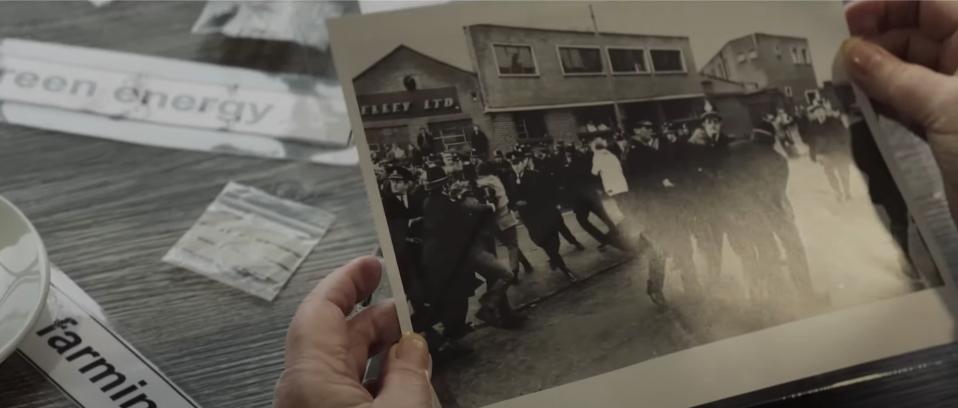
Jeremy has a long history of finding and presenting such vital stories. Tales from the land and its people, across the breadth of the country, everyday souls with extraordinary insights, shared with diverse warm soothing accents across a kitchen table, not dictated with mercurial cold, clipped contempt down from marble pulpits or press announcements. When he writes on his website that he has been inspired from an early age by helping his mother feed miners during the UK Miner’s strike (1984-1985), you can feel that in every frame of films he creates.
Which aptly brings us to a recent short documentary he has made which is directly associated to that upbringing, and the central topic of this review, individuals standing up for themselves, but more importantly for others, family, friends, community, village, town, region, country, society and the planet.
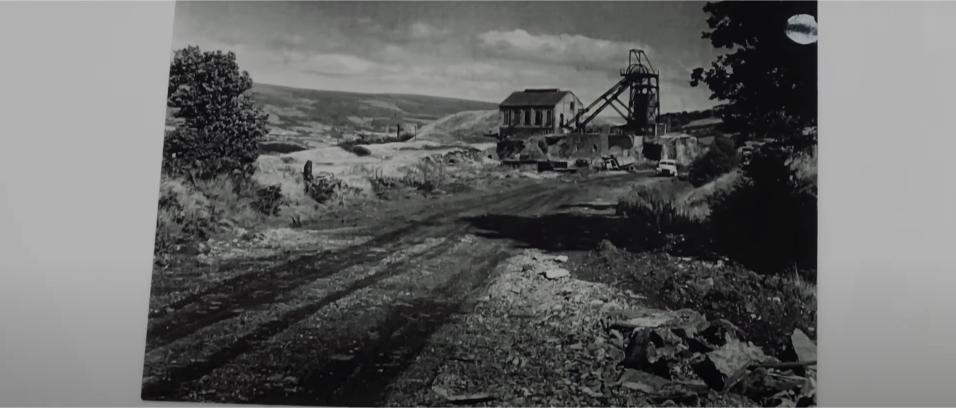
The Coal Beneath Our Feet, The Wind Above Our Heads (2025) may be a short film about a small Welsh village, but its story has incredibly far reaching potential, that radiates way beyond the valleys in the only way that true humanity, empathy, hope, knowledge and inspiration can. In another time and much drier climes, it could have been written about by one of the great ancient Greek historians, but it is no less the adventure for it that it’s two main guides are young Welsh teenagers Arwen Morgan and Emrys-Cobbett-Evans, who are still in school.
We open in the village community of Penrhiwceiber, setting off on a short voyage into the past, and what could be a very bright future, where currently there seems to be no future at all. There’s so many wonderful moments in the film, with an initial one of locals gathered in the village hall as they wait for a screening of filmed interviews, in the corner of the room is a traditional miners marching banner with a painting of a miner arms outstretched, one hand holding up the world, and the other holding up a pile of books. Above him reads PENRHIWCEIBER, and below him KNOWLEDGE IS POWER, very befitting of the film everyone is gathered to watch. It feels like fuel for the soul has been dug up from the earth as well as national energy necessities.
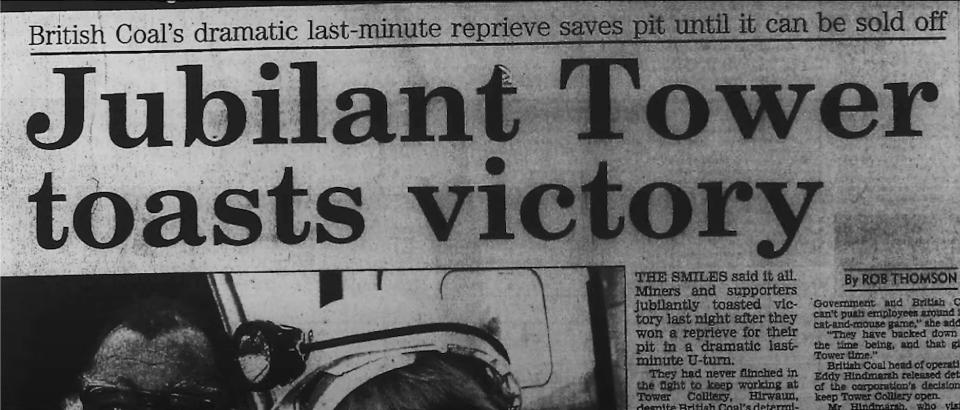
As it progresses we learn with the young adults a history of the greater area that they didn’t know themselves, where despite seemingly against all the odds, and the establishment, the miners of another Welsh mine called Tower Colliery dramatically flipped a foregone bleak outcome, and reinvigorated the area. I was genuinely stunned upon learning this story, not having never heard of it despite its global potential. The story unfolds from the people that were part of it, where 239 miners pooled contributions of £8,000 each from their redundancy and bought the closing mine for themselves, turning it into a Co-op, that not only saved jobs, but pumped money, support and culture back into the community for years to come. It is a genuine wonder to behold.
Ultimately the mine closed, but the lessons were learned. Writer Alan Moore has discussed in interviews that ‘we need more ghosts’, meaning that we actively search for the stories and histories hidden in the walls, buildings and landscape that surrounds us. In the universal hypnotism of modern tech, we have become blind to the knowledge and adventures that have already existed. The potentially hollow promise of the addictive flickering lights are at the direct cost of the tangible learnings of the actual world and people that are around us, from the individuals with libraries of stories walking around inside them.
They may not be words as well scripted as a Marvel movie, but when the elderly lady whose family worked at the mine for generations talks about the salvation idea being raised by a miner to purchase the mine, saying ‘and then one of the boys stood up’, she’s effectively Captain Marvel saying ‘Avengers… assemble’. A deeply beautiful and colloquial clarion call that changes the dynamic and outcome forever more. Even if the desired vision isn’t ultimately reached in a situation, that movement, no matter how small, is the beginning of momentum, that sense of life, defiance, growth and hope.
As mentioned, that new life shone brightly at Tower Colliery for the 13 years it lasted, and now the baton seemed to have dropped, or at the very least was being held in limbo until whoever or whatever came next. This is where the embers start to flicker with the potential inferno that could rise up, literally in the form of giant wind turbines.
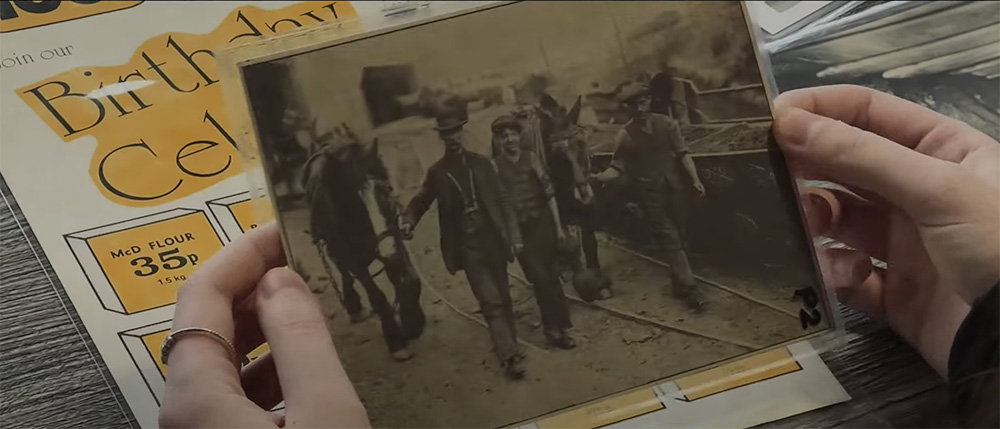
The students now carry the inspiration, knowledge and history of the people that surround them, as they meet individuals from other ex-mining communities that have set up wind farms to utilise another natural resource that Wales is not short of, one that is dramatically better for the environment too. These new developments are also contributing to the livelihoods and culture of the region as once the mines did, and seeding new hope of a better future, where the young might not have to leave just to survive.
Despite the exploitation of the local mineral deposits by the state for over 100 years, what is clearly the true natural resource is the minds and personalities of the locals. Assets were taken, but the fire of determination hasn’t gone out. Admittedly the embers were low, almost extinguished, needing a rekindling, but by exposing the history that lay beneath the spent dust, with new fuel and oxygen added in the form of knowledge, information, research and effort, people once again stood up. They didn’t wait to be told, they didn’t listen when they were told no. Situations are rectified by personal action, not by sitting back hoping someone else fixes it, maybe others haven’t even noticed it, or are for some reason in fear of pointing it out.
That fear isn’t real, as the studies showed, most people are decent and want the best for everyone. We have allowed ourselves to be conditioned to think otherwise, which only empowers exploitation. Gestures don’t have to be grand to change this, sometimes a simple informed no will work, or a proud yes, before even having to stand up. But like anything, it becomes easier the more you do it.
People like Zack and Jeremy show us that in the most important ways it does get easier to participate or instigate. Similarly another director Paul Sng who we’ve covered repeatedly at FLUSH has an excellent forthcoming documentary about Irvine Welsh that we will be reviewing soon. Paul has constantly stood up to share amazing stories and causes in his films that he deeply believes in to raise awareness of the underrepresented, under recognised people, or topics of race, culture and politics.
It’s not only the guys, I’ll briefly mention two genuinely inspiring women that constantly have me in awe of their achievements and desire to make the world a better place for all. It’s even a possibility they might never actually sit down; they seem to be so active. One is Sammy Andrews, founder and CEO of Deviate Digital who not only runs a very successful business in an unforgiving disproportionately male dominated music industry, but does endless campaigning and generating events for a multitude of just causes, from industry related support of musicians, to female empowerment and raising awareness of the atrocities in Gaza
Then there’s Zoe Scaman, founder of Bodacious, who I became aware of on LinkedIn from her ceaseless sharing of vital information also about the genocide in Gaza, as well as brilliantly written insights on another business that’s also disproportionately male, at least in leadership roles.
Again there should be books written about all these people, but maybe the best way to honour them (besides following or working with them) is to mimic their work and their values, raising standards for all, while protecting the most vulnerable. Just stand up for something.
But to end by returning to the documentary, we’ll end with the inspiring words a class of young school children sing in Welsh that opens the film:
Where teachers believe in our dreams,
And no one goes it alone,
Despite everything and everyone.
There are the teachers we have in school, and the ‘teachers’ that walk amongst us everyday, who are standing up for all of us. It’s time we stood up with them.
The Coal Beneath Our Feet, The Wind Above Our Heads is available to watch on youtube via the embedded video above. It will also open Cardiff Transformed 2025 on 27 September.
Jeremy Clancy can be contacted via jeremyclancy.com